








 Web Trader MT5









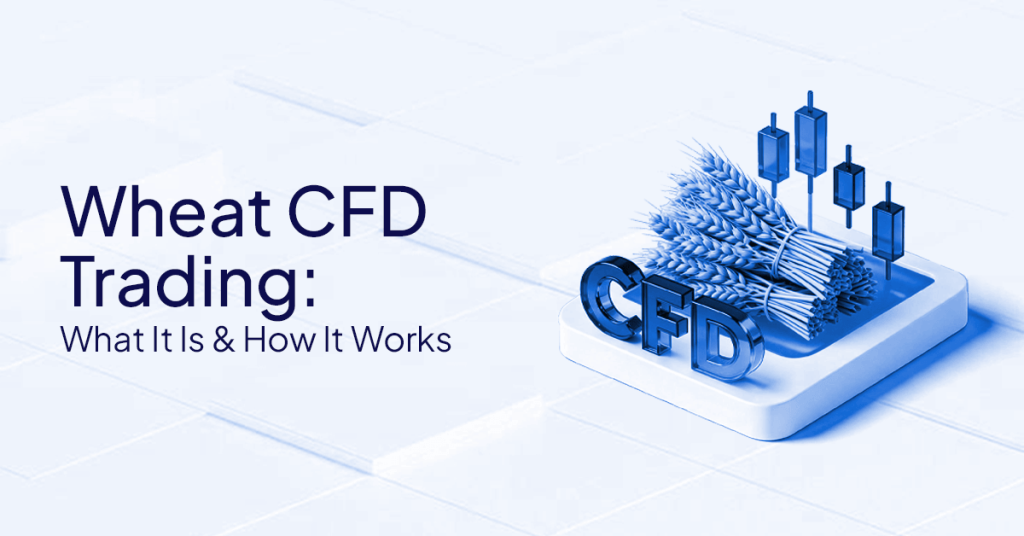
Wheat is a broadly traded agricultural commodity in the world, which is essential in the production of food, animal feed, and international trading.
A wheat CFD enables traders to invest in the movements of the wheat market using a derivative contract rather than the actual commodity.
Have you ever wondered how traders can access agricultural markets without a silo or transport logistics?
This guide describes how wheat CFDs work, price drivers, essential risks, and costs, and how a person can trade in a well-organized, risk-sensitive manner. Note that not every jurisdiction offers CFDs, and even parts of the United States don’t.
Quick Answer
A wheat CFD allows you to trade the movements of the wheat market without having to purchase and deliver actual wheat.
It is a versatile yet riskier instrument, which traders use to short or take a long position with or without leverage. The availability and regulation of CFDs may vary by jurisdiction, and they are not allowed in certain regions.
What Is a Wheat CFD?
A wheat CFD is a financial contract that enables traders to speculate on the price of wheat even if they do not have the actual crop.
Wheat CFD Explained in Simple Terms
CFDs, which stand for Contract for Difference, are agreements between traders and providers to trade changes in the value of assets between the time the trades are opened and closed.
If you trade CFD wheat, you are speculating on the rise or fall of wheat prices. When you are right, you get a payoff on the difference between you and when you are wrong, you lose.
What You Trade vs What You Don’t Own
In contrast to a futures contract, which can lead to the delivery of the goods to buyers engaged in commercial business, CFDs are entirely financial. It is not the ownership of the underlying asset; no bushels of wheat are stored, transported, or insured.
What you are selling is the market sentiment and economic conditions that propel the value of wheat and not the wheat itself.
Note: You do not have any voting rights or physical claims to the inventory, as you are not the owner of the asset. You merely have a stake in the movement of the assets.
How Does Wheat CFD Trading Work?
Trading entails opening long or short positions based on your market perception, leveraging to capitalize on your exposure.
Long vs Short Positions
CFDs provide the option to buy and sell in two directions of the market:
- Going Long (Buying): You establish a buy position when you expect the price of wheat to rise. You earn when the market is trending up and lose when it is trending down.
- Going Short (Selling): You will open a sell position when you think that wheat values will fall. You gain when the market drops and lose when it increases.
This shorting capability makes CFDs favorable for hedging portfolios in case the agricultural sector experiences a downward trend.
Margin and Leverage Basics
CFDs are leveraged products. This means it gives you a chance to open a position by depositing only a small percentage of the entire trade value, called the margin.
- Leverage: This enables you to manage a prominent position using less capital.
- Risk Warning: Leverage can increase potential returns, but it also amplifies losses. When the market works against you, you may lose more than your initial deposit in the form of a margin. Before opening a trade, it is essential to know the margin requirements.
Cash vs Futures-Based Wheat CFDs
Cash CFDs typically track the spot market with a daily financing adjustment, whilst the futures-based CFDs are based on contracts with particular expiration dates.
What “Wheat Cash CFD” Typically Means
A wheat cash CFD tends to track the spot market. These are continuous contracts that do not have a fixed expiration date. They are preferred for short-term trades.
Nonetheless, when you are in cash CFD and leave it overnight, you usually pay a financing fee (swap fee) to leave the position open.
Rollover and Contract Expiry
CFDs based on futures track a specific futures contract (e.g., Wheat Futures that expire in December).
- Expiry: The underlying futures contract expires at the end of which the CFD position must be closed or rolled over.
- Rollover: This is when one closes an expiring contract and opens a new one next month. This can be on a cost or adjustment basis, depending on the value of the difference between the two contracts.
What Moves Wheat Markets?
Global weather patterns, supply chain geopolitics, and changing demand for food and animal feed primarily drive the wheat markets.
Weather and Crop Conditions
Nature plays a highly significant role in agriculture. Droughts, floods, or very hot seasons in key production areas (such as the US, Canada, Russia, or Australia) can have calamitous effects on harvest yields.
Unfavorable weather typically reduces supply, which may push values higher, while favorable weather may produce bumper crops, which will lower values.
Global Production, Exports, and Geopolitics
Wheat is a world political commodity. Trade policies, tariffs, and conflicts can disrupt supply chains.
For example, when a large exporting country prohibits exports to cushion domestic supply, the world supply becomes limited. Organizations such as the USDA Foreign Agricultural Service usually track authoritative data on worldwide supply and demand.
Demand Drivers and Currency Impact
- Consumption: Dietary changes or livestock feed intake also affect wheat consumption.
- Currency: At a time when wheat is commonly traded in US Dollars, a stronger USD may increase the cost of wheat to foreign markets, thereby decreasing demand.
Costs and Risks to Know Before Trading
Traders must consider costs, such as spreads and overnight fees, and hedge against risks, including leverage-amplified losses and market volatility.
Spread, Financing, Slippage, and Gaps
- Spread: The difference between the buy and sell quote. This is the main cost of entering a trade.
- Financing (Swaps): The interest on an overnight leveraged position.
- Slippage: The gap between the anticipated execution point and the actual execution point most often occurs when volatility is high.
- Gapping: When the market jumps from one level untraded to the next (e.g., over a weekend), and maybe bypasses stop-loss orders.
Volatility Risk Amplified by Leverage
Agricultural markets can be volatile. A weather report may cause a sharp move. With leverage and high volatility, it can easily lead to changes in account equity.
These risks can be managed with the tools offered on platforms such as STARTRADER, but traders should remain attentive.
How to Trade Wheat CFDs Step by Step
Traders must adhere to proper discipline, which involves analyzing the market, accurately positioning, and adhering to risk management policies.
Pre-trade Checklist
Professional traders usually analyze the market situation before making a trade.
- Catalyst: What is the market currently being driven by? (for example, a new crop report).
- Volatility: Does the market swing or does it operate evenly?
- Purpose: Why do I want to get into this business, and is it my strategy?
Position Sizing and Stop-Loss Regulations.
- Position Sizing: It is best to avoid risking more capital than you can afford to lose. Calculate your trade size based on your account balance, not on the required margin.
- Stop-Loss: It is always good to have a predetermined exit point. A stop-loss order automatically sells your trade when the market turns against you by a predetermined amount, and helps limit losses.
To find out more about trade setup management, read about risk management strategies.
Common Beginner Mistakes
Beginner traders often fail due to excessive leverage, failure to recognize underlying market forces, or a lack of an exit strategy.
There are several advantages and disadvatages of CFD trading, but being aware of these beginner mistakes with wheat CFD trading will give you an edge.
- Over-leveraging: Trading positions which are larger than the size of the account.
- Disregard of Fundamentals: Wheat trading without referring to either weather reports or the CFTC Commitments of Traders reports.
- No Plan: Starting in a trade as a result of a “hunch” instead of an analysis.
- Holding too long: Maintaining a losing position in hopes that they may reverse (holding and hoping).
Wheat CFD vs Wheat Futures vs Wheat ETF
Table: Comparison of Wheat Trading Instruments
| Feature | Wheat CFD | Wheat Futures | Wheat ETF |
| Leverage | High | Medium/High | Low/None |
| Holding Horizon | Short to Medium Term | Medium Term | Medium to Long Term |
| Complexity | Medium | High | Low |
| Cost Structure | Spreads & Swaps | Commissions & Exchange Fees | Management Fees (Expense Ratio) |
| Ownership | No (Derivative) | No (unless delivery taken) | No (Share of fund) |
Checklist: Before You Trade Wheat CFDs
- Catalyst Identified: I am aware of what is driving market news or events.
- Volatility Awareness: I know the current market pace.
- Size of Position Determined: The size of my trades is within my risk tolerance.
- Stop-Loss Set: I will have a hard exit point if I am wrong.
- Maximum Accepted Risk: I understand the extent of the risk I might incur.
FAQs
A wheat CFD (Contract for Difference) is a financial instrument which allows you to invest in the change in the price of wheat, but does not require you to possess the actual grain.
Depending on your market forecast, you place a position (buy or sell). When the market works in your favor, then your profit will be the difference between the opening and closing value. When it works against you, then you lose that difference.
A wheat cash CFD is a track that follows the value of the immediate spot market price of wheat as opposed to a future delivery contract. It usually entails an overnight funds charge.
Yes. Since it is a contract based on the value of the asset, you can enter into a “sell put “to make profits when the markets are going down.
Conclusion
The wheat CFDs offer exposure to one of the largest agricultural markets in the world without dealing with the physical commodity.
Although they are very flexible and easily accessible, the risks involved are not benign, particularly because they are leveraged and market-oriented.
Knowledge of wheat market operations, understanding of the fluctuations between cash- and futures-based CFDs, and adherence to sound risk management are key factors before trading.
Tags


Open Live Account
 Email Address
 Phone Number
Important Notice
STARTRADER does not accept any applications from Australian residents.
To comply with regulatory requirements, clicking the button will redirect you to the STARTRADER website operated by STARTRADER PRIME GLOBAL PTY LTD (ABN 65 156 005 668), an authorized Australian Financial Services Licence holder (AFSL no. 421210) regulated by the Australian Securities and Investments Commission.
Important Notice for Residents of the United Arab Emirates
In alignment with local regulatory requirements, individuals residing in the United Arab Emirates are requested to proceed via our dedicated regional platform at startrader.ae, which is operated by STARTRADER Global Financial Consultation & Financial Analysis L.L.C.. This entity is licensed by the UAE Capital Market Authority (CMA) under License No. 20200000241, and is authorised to introduce financial services and promote financial products in the UAE.
Please click the "Continue" button below to be redirected.


