








 Web Trader MT5












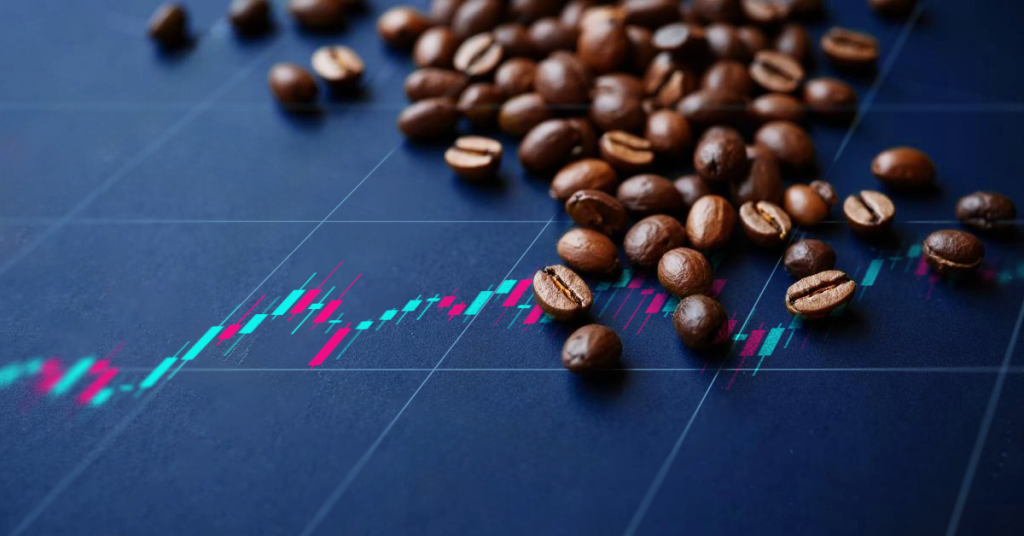
Have you ever wondered why your coffee price keeps changing? Your morning cuppa puts you in touch with one of the wildest markets in the world.
Coffee prices zig and zag all the time. One thing that can shoot your expenses is the weather in Brazil.
The shifts in European demand can swing whole markets. This insanity allows smart traders to make potential profits.
Coffee futures trade on major exchanges with serious volatility. There are definite patterns to the market so long as you know where to look.
This guide brings up actual trading tips for coffee spot trading and CFDs. It will leave the theory aside and go into the practical things.
Why Trade Coffee? (Opportunities & Risks)
Understanding of the coffee markets is tantamount to knowing what you are getting involved in. Coffee is always on the move, and this attracts traders.
Coffee consumers are in a perpetual state of consumption, and its production is based solely on the weather and politics. This induces price volatility, which is analyzed by others.
Risks, however, are rather high. A poor weather forecast out of Brazil can leave the prices either rocketing or plummeting in minutes. The Politics in the developing countries may immediately change the prices, export policy, or the exchange rate.
The decision to engage in coffee trading lies in the preparation. Here’s a quick rundown.
The Good Parts:
- It’s asy to buy and sell since it’s traded worldwide
- You can follow seasonal patterns that you can learn
- There is a lot of public data available from government sources
- Prices move enough to create short-term opportunities
The Tough Parts:
- Weather disasters can cause sudden price jumps
- Leverage amplifies both gains and losses
- You need to understand crop cycles and reports
Core Coffee Trading Strategies
Any trading approach needs a solid plan. A coffee trading strategy sets rules for entering trades, exiting positions, and managing risk. Here are some common methods people use.
Swing Trading Futures (Hold for 3-6 Weeks)
Swing trading means holding positions for days or weeks to catch bigger price moves. Most people use the ICE Coffee ‘C’ futures contract for this. It represents a standard amount of coffee beans.
The basic idea is to buy when prices hit strong support levels, especially when good news comes out.
How It Works:
Look at some of the price charts already made on some levels. Perhaps 180 cents a pound served as a support in the past. These spots are important because traders recall them.
Don’t buy mindlessly at these levels, though. Hang on until actual news is available that will drive prices. That could be a USDA report of reduced supply estimates or a frost warning in the coffee areas of Brazil.
In this case, risk management is relevant. A lot of traders use a 1:3 risk-reward ratio. If the risk is 500, then you will be looking at 1500. It is a model calculation, and it is not always true. It is called the turnaround sequence.
Example:
Imagine staring at a daily coffee chart. The prices have fallen for two weeks, and are now about 180Se/lb. This level was reached three months ago when buyers showed up.
Then, word came out that cold waves would hit Brazil’s coffee belt. Everything is at risk of being lost.
The chart shows that there was even buying interest at exactly the 180c/lb price. One can go in here and put a sell stop of 175c/lb and buy point of 195c/lb. It makes a solid projection with risk laid out.
Seasonal Spread Trading
This is an elevated strategy of playing with the seasonal trends of the coffee. It is not a matter of trying to forecast the market’s direction, but instead betting on the difference between two future contracts.
Prices tend to fall between May and August when the big harvest in Brazil arrives. A trader could anticipate the fall of July contracts over the December ones.
The play would be bought in July and sold in December simultaneously. You will be using the details to guess which way the gap between the two goes, up or down (regardless of where the market is moving).
In other words, if the July trade is at 180c/lb and the December trade is at 185c/lb, then there is a spread of 5c. You would earn 3 cents a pound in the event of an increase in the spread to 8 cents.
This needs a lot of information on coffee economics and seasons.
These are approaches that people adopt. They all have their time frame, risk profile, and complexity level. Some are driven by fundamentals, others by technical formations, and advanced systems incorporate a combination of metrics.
The trick lies in knowing what each method demands and then trying them out.
Also Read : How to Trade Coffee CFDs
Key Tools & Analysis For Coffee Trading Strategy
Good analysis splits into two areas: fundamentals and technicals.
What Fundamentals Really Matter
Fundamentals are real-life events that influence the supply and demand of coffee.
Some key reports include the USDA’s twice-a-year World Markets and Trade and monthly ICO reports.
These have supply and demand data.
The weather is what matters. Arabica in Brazil and Robusta in Vietnam are the vision of the watch. Droughts and frosts are market movers.
The circulation of money is also included in the count. Coffee is priced in US dollars, so dollar strength is an issue. You will also need Brazilian Real. A weaker Real can encourage Brazilian farmers to produce more coffee for exports.
Track the inventories in the ICE warehouses and any alterations to the tax in the leading countries regarding export or import.
Technical Indicators That Help
Technical analysis analyzes the price movement by utilizing the charts and indicators.
RSI indicates probable overbuying (more than 70) and overselling (less than 30) of the prices. These show the signs of reversals.
- Moving averages help to determine the trends. Traders refer to the situation when the 50-day average is above the 200-day average as a golden cross because it is considered bullish.
- Volume Profile can tell where significant actions have been taken in the past. Such levels tend to be insecure in the future.
- Fibonacci retracements can also be applied to decide where the end of the pullback within the trends will be.
The two types of analysis, namely fundamental and technical, would be acceptable. A lot of traders combine the elements of the two approaches.
Coffee Trading in India
There are several ways Indian traders can get into the world coffee markets. They use most brokers who provide CFDs of international commodities, such as coffee. Others may gain access to foreign futures exchanges and special brokerages, although regular retail traders do not do this very often.
Any trade has to be done via SEBI-mandated brokers. The Securities and Exchange Board of India regulates this. Choosing a SEBI-registered brokerage helps safeguard your funds.
India grows a lot of coffee. Karnataka and Kerala are at the top. Although Indian production does not affect prices globally as Brazil’s does, it generates a good local market.
An analysis revealed a skyrocketing domestic coffee consumption in India. Cafe culture expands fast in the city. This domestic consumption growth provides a new direction for Indian traders who are keeping their eyes on the global markets.
The costs are not to be overlooked. There are brokerage fees, transaction charges, capital gains taxes, etc. These expenses have to be included in a trade strategy.
Is Coffee Trading Worth Your Time?
The coffee trade is nothing but balancing the pros and the cons. Not every person can assure the returns. The market may fluctuate any which way and stand to make a loss just as easily as a gain.
Strict risk management, sound strategy, and discipline are required. This cannot be otherwise. Coffee markets and their technicalities are peculiar and profitable to those who are prepared. It can quickly deplete the capital of the unprepared ones.
The market does not care about your level. It follows the weather, politics, and world demand. Other traders love what they see in coffee patterns. To other people, the flow of news and the volatility are overwhelming.
It is the determinant of success, preparation, and discipline. The market is neither a good market nor a bad market. It simply presents the opportunities and risks in the same measure.
Want to move from theory to execution? Open a live account and start trading coffee today. (Or test first with a free demo.)
Conclusion
Not just anyone can be a coffee trader, but it pays off to prepare well. The strategies mentioned here are not flawless winning strategies, but this will give you a good foundation.
The first thing is to practice. Make a free demo and use that tactic with virtual money. Whenever there is news, pay attention to the trends in the prices. Find out what the limits of risks are without actually spending your money.
Coffee markets are not kind to people who venture into them too fast. They, however, offer real potential with time and a proper plan of action.
Tags


Open Live Account
 Email Address
 Phone Number
Important Notice
STARTRADER does not accept any applications from Australian residents.
To comply with regulatory requirements, clicking the button will redirect you to the STARTRADER website operated by STARTRADER PRIME GLOBAL PTY LTD (ABN 65 156 005 668), an authorized Australian Financial Services Licence holder (AFSL no. 421210) regulated by the Australian Securities and Investments Commission.
Important Notice for Residents of the United Arab Emirates
In alignment with local regulatory requirements, individuals residing in the United Arab Emirates are requested to proceed via our dedicated regional platform at startrader.ae, which is operated by STARTRADER Global Financial Consultation & Financial Analysis L.L.C.. This entity is licensed by the UAE Capital Market Authority (CMA) under License No. 20200000241, and is authorised to introduce financial services and promote financial products in the UAE.
Please click the "Continue" button below to be redirected.


