








 Web Trader MT5










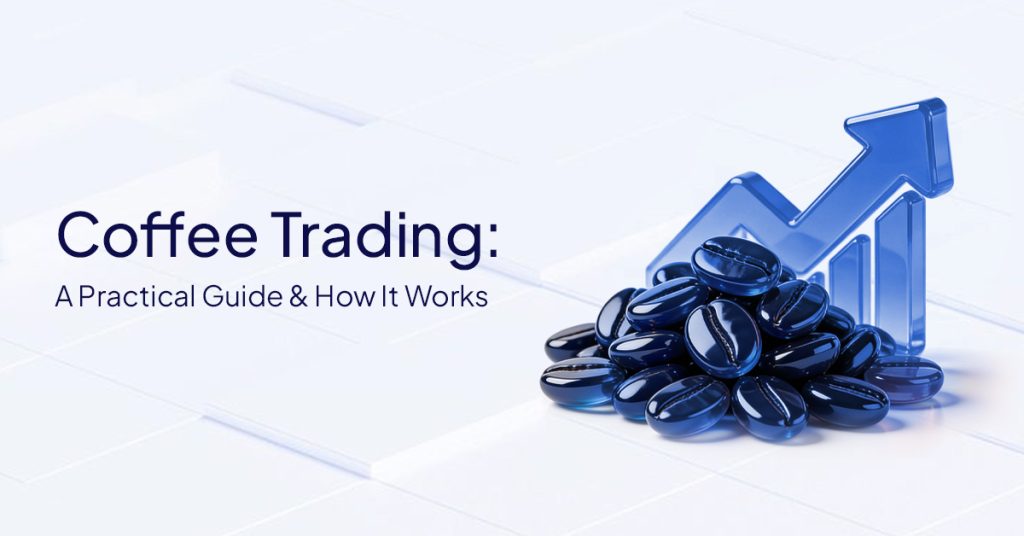
Coffee is a daily drink for people around the world, yet it is a billion-dollar business that keeps economies going. Coffee trading is a large market that includes agriculture, logistics, and finance. It unites coffee growers in Brazil, traders in London, and investors in New York.
Understanding the coffee process from harvest to contract will enable traders, business owners, and coffee lovers to understand how this high-speed industry operates.
Coffee trading refers to the buying and selling of coffee as both a tangible product and a financial instrument. The rates increase and decrease not only on a global basis, driven by supply and demand, but also by weather, shipping routes, currency fluctuations, and consumer trends.
Everything you should know about coffee trading, global supply chains, financial instruments, and the process of trading can be comprehended in clear and easy-to-understand terms using this guide. Follow along!
Quick Answer
This guide covers the most significant regulations and things you should know about how to trade coffee, from the field to the futures floor:
- Coffee trading connects the physical supply chain (from farm to roaster) with the financial markets (futures, options, and CFDs).
- Prices are affected by weather, yield reports, freight logistics, currency exchange rates (USD/BRL), and demand for roasters.
- London and New York are the key trading centers, and their liquidity periods align with time zones around the world.
- You can use futures and options to hedge or speculate, and you can trade CFDs for a short time.
- You need to understand how the economy works, including how weather affects coffee prices, how foreign exchange rates change, and what the government does.
- The process of trading coffee requires obtaining a license, sourcing suppliers, preparing contracts, and ensuring compliance.
- Jobs in the coffee industry come in many forms, including commercial, analytical, and logistics.
These lessons enable anyone who wants to participate in the coffee market, whether as a business owner or a financial trader, to build a strong foundation.
What Is the Global Coffee Trade?
The global coffee trade links the transportation of beans from farms to roasters with price movements in financial markets.
Most coffee beans come from farms in Brazil, Vietnam, Colombia, and Ethiopia. Next, the beans are processed, ground, and sorted by quality.
Once beans are assessed, they are sent to exporters and importers before being sent to roasters or distributors. These trades keep the global market going.
More than 138.6 million 60-kg bags of coffee were shipped worldwide during the 2024/25 coffee year. This gives you a sense of how enormous the scale is. Many genuine items directly affect the price benchmarks traded on marketplaces such as ICE (Intercontinental Exchange) and NYSE Euronext.
Futures prices don’t just sit there; they directly affect real contracts. When big companies face droughts or shortages of goods, the prices of futures and exports rise. On the other hand, prices go down when logistics are good and crops are plentiful.
By connecting real-world supply with market-based prices, the global coffee trade ensures that more than 70 countries that grow coffee are efficient, open, and manage risk consistently.
International Coffee Trading Basics
International coffee trading governs the regulations for shipping, pricing, and contracts for coffee shipped to other countries.
Most international trades are built around Incoterms, global standards that define who handles shipping, insurance, and customs at each step. The quality of the coffee is determined by its grade, variety (Arabica or Robusta), and number of flaws. Each feature might influence the price per pound or per container.
Typical documents include:
- Terms of sale, such as price, quantity, delivery, and payment
- Business invoice and packing list
- Bill of Lading (B/L) for shipping by boat
- Proof of where it came from
- Insurance certificate
For example, an exporter in Colombia might deliver 250 bags of washed Arabica (60 kg each) under the FOB Cartagena Incoterm. The customer would ensure this, and the money would be sent through a confirmed letter of credit. This structure will ensure that the two parties trust one another, that logistics are accurate, and that they are responsible for their actions.
Financing entails letters of credit; therefore, the buyer and the seller are confident they can repay each other. In conclusion, global coffee trading relies on physical logistics, financial accuracy, and legal safeguards to ensure the business flows efficiently through a complex global supply chain.
Financial Market Access (Overview)
People who buy and sell coffee can use derivatives such as options, futures, or CFDs to speculate or protect their investments.
- Futures: Futures are contracts traded on an exchange that guarantee the delivery of a certain amount of coffee at a later date. Traders use them to take risks, and roasters use them to protect themselves from price swings.
- Options: Options are contracts that let you buy or sell futures at a set price, but you don’t have to. It helps you keep track of price changes.
- CFDs: CFDs are tools that brokers use to track coffee prices without physical delivery. They are perfect for people who trade for a short time.
They all include margin and leverage, which increase risk and potential gain. The market is most liquid when the London and New York sessions overlap.
Brokers like STARTRADER let active traders who want to trade based on price action without actually receiving the coffee do so with coffee CFDs (Contracts for Difference). People enjoy this product because it has low spreads and multiple ways to use leverage. It works best to take advantage of short-term volatility, such as when the London and New York sessions overlap.
Remember to verify the rules in your country before trading derivatives carefully.
Trading Hours & Volatility Windows
Coffee futures trading hours indicate when the market is most liquid and prices are most volatile.
The Arabica Coffee Futures (ICE U.S.) market begins at 3:15 a.m. and closes at 1:30 p.m. Eastern Time, and the Robusta Coffee Futures (ICE Europe) market begins at 3:00 a.m.. It closes at 12:30 p.m. E.T. The cross-link between London and New York is the period most commonly active in both contracts.
Typical volatility windows:
- European open (78 a.m. GMT): The first reaction to overnight information and weather forecasts.
- U.S. open (8–9 a.m. ET): Surge in speculative flows and macro-driven movement.
- Pre-close: Position trimming and rollover adjustments.
Watch out for contract expirations, roll dates, and holiday schedules, as they may influence how spreads and volume behave.
Tip: Convert to your local time zone before trading.
Reading a Coffee Trading Chart
A coffee trading chart shows traders how prices change, how unstable they are, and how the market is set up, which helps them make judgments.
Follow these five key steps:
- Determine the month of contract: e.g., KCZ5 = Arabica Coffee, December 2025.
- Mark past highs/lows: These are the most significant points of resistance and support.
- Determine the trend pattern: Varying higher highs (bullish) or lower lows (bearish)?
- Calculate volatility: The Average True Range measures day-to-day movement and helps determine stop distances.
- Set invalidation levels: Know when your trade idea is invalidated before capital investment.
Technical patterns on a coffee trade chart are helpful for short- and medium-term analysis because they often align with seasonal reports, crop predictions, and macro data.
Options at a Glance
Coffee options trading allows you a lot of ways to shield yourself from risk or trade volatility with known risk.
A call option gives the holder the right to buy coffee futures at a specified price, while a put option gives the holder the right to sell coffee futures at a specified price. Before harvest statistics are released, roasters and importers usually use them to set pricing.
Pros and Cons of Coffee Options
| Advantages | Limitations |
| Set a maximum loss ahead of time (only for premiums) | When markets are unstable, premiums rise |
| Strategic flexibility to speculate or hedge | As an option approaches its expiration date, its value declines |
| Lower capital commitment vs. futures | Requires understanding of implied volatility |
Futures and coffee options trading go well together because they let traders choose how much risk they want to take on.
Economics That Move Price
Currency fluctuations, supply-and-demand imbalances, and global logistics influence coffee trading economics.
Core market drivers include:
- Weather conditions: frost, drought, or heavy rain in Brazil or Vietnam.
- Crop cycles: Biannual changes in the yield of Arabica.
- Stock levels: E.g., certified warehouse stocks of Arabica at Intercontinental Exchange (ICE) are falling rapidly and are currently at a perilous low of about 406,129 bags as of November 2025. This is the lowest total in 21 months, and it’s a significant decline from the 716,578 bags reported in August.
- Freight and logistics costs: Affect margins for exports and arbitrage
- Currency movements: Especially the U.S. dollar and Brazilian real, as a stronger Real discourages sales.
- Consumer demand: The profitability of the roasters and their frequency of use.
- Government and trade policy: U.S. taxes on Brazilian coffee and the depletion of stock will serve as examples of export incentives or restrictions.
Traders often use data from crop forecasts, customs reports, and the economic calendar.
Starting a Coffee Trading Business (High-Level)
To run a coffee trading business, you need a sound financial structure, supply chain management capability, and familiarity with the rules.
If you are a small or medium-sized business that is interested in entering the market, you need to plan:
- Licensing and registration: Obtaining the necessary licenses and registration to be able to bring in and out of the country.
- Supplier check: Test the quality, qualifications, and ability of the producers.
- Contracts and payment terms: Utilize definite Incoterms and make payments promptly.
- Capital allocation: Prepare funds for shipping and other costs before shipping.
- Risk management: Hedge yourself against market and foreign-exchange risk.
- AML/KYC compliance: Address anti–money laundering requirements and transparency.
The competitive coffee trading business is a field where it is essential to establish long-term relationships with suppliers and enforce strict quality controls to turn a profit.
Careers & Roles
There are many coffee trading jobs at global commodity companies, including commercial, analytical, and operational roles.
Some of the most important jobs are:
- Trader: Plans purchases and sales, monitors prices, and manages positions.
- Merchandiser: Responsible for customer service and logistics.
- Risk Analyst: Checks how well hedging works and how much risk it puts you in.
- Logistics Specialist: Handles the paperwork, books the freight, and runs the warehouse.
A good professional knows how to handle money, understands the dynamics of agriculture, can talk to people, and is up to date on what’s going on in the world.
Finding Partners
Choosing the right coffee trading company makes sure that everything goes smoothly, that there is always a supply, and that contracts are followed.
Look for suitable partners based on:
- Experience and reputation: Success over multiple cycles has been proven.
- Certifications: Look for standards for traceability and long-term use.
- Quality control: Sample testing and cupping accuracy.
- Infrastructure: The ability to keep things and move them by truck or ship.
- Terms of the contract: Clear pricing, payment terms, and mechanisms for resolving disputes.
A good coffee trading company builds long-term connections while protecting both earnings and compliance.
Frequently Asked Questions
A: It includes both the physical buying/selling of beans and financial trading of derivative contracts. Getting items to their destination and logistics are what physical trade is all about, while price exposure and hedging are what financial trading is all about.
A: From 3:15 a.m. to 1:30 p.m., ICE US Arabica starts trading. London Robusta trades begin at 3:00 AM ET and run until 12:30 p.m. ET, with the most activity during the overlap hours.
A: To reduce risk, you should identify the contract, key highs and lows, trend, and volatility. Then, you should set a point where the contract is no longer valid.
A: Yes, but with proper licensing, supplier networks, and capital management. Partnerships with exporters or brokers reduce barriers to entry.
Final Thoughts
Coffee trading has been at the intersection of international trade, farming, and finance—it requires both accuracy and vision.
A complicated system of weather patterns, shipping routes, and employment supports the futures tick or contract. This economic sector demands more than technical skills. Then you need to be informed about the inner workings and external factors of global trade, and understand that agricultural products may vary significantly.
When attempting to hedge your business, study market data and understand the profession; you should know how to trade coffee by considering the risks and realities. Make ground-level research decisions, take responsibility, and remember that the industry is made up of people, whether the smallholder farmers growing the beans or the institutions that sell the beans day by day.
Coffee is originally a crop; however, when traded, it becomes a language of worth, power, and transformation everywhere on the planet.
Note that this information is not financial or investment advice; it is provided for educational purposes. Trading coffee is risky, and consult an expert before making any trading or investing decisions.
Tags


Open Live Account
 Email Address
 Phone Number
Important Notice
STARTRADER does not accept any applications from Australian residents.
To comply with regulatory requirements, clicking the button will redirect you to the STARTRADER website operated by STARTRADER PRIME GLOBAL PTY LTD (ABN 65 156 005 668), an authorized Australian Financial Services Licence holder (AFSL no. 421210) regulated by the Australian Securities and Investments Commission.
Important Notice for Residents of the United Arab Emirates
In alignment with local regulatory requirements, individuals residing in the United Arab Emirates are requested to proceed via our dedicated regional platform at startrader.ae, which is operated by STARTRADER Global Financial Consultation & Financial Analysis L.L.C.. This entity is licensed by the UAE Capital Market Authority (CMA) under License No. 20200000241, and is authorised to introduce financial services and promote financial products in the UAE.
Please click the "Continue" button below to be redirected.


