








 Web Trader MT5









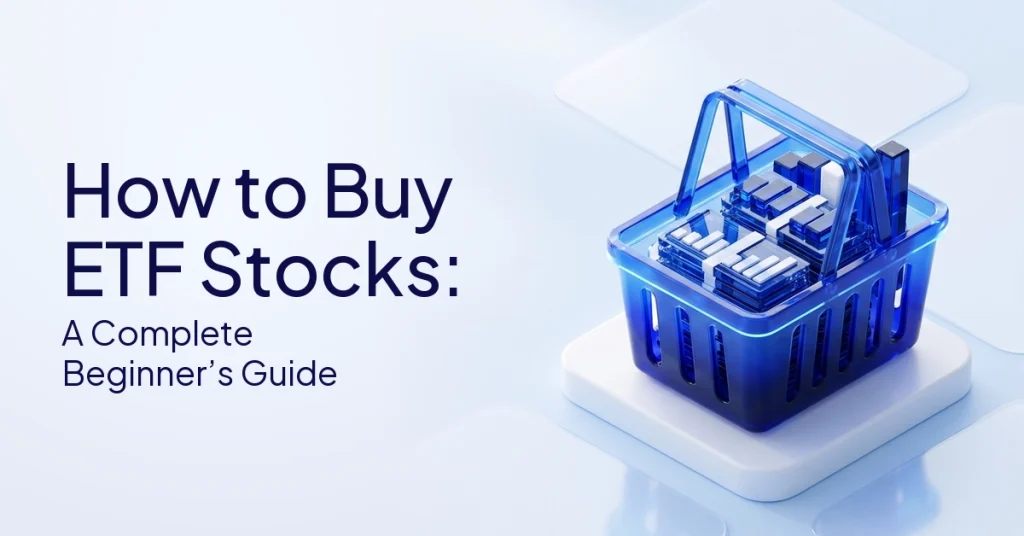
You can buy ETF stocks by opening a regulated trading account, looking for the fund you want, and placing a buy order.
Have you ever thought about how top investors can quickly diversify their portfolios without having to buy hundreds of different stocks? Exchange-Traded Funds (ETFs) are a simple way for market traders to build balanced portfolios.
Many new investors choose these assets over individual stocks because they are easy to get, cheap, and can be traded in a variety of ways. One of the best ways to learn how to invest is to learn how to buy ETF stocks.
Quick Answer
An ETF (Exchange-Traded Fund) is a group of stocks that trades on an exchange like a single stock.
To buy ETF stocks, open a regulated trading account, look up the ETF by name or ticker symbol, and place a buy order. With ETFs, you can get a wide range of exposure to a market, index, or sector in just one trade.
What Is An ETF And How Does It Work?
An ETF is a type of pooled investment that holds a group of assets and trades on a stock exchange like a single company stock.
These funds follow the performance of certain sectors, indices, or commodities.
When you learn how to buy ETF assets, you are buying shares in a portfolio that a bank or other financial institution manages. With just one purchase, this structure gives you instant diversification.
To know how to invest in ETFs, you need to know how they are different from other types of assets.
| Feature | ETF | Individual Stock | Mutual Fund |
| What you own | Basket of assets | Single company | Managed portfolio |
| Trades on exchange | Yes | Yes | No (end-of-day only) |
| Built-in diversification | Yes | No | Yes |
| Intraday pricing | Yes | Yes | No |
| Typical cost | Low | Varies | Higher fees |
How To Buy ETF Stocks: Step By Step
It’s easy to buy ETF stocks, since you just need to open an account, put money in it, choose the right ETF, and place your order with a few simple checks along the way.
Buying an ETF is like buying any other security that is listed. The most important difference is picking the right fund and looking over its details before making a trade.
Open a regulated trading account
Pick a platform that is approved by a well-known financial regulator. To finish the KYC process, you need to send in proof of your identity and address. This step is required by law and keeps your account safe.
Deposit funds into your account
Use the methods your platform gives you to deposit money into your account. These usually include bank transfer, card, or digital wallet. If the currency of your account is different from the currency of the ETF, check to see if currency conversion applies.
Search for the ETF by name, index, or ticker
Find the ETF by using the search bar on the platform. You can look up the fund by its name, ticker symbol, or the index it follows (like the “S&P 500”). Before you go any further, make sure you have the right ETF.
Review the ETF’s key details before buying
Look at the fund’s biggest holdings, expense ratio, assets under management (AUM), and how well it has tracked in the past. These numbers show you what you’re really getting and how well the fund works.
Choose your order type
Choose between a limit order vs a market order. A market order is executed immediately at the current price. A limit order only goes through if the ETF hits a price you set. Market orders are easier for beginners; limit orders let you choose the price at which you buy.
Enter the number of units and confirm
Determine how many ETF shares you want to buy. Some platforms let you buy fractional shares, which means you can invest a set amount of money instead of buying whole units.
Monitor your position and reinvest if applicable
You can see how well your portfolio is doing on your platform’s dashboard. If the ETF pays dividends, you can choose to reinvest them or get them as cash, depending on what the fund offers.
What Types Of ETFs Can You Buy?
You can buy different types of ETFs that track broad market indices, certain industry sectors, companies that pay dividends, or raw commodities.
Before you buy shares in a dividend ETF or a sector-specific fund, take a look at the main types that are available.
| ETF Type | What It Tracks | Key Consideration |
| Index ETF (e.g. S&P 500) | Broad market index | Core portfolio building block |
| Sector ETF | Specific industry (tech, energy, etc.) | Concentrated sector exposure |
| Dividend ETF | Dividend-paying stocks | Income-focused investors |
| Nasdaq ETF | Nasdaq 100 companies | Technology-heavy exposure |
| Leveraged ETF | Amplified index returns | Higher risk, not for long-term holding |
| Bond ETF | Fixed income instruments | Lower risk, income-focused |
| Commodity ETF | Gold, oil, etc. | Inflation hedge, diversification |
How To Buy S&P 500 ETFs
To buy S&P 500 ETFs, look for funds on your trading platform that closely mirror the performance of the 500 largest publicly traded US companies.
There are many ETFs that track the same index. The main differences between them are the expense ratio, how closely they track the index (tracking error), and how easy it is to sell the fund (daily trading volume). S&P Global says that the S&P 500 has been the standard benchmark for most active fund managers for a long time.
When looking at two S&P 500 ETFs, a lower expense ratio and higher AUM are usually good signs. A higher AUM means that the fund can track its index better and is less likely to run into liquidity problems when it buys or sells.
If you’re just starting to learn how to invest in the S&P 500, broad index ETFs with low fees are the easiest way to go. Platforms like STARTRADER give you access to major index-tracking instruments, which makes it easier to learn how to buy shares of ETFs that track the S&P 500.
How To Buy Nasdaq ETFs
You can buy Nasdaq ETFs by looking for funds that are meant to follow the Nasdaq 100 index, which is full of technology companies.
The Nasdaq 100 index tracks the 100 biggest non-financial companies on the Nasdaq exchange. Most of these companies are in the tech sector.
If you want to buy a Nasdaq ETF, look for ETFs that mention the Nasdaq 100 on your platform. Because the index is heavy on tech companies, like those that make software, semiconductors, and internet services, Nasdaq ETFs have a higher sector concentration than a broad market index.
This could mean better performance during tech bull markets, but it could also mean bigger losses when the sector corrects. Before you buy, look at the fund’s top holdings to see how concentrated they are.
How To Buy Leveraged ETFs
Leveraged ETFs use financial derivatives to increase the daily returns of an underlying index, usually by two or three times.
A 2× leveraged ETF wants to give you 2% back on a day when the index goes up 1%. But this amplification works both ways, and over the course of several days, it can cause the actual multiple to be very different from what was expected, especially in markets that are very volatile.
Leveraged ETFs are meant to be used for short-term strategies. They aren’t good for all investors, and the chance of losing money is much higher than with regular index ETFs. The data show clearly how much it will cost to ignore this difference:
According to Crystal Funds study, a sample of 2x leveraged ETFs had an average annualized return of -11.1%, while the underlying indexes had a positive return of +15.7% over the same time period. The difference was due to the compounding effect of daily rebalancing in volatile markets. The data make the cost of ignoring this distinction very concrete:
How To Buy ETF Options
ETF options are derivative contracts that give you the right to buy or sell an underlying ETF at a certain price. You can get them through approved margin accounts.
Options are different from the ETF itself and add more complexity, such as premium pricing, time decay, and the need to know about strike prices and how options expire.
Most platforms won’t let you trade options until you’ve done more verification or signed a risk understanding agreement. This is because you need to enable options trading in your account. Options are not a good choice for beginners because they are very risky, and you could lose a lot of money.
How To Choose The Right ETF
To choose the right ETF, you need to make sure that the fund’s underlying index matches your financial goals and that the costs and liquidity are right.
Always look at the expense ratio, because lower ongoing costs add up over time.
Check the assets under management (AUM) because higher AUM usually means better liquidity and smaller spreads. Make sure you know how the fund pays out dividends. Does it automatically reinvest (accumulate) or pay out cash (distribute)?
Checklist for Choosing an ETF:
- I know what index or sector this ETF follows.
- I have looked at the expense ratio.
- I know if the ETF is growing or shrinking.
- I have looked over the ETF’s biggest holdings.
- I know how liquid (how much trading volume) this ETF is.
- I have confirmed that it is available on my trading platform.
How To Invest In ETFs For Beginners
Beginners should start by putting money into broad market index ETFs to build a low-cost, diverse base before looking into niche sectors.
New investors should definitely look into ETFs because they don’t have to choose individual winning companies.
But it’s important to remember that ETF prices can still change, and all of your investment money is at risk. Having a long-term mindset keeps you from getting upset when the market goes down in the short term.
How To Buy ETFs Daily Vs Long-Term Holding
You can buy and sell ETFs at any time that the market is open, just like you can with individual stocks.
However, this flexibility comes with its own risks if you trade them often.
When you trade ETFs for a short time, you face the same timing risks as when you trade individual stocks. These include spreads, market impact, and the mental challenge of reacting to daily price changes. Most retail investors use ETFs as long-term, diversified investments instead of trading them every day.
Frequent buying and selling usually cancel out the benefits of staying invested, like reinvested dividends and long-term index growth. One of the most important things a new investor can do is learn the difference between an intraday trading mindset and a long-term investment approach.
FAQs
An ETF (Exchange-Traded Fund) is a fund that holds a mix of stocks, bonds, commodities, or other assets and trades on a stock exchange like a single share. When you buy one unit of an ETF, you get access to all of the assets that the fund owns.
To buy an ETF, you need to open a regulated trading account, verify your identity, deposit money, search for the ETF by name or ticker, review the fund’s details, choose your order type, enter the number of units, and confirm the purchase.
A stock is a share in a company, while an ETF is a fund that holds a group of assets. ETFs are already diversified and often follow an index or sector. Stocks, on the other hand, depend on how well one company does and are riskier because of this.
Look for funds that track the S&P 500 on your trading platform if you want to buy an S&P 500 ETF. Look at the expense ratio, tracking accuracy, and assets under management of each option, and then place a buy order like you would for any other listed security.
Conclusion
Buying ETFs is a simple way to diversify your investments. They combine the trading flexibility of individual stocks with the wide range of mutual funds. When you know how to buy ETF stocks, you can invest in global markets without having to look at hundreds of individual companies.
You set yourself up for a good financial future by following the steps to open an account, check the fund’s expense ratios, and place an order with all the information you need.
Keep in mind that broad market funds should come first, that you should always think long-term, and that you should always be aware of the risks that come with investing in the market. If you’re ready to look into the markets, you might want to open a live account at STARTRADER to see what assets are available.
Risk Warning: CFDs are complex instruments and come with a high risk of losing money rapidly due to leverage. Please ensure you understand the risks involved before trading.
Tags


Open Live Account
 Email Address
 Phone Number
Important Notice
STARTRADER does not accept any applications from Australian residents.
To comply with regulatory requirements, clicking the button will redirect you to the STARTRADER website operated by STARTRADER PRIME GLOBAL PTY LTD (ABN 65 156 005 668), an authorized Australian Financial Services Licence holder (AFSL no. 421210) regulated by the Australian Securities and Investments Commission.
Important Notice for Residents of the United Arab Emirates
In alignment with local regulatory requirements, individuals residing in the United Arab Emirates are requested to proceed via our dedicated regional platform at startrader.ae, which is operated by STARTRADER Global Financial Consultation & Financial Analysis L.L.C.. This entity is licensed by the UAE Capital Market Authority (CMA) under License No. 20200000241, and is authorised to introduce financial services and promote financial products in the UAE.
Please click the "Continue" button below to be redirected.


