








 Web Trader MT5








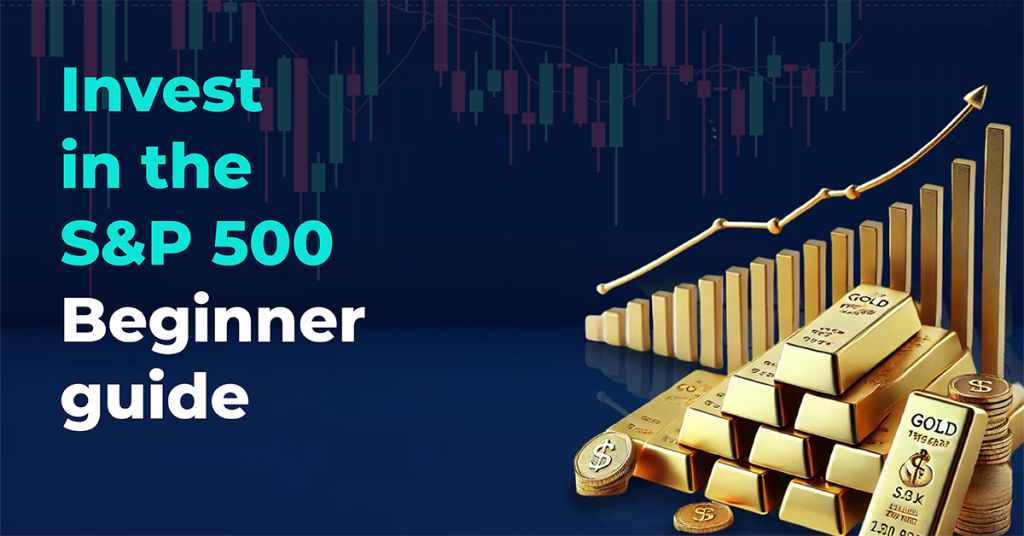
The S&P 500 is one of the most convenient ways to invest in the US stock market. The question of how to invest in the S&P 500 as a beginner is not as difficult as many believe: you do not have to select stocks or have perfect market timing.
If you’re a beginner, this guide will help you get started with an S&P 500 index fund or an ETF. Either way, you will know the steps, the accounts required, and the initial amount.
The S&P 500 comprises the 500 largest US companies, providing comprehensive coverage of the US economy. It has had a long history of delivering good long-term returns and has been used as a stable core in most portfolios.
By the end of this article, you will have a clear understanding of how much money to invest in the S&P 500 as a beginner, how to open your account, and how to invest long-term.
Quick Answer
- The first step for beginners to invest in the S&P 500 index is to open an investment account. This may be a tax-favored investment, such as a 401(k) or IRA in the United States, or an ISA or SIPP in the United Kingdom, or a regular brokerage account.
- Then, select a vehicle; choose either the S&P 500 index fund or the S&P 500 ETF, which is the simplest method for a beginner to invest in the S&P 500.
- Compare costs and features by researching the expense ratio, minimum investment requirements, dividend reinvestment options, and any platform fees. Automatic investments, also known as a Systematic Investment Plan (SIP), should be established.
- Lastly, make an order and keep it for the long term: invest regularly, adhere to your schedule, and allow compounding to occur over time.
Why the S&P 500?
The S&P 500 offers broad coverage of the 500 largest companies in the US. Hence, it provides a straightforward method for gaining a foothold in the market. It serves as a long-term holding due to its large-cap and diversified core.
According to Investopedia, the S&P 500 has provided investors with an average annual return of approximately 10% over the past 50 years, as of September 2025.
For anyone studying how to invest in the S&P 500, an S&P 500 index fund is a low-maintenance investment that allows you to experience growth in US equities.
Step-by-Step — United States
Pick the Right Account
Always start with a tax-favored account. This can be a 401(k) with your employer, or a Traditional or Roth IRA, if you’re in the US. These accounts are tax-benefit accounts that enable your money to grow tax-free over time.
If tax-favored accounts are not available, a taxable brokerage account is also a viable option. You can open one of them with a major brokerage, such as Vanguard, Fidelity, or Schwab. The trick is to have a platform that is trustworthy, user-friendly, and offers the S&P 500 index funds or ETFs.
Choose Fund vs ETF
Decide whether to invest in an index fund or an ETF.
- Index Funds: Determine a fixed amount of dollars and make periodic investments. They do not trade through the day, hence you have end-of-day pricing. It is also suitable for beginners who like a set-and-forget method with automatic investment options.
- ETFs are traded like stocks and can therefore be bought and sold on the same day. Monitor the bid-ask spread and consider using limit orders to minimize unnecessary trading costs. Exchange-traded funds can be flexible, but require more attention.
Compare Costs & Features
When choosing between options, look at:
- Expense Ratio: Annual fund charges. Lower ratios retain a higher amount of money working for you.
- Tracking Difference: How closely the fund follows the S&P 500.
- Minimum Investment: Some index funds require a minimum contribution, while ETFs typically require just one share, plus fees.
- Auto-Invest and Dividend Reinvest: Auto-invest and Dividend reinvest increase over time.
Mini Case Study: Vanguard VFIAX (an index fund) has an expense ratio of 0.04%, whereas VOO (an ETF) has a similar ratio and functions similarly to a stock. They are both popular among beginners.
Place an Order
Once you’ve chosen your vehicle:
- Index Fund: Enter your dollar amount and select frequency (monthly or quarterly). Automatic investments are permitted in most brokerages, which helps with dollar-cost averaging.
- ETF: Type in the ticker (such as VOO or SPY), amount, and set a limit price. Check fees and submit.
Holding for the long term is essential. Do not respond to short-run market fluctuations. Platforms, such as STARTRADER, will ease the order-making process and provide transparent fee structures.
Step-by-Step — India
You can invest in the S&P 500 in India through Feeder Funds and ETFs, but it’s essential to understand the regulations, prices, and available investment opportunities.
You can either invest in an international mutual fund or feeder fund, or you can invest directly through US ETFs with the help of foreign brokers. Let’s break them down.
Route 1 – International Mutual Funds / Feeder Funds
For most Indian investors, this is the easiest way to gain access to the S&P 500. You do KYC and invest in these mutual funds in INR using Indian channels.
Before investing, consider the Total Expense Ratio (TER), tracking error, and fees of the fund-of-funds (FoF) to ensure a comprehensive understanding. Some people invest directly in US ETFs, while others hold a portfolio of equities that mimic the S&P 500.
Easy taxes, assistance for local accounts, and the convenience of the INR are among the benefits. The downsides could be higher costs, though by a smaller amount, and longer wait times for payouts.
Many Indian platforms also offer SIP (Systematic Investment Plan) arrangements, which allow you to invest small sums of money over time. This is an excellent way for beginners to discover how much to invest in the S&P 500.
Route 2 – US ETFs via International Broker
If you want to invest directly in the real US-listed S&P 500 ETFs, you need a broker that allows international trading. There are extra steps to take if you choose this route:
- Following the limits set by the Liberalised Remittance Scheme (LRS).
- Changing INR to USD in foreign exchange.
- Filling out the W-8BEN form for withholding dividends.
In this situation, consider the impact of brokerage fees, currency spreads, and custody fees, as these can accumulate over time. You can invest in ETFs like VOO, SPY, or IVV once you set them up, and you can often set up auto-invest to make regular payments.
Taxes (High-Level)
In India, overseas stock investments are taxed as long-term capital gains (LTCG) or short-term capital gains (STCG). There is also a tax on remittances and a withholding tax on US profits.
The rates depend on how long you retain the asset and the slab you choose. Therefore, it would be advisable to consult a tax expert.
You can avoid surprises when your returns are credited by learning these principles, even if you don’t give personal tax advice.
Lesson: Indian investors can easily get exposure to the S&P 500 through mutual funds or by buying US ETFs directly. But you should always think about fees, taxes, and FX effects.
Good advice is to use a trustworthy platform like STARTRADER. This will make it easier to access both US ETFs and international mutual funds, and it will also provide you with tools to track fees, dividends, and performance.
Step-by-Step — United Kingdom
Pick an Account
UK investors can open tax-advantaged accounts, such as a Stocks and Shares ISA or a Self-Invested Personal Pension (SIPP). The money in these accounts may grow tax-free, and your investment may grow even faster.
A General Investment Account (GIA) is another choice if you can’t get a tax-favoured account. Choosing a reliable broker is very important. You should be able to access an S&P 500 fund or ETF through them.
Choose UCITS S&P 500 Fund / ETF
In the UK, it’s normal for funds and ETFs to follow UCITS rules. When choosing one, think about:
- Accumulating vs Distributing Shares: Accumulating automatically reinvests the dividends, while distributing pays out the dividends.
- GBP-Hedged vs Unhedged: Hedged funds safeguard against changes in the value of USD and GBP, although they may charge higher fees.
The iShares Core S&P 500 UCITS ETF and the Vanguard S&P 500 UCITS ETF are two large UCITS ETFs that track the S&P 500. They both have classes of shares that accumulate and distribute.
Place an Order
Once you’ve picked your fund and account:
- Enter the amount you want to invest and select a timetable for when you would like to reinvest.
- When trading ETFs, it’s essential to consider the bid-ask spread and utilise limit orders to avoid paying too much.
Mini Tip: Start with a monthly contribution that you can afford, such as £100 to £200, and then increase it as your resources allow.
Fund vs ETF : What’s the Difference?
| Feature | Index Fund | ETF |
| Trading | End-of-day pricing only | Trades intraday like a stock |
| Minimum Investment | Often a set dollar amount (e.g., $1000) | Usually 1 share + fees |
| Expense Ratio | Typically low, may vary slightly by fund | Low, often slightly lower than index funds |
| Automatic Investments | Easy to set up recurring contributions | Some brokers allow DRIPs; otherwise manual |
| Dividend Reinvestment | Automatic in most funds | Reinvest via DRIP if the broker supports |
| Flexibility | Less flexible, long-term “set and forget” | High flexibility, can buy/sell anytime |
Key Takeaways for Beginners:
- Index Funds: Ideal for hands-off investing and a long-term approach. You set a dollar amount, invest regularly, and let compounding work its magic.
- ETFs: Provide flexibility in trading, but must consider spreads and time.
How Much to Invest in the S&P 500? (Framework)
The amount you should invest depends on how long you plan to keep the money, the level of risk you’re willing to take, and your financial goals.
Risk Tolerance and Time Frame
- Long-term investors (those who plan to hold their investments for 10 years or more) can allocate a significant portion of their savings to the S&P 500.
- Investors who only want to own stocks for a short time should restrict their exposure to them.
You could also adopt a core-satellite strategy to make the S&P 500 the core of your portfolio and put 60-70% of it in the S&P 500. Then, allocate 30% to 40% of your portfolio to satellite holdings, such as bonds or funds that focus on a specific industry.
Some investors even follow an age-based glide path, which means that as they approach retirement, they gradually reduce the amount of money allocated to stocks.
Dollar-Cost Averaging (DCA) vs Lump Sum
- DCA: Invest a set amount of money regularly. Reduces the chance of investing during a market top.
- Lump Sum: You might get the benefits of long-term growth, but there is a danger of timing.
- For example, $200 to $500 a month, with adjustments for income growth.
Start Sustainable & Increase Gradually
- Start with a monthly amount that feels good. Grow as your financial situation improves.
- Mini Tip: Some investment platforms can automate investments, making investing easy and disciplined.
Fees, Spreads, and Tracking (What Really Matters)
Understanding fees and tracking is essential for long-term returns.
Expense Ratio Compounding
- Lower expense ratios allow more money to be invested.
- Even minor differences have a significant impact over the course of decades.
ETF Spreads
- Use limit orders to prevent overpaying on illiquid ETFs.
- Popular ETFs such as VOO and SPY are tightly spread.
Tracking Difference vs Index
- More minor tracking differences mean the fund closely mirrors the S&P 500.
- There may be some effects on returns due to securities lending policies.
Reinvesting & Staying the Course
Automatic reinvestment increases wealth with time.
- Index Funds: Dividends are usually automatically reinvested.
- ETFs: Consider a DRIP if your broker offers it.
- Behavioral Rules: Do not chase returns, rebalance annually, and remain disciplined.
Safety, Risks & Common Mistakes
Even beginners face risks when investing.
Key Risks
- Market risk, currency risk for non-US investors, and risk associated with the platform or provider.
Common Mistakes
- Purchasing high-fee “S&P-like” products.
- Not taking auto-invest or DRIPs.
- Using market orders on illiquid ETFs.
- Disregard of account-level taxes and fees.
Mini Tip: Invest in low-cost, open funds and concentrate on long-term growth.
Quick Guides for Brand Intents
Fidelity S&P 500 for Beginners
- Compare expense ratio, minimum investment, reinvestment of dividends, and auto-invest.
- The process mirrors the overall investing rules: select a vehicle, compare prices, automate the investment, and hold it for the long term.
Vanguard S&P 500 for Beginners
- Choose a fund or ETF, accumulating shares, or distributing shares.
- Vanguard has low fees, which is beneficial for long-term compounding.
Frequently Asked Questions
A: Index funds are simpler to invest in automatically every month, and hence beginner-friendly. ETFs are flexible and intraday tradeable, but may need more active management.
A: You can start with however much you feel comfortable, like $ 100. Consistency and discipline are much more important than the amount of your first contribution.
A: Yes, many countries offer feeder funds, UCITS ETFs, or international mutual funds that track the S&P 500. These provide indirect access without requiring a US-based account.
A: The best time to start is as soon as possible. It is the ability to remain invested, rather than relying on fine market timing, that creates long-term returns.
A: No, you don’t have to select each stock separately. When you purchase an index fund or an ETF, you have immediate exposure to the 500 companies.
A: It depends on the fund. ETFs typically have a minimum price of at least one share, whereas index funds often impose their own minimum investment requirements.
A: The dividends are automatically reinvested in most index funds. Under ETFs, you might have to arrange a Dividend Reinvestment Plan (DRIP) with your broker.
Final Thoughts
Investing in the S&P 500 is a straightforward and efficient way for beginners to build long-term wealth. The key is to begin small and build up, by picking the appropriate account, choosing an index fund or an ETF, comparing prices, and automating investments.
Be disciplined: reinvest dividends, avoid following short-term market cycles, and conduct an annual review of your portfolio. Regardless of whether you are in the U.S., India, or the UK, these steps will guarantee that you invest wisely without taking too much risk.
It is time to begin, be consistent, and allow compounding to do its magic. Small investments made today can yield a substantial return in your future finances if they are made correctly. Please note that this article is only for educational purpose, and not financial advice.
Tags


Open Live Account
 Email Address
 Phone Number
Important Notice
STARTRADER does not accept any applications from Australian residents.
To comply with regulatory requirements, clicking the button will redirect you to the STARTRADER website operated by STARTRADER PRIME GLOBAL PTY LTD (ABN 65 156 005 668), an authorized Australian Financial Services Licence holder (AFSL no. 421210) regulated by the Australian Securities and Investments Commission.
Important Notice for Residents of the United Arab Emirates
In alignment with local regulatory requirements, individuals residing in the United Arab Emirates are requested to proceed via our dedicated regional platform at startrader.ae, which is operated by STARTRADER Global Financial Consultation & Financial Analysis L.L.C.. This entity is licensed by the UAE Capital Market Authority (CMA) under License No. 20200000241, and is authorised to introduce financial services and promote financial products in the UAE.
Please click the "Continue" button below to be redirected.


