








 Web Trader MT5







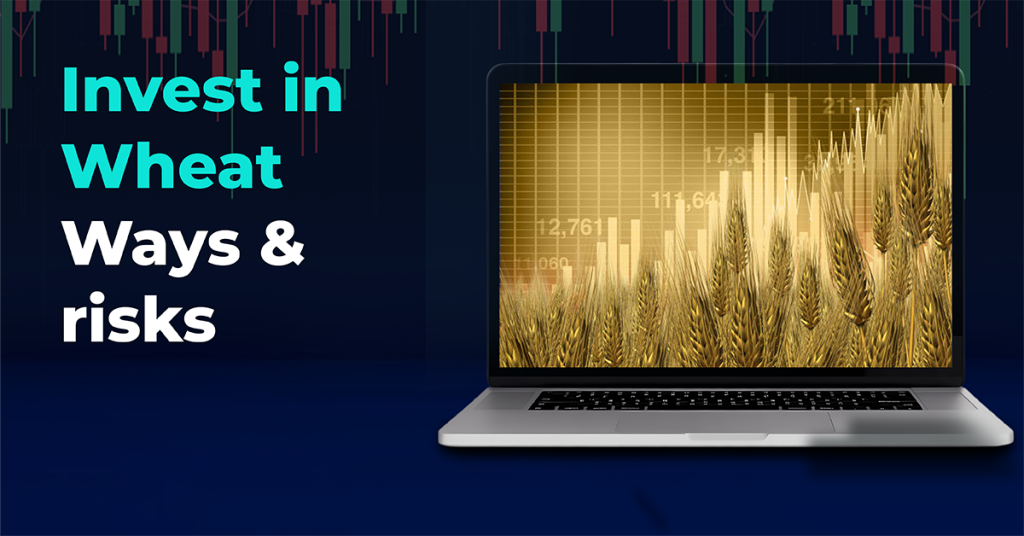
The global food demand for wheat is a good component of a diversified portfolio, but it also carries significant volatility due to weather, geography, and currency fluctuations.
Your morning bread has links to events around the world that you might not expect.
A drought in Kansas has an effect on your breakfast. A political move in Moscow also does. Wheat is what makes these connections possible because it feeds people.
You don’t eat this grain. It changes based on the weather, the economy, and world politics. That is what makes investing in it interesting.
You have choices here. You can get stocks in the company. You can also buy and sell futures contracts. Each method works in its own way.
This article will teach you how to invest in wheat stocks. You’ll learn about the pros and cons. You’ll also get a simple way to think about this market.
You might want to add more types of investments to your portfolio. Or you want to invest directly in commodities. No matter what, you need to learn the basics first.
Why Wheat as an Investment
Wheat prices respond to global supply and demand imbalances driven by population growth, weather shocks, and geopolitical events.
Here’s how these two main forces are at work here:
Demand Drivers
Wheat remains a staple food. There are more mouths to feed when there are more people around. People also eat more meat when they have more money.
Because of this, there is a need for wheat as animal feed. Biofuels also contain some wheat. This links energy markets to wheat.
Supply Drivers
Weather strikes a blow to the wheat supply. Floods and droughts devastate crops, and plant diseases do the same.
Fertiliser costs matter. Some farmers produce less wheat when fertiliser becomes costly.
Politics also plays a role. The black sea region cultivates wheat. Bans on exports or conflicts there affect the world markets.
Difficulty in shipping can delay wheat movement, and port delays add costs.
The prices are sensitive to currency changes. Wheat is traded in dollars; hence, exchange rates are important to exporters.
| Driver Category | Key Factors | Impact on Wheat Price |
| Demand | Population growth, rising incomes, livestock feed needs, and biofuel mandates | Higher demand generally pushes prices up. |
| Supply | Weather shocks, disease outbreaks, export bans/sanctions, and high input costs | Reduced supply generally pushes prices up. |
| Macroeconomic | Strong USD, global economic slowdown, high shipping/freight costs | A strong USD can make wheat expensive for importers; a slowdown can curb demand. |
Also Read : How to Trade Coffee CFDs
Ways to Invest in Wheat (Low to High Risk)
The first step in learning to invest in wheat is to know the various products offered, including stocks, ETFs, futures, and other products that are tied to commodities. These strategies have their risks, costs, and complexity:
1. Listed Equities (Stocks)
This is an indirect means of exposure to the wheat market — you do not purchase the commodity, but instead buy shares of companies that are associated with it. This is a nice place to begin with an investment in the wheat commodity.
You can invest in four types of companies:
- Agribusiness Giants: Large trading firms that purchase, sell, store, and transport grain.
- Food Producers: The companies that produce flour out of wheat or use it to manufacture consumer products such as bread, pasta, and cereal.
- Seed and Fertilizer Producers: Their earnings depend on farmers’ intentions to plant and their financial status.
- Farm Equipment Makers: These businesses perform well when there is a general success of the agricultural sector.
The advantage of stock is that it exposes you to the larger agricultural economy, can pay dividends, and tends to be diversified, which will cushion against the swings in the wheat price on its own.
However, it also has risks. The general market sentiment, company management, and other business lines affect the stock price too, and could dilute the wheat-based pure-play exposure.
2. Funds & ETFs
Mutual funds and Exchange-Traded Funds (ETFs) provide an opportunity to invest in grains or the whole agricultural industry without selecting stocks separately.
These include:
- Agriculture ETFs: They usually contain a collection of stocks of businesses within the agriculture sector, such as equipment manufacturers or food manufacturers.
- Grain ETFs or Commodity Baskets: These funds attempt to pursue the price of a single grain, such as wheat, or a collection of commodities. They usually do this through futures contracts.
The advantage is that it allows instant diversification, is less expensive than purchasing numerous individual stocks, and is highly liquid.
However, you will pay an annual management fee (expense ratio). Futures-based funds are subject to tracking error, or their performance is not connected as closely with the commodity’s price movement.
3. Wheat Futures & Options
This is the most direct way to speculate on or hedge against wheat price movements. It is also the riskiest and is best suited for experienced investors.
What are they? Futures are contracts to buy or sell a specific amount of wheat on a future date at a predetermined price.
They are traded on exchanges like the Chicago Board of Trade (CBOT wheat).
- Leverage and Margin: You only need to put down a small deposit (margin) to control a large contract, which magnifies both potential profits and potential losses.
- Contango and Backwardation: Because futures contracts expire, investors must “roll” them into a new contract. The cost or gain from this process (known as roll yield) can significantly impact returns.
- Contango: When the future price is higher than the spot price. This creates a cost to roll forward.
- Backwardation: When the future price is lower than the spot price. This creates a gain when rolling.
Futures Mini-Example: Rolling a Contract in Contango
| Scenario | Price |
| You buy a December futures contract | $6.50 / bushel |
| The next contract (March) is trading at | $6.60 / bushel |
| To maintain your position, you sell the December contract and buy the March one. | |
| Result | You incur a $0.10 “roll cost” due to contango, which eats into your returns. |
4. Physical Wheat
This is impractical for nearly all retail investors due to the massive challenges of storage, transportation, quality control, and spoilage. It’s the domain of large commercial players.
Investment Route Comparison
| Investment Route | Risk Level | Potential Cost | Effort/Knowledge | Best For… |
| Equities (Stocks) | Medium | Low (Brokerage) | Medium | Long-term investors seeking indirect exposure and dividends. |
| Funds / ETFs | Medium | Medium (TER, Brokerage) | Low | Beginners seeking easy diversification. |
| Futures / Options | High | High (Commissions, Margin) | High | Experienced traders seeking direct, leveraged exposure. |
| ETNs | High | Medium (TER, Brokerage) | Medium | Investors who understand and accept counterparty risk. |
| Physical Wheat | Very High | Very High (Storage, etc.) | Very High | Commercial entities and farmers only. |
Which Route Fits You?
Choosing the right path depends entirely on your goals, risk tolerance, and level of experience.
| Your Objective | Best Fit | Why? |
| Long-Term Diversification | Stocks or ETFs | Offers broad exposure to the agricultural sector with less direct volatility and lower management effort. |
| Inflation Hedge | Commodity ETFs/ETNs | Aims to track commodity prices more directly, which often rise during inflationary periods. |
| Short-Term Speculation | Futures or Options | Provides direct, leveraged exposure to price movements, suitable for active, experienced traders. |
Allocation & Sizing
Discipline is essential even when you are bullish on wheat. To most retail investors, commodities must be a small and diversifying portion of the portfolio, not central.
- General Rule: The most prevalent place of starting investment is 2-5% in a general commodity slice (that may cover agriculture/wheat). A commodity sleeve sizing guide can help you know more.
- Single Stock Limit: If you decide to invest in stocks of individual wheat companies, limit each name to 2-3% of your portfolio to avoid concentration risk.
- Derivatives: Trading in futures and options should be done with much caution. Always employ hard stop losses and ensure that the size of your position is only a small percentage compared to your account capital.
- Rebalancing: Periodically (annually) check your allocation, or when it is out of control (for example, ±25) of your target. This makes you have to sell at a premium.
| Example Portfolio Allocation | Details |
| Core Portfolio (80%) | Broad Market Stocks & Bonds |
| Satellite Portfolio (20%) | Thematic Investments, Real Estate, etc. |
| Commodity Sleeve (within Satellite) | 3–5% of Total Portfolio |
| Rebalancing Rule | Rebalance back to target if sleeve exceeds 6.25% or falls below 3.75%. |
Costs & Mechanics
There are expenses associated with every investment that may reduce your profits.
Brokerage commissions occur when purchasing and selling stocks and exchange-traded funds (ETFs). The yearly Total Expense Ratio (TER) for ETFs is subtracted from the assets of the fund.
Futures: The expenses vary. You must comprehend the fundamentals of futures and margin, including the requirements for initial and maintenance margins. Additionally, you will have to pay commissions according to the terms of the contract and deal with possible slippage when making and withdrawing trades, particularly when using various order types. You can control execution costs by understanding the difference between market and limit orders.
Roll Yield: As previously indicated, the impact of contango or backwardation may be a hidden expense or advantage for futures-based funds and direct futures trading.
Key Risks
Wheat investing carries a number of serious risks. Many of these changing risks are detailed in the excellent monthly reports that are provided by the Agricultural Market Information System (AMIS).
Weather Shocks: Prices can suddenly rise or fall in response to a major growing region experiencing a sudden drought, flood, or frost. According to a NASA study, climate change may make these shocks more frequent.
Geopolitical and Policy Risk: Supply chains may be abruptly disrupted by export restrictions, tariffs, or armed conflicts.
Input Price Volatility: Sudden spikes in fertilizer or energy costs can reduce farm profits and influence planting choices in the future.
Leverage Risk: Because futures and options are inherently leveraged, even a slight negative change in price has the potential to result in losses greater than your initial investment.
Tracking Error: Because of fees, roll yields, and fund structure, ETFs and ETNs might not accurately reflect the price of wheat.
India Notes
There are particular steps and factors for Indian investors looking to enter the global wheat market:
Access: Using an international broker that permits investment in international stocks and exchange-traded funds (ETFs) listed on U.S. or European exchanges is the simplest method.
Derivatives: Although local laws govern participation, wheat futures are traded on domestic exchanges such as the NCDEX.
Tax: There are substantial differences in the tax treatment. Derivatives may be subject to business income tax, but gains from foreign stocks or ETFs are usually taxed as capital gains. Understanding the most recent regulations and the fundamentals of taxes is essential, as is speaking with a tax expert.
Simple Implementation Plan
Define Your Sleeve: Choose your overall allotment to wheat and agriculture (such as 3%).
Select Your Vehicle: Choose the investment vehicle that best suits your objectives and risk tolerance (such as a diversified agriculture ETF).
Order Now: To control your entry price, use a limit order when placing your trade through your broker (such as STARTRADER).
Keep an eye on the main drivers: Pay attention to important USDA and FAO reports, weather updates, shipping prices, and geopolitical tensions.
Rebalance: To sustain your intended exposure over time, adhere to your rebalancing guidelines.
FAQs
For most beginners, the simplest and most accessible ways are through diversified wheat stocks (like large food producers) or a broad agriculture ETF. These options avoid the complexity and high risk of futures.
Stocks offer indirect exposure tied to a company’s success. ETFs provide diversified exposure to a basket of stocks or futures contracts. Futures offer direct, leveraged exposure to the commodity price and are intended for advanced traders.
A common guideline for a total commodity allocation is 2–5% of your overall portfolio. A specific wheat investment would be a fraction of that.
Yes, wheat prices often exhibit seasonal patterns tied to planting and harvest cycles in the Northern and Southern Hemispheres. However, these patterns can be easily disrupted by weather or political events.
From futures and ETFs to top agribusiness stocks — discover how to trade one of the world’s most essential commodities. Start trading wheat now
Conclusion
Wheat is a staple of the world food system, and as an investment, it is a one-of-a-kind method of diversifying a portfolio.
Powerful real-world forces, such as weather patterns or international trade policy, drive it. Its market, however, is also volatile and complicated.
Winning in this field is not about pursuing temporary price increases. Discipline, understanding world drivers, and the size of exposure are key to learning how to invest in wheat to diversify portfolios.
You can consider the risks, the costs, and the correct type of vehicle to match your objectives, so by making wise choices, you can invest wisely in this necessary commodity.
Tags


Open Live Account
 Email Address
 Phone Number
Important Notice
STARTRADER does not accept any applications from Australian residents.
To comply with regulatory requirements, clicking the button will redirect you to the STARTRADER website operated by STARTRADER PRIME GLOBAL PTY LTD (ABN 65 156 005 668), an authorized Australian Financial Services Licence holder (AFSL no. 421210) regulated by the Australian Securities and Investments Commission.
Important Notice for Residents of the United Arab Emirates
In alignment with local regulatory requirements, individuals residing in the United Arab Emirates are requested to proceed via our dedicated regional platform at startrader.ae, which is operated by STARTRADER Global Financial Consultation & Financial Analysis L.L.C.. This entity is licensed by the UAE Capital Market Authority (CMA) under License No. 20200000241, and is authorised to introduce financial services and promote financial products in the UAE.
Please click the "Continue" button below to be redirected.


