








 Web Trader MT5





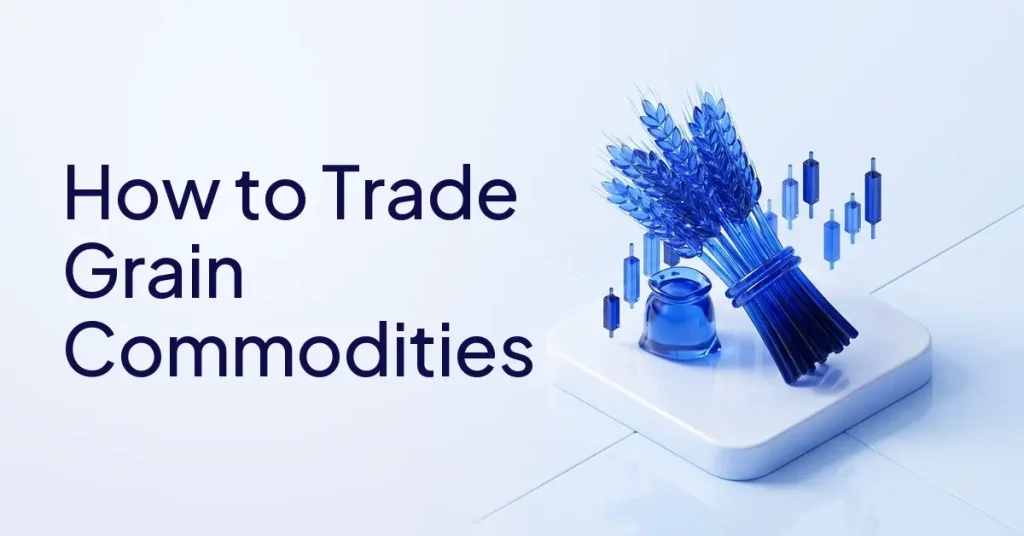
Food has always been a fundamental driver of economic activity, and grain markets are at the heart of that reality. Corn feeds livestock and fuels ethanol production. Billions of people in dozens of countries feed off wheat. The prices fluctuate according to the weather, politics, trade flows, and demand patterns, which unfold during each growing season.
Learning how to trade grain commodities would mean venturing into a market that runs on different rules than the stock or currency markets. These are seasonal resources. They have crop-calendar-based prices, respond to rainfall data, and are prone to government supply reports that most traders in other markets do not read.
That specificity makes grain trading interesting, and preparation non-negotiable.
Quick Answer: How to Trade Grain Commodities
- Grain commodity trading means assuming price risk through futures contracts, not buying or holding physical grain.
- The common markets comprise corn, wheat, and other similar agricultural products.
- Weather, crops, global supply and demand, export volumes, and government policy all influence prices.
- All grain futures contracts have certain mechanics: size of the contract, tick movement, margin requirement, and expiry date.
- Beginners should start with one grain market; corn is the more likely entry point.
- Determine the entry, stop-loss, and target to order any trade; grain markets can spike at the turn of a report.
How to Trade Grain Commodities Step by Step
Grain commodity trading has a definite order to follow, and skipping any steps increases risk.
- Know what you are doing. You are taking price exposure through a futures contract but not taking physical grain.
- Select a market and study it deeply.
- Be aware of the contract size, expiry, and movement of the tick.
- Check margin requirements.
- Learn about the seasonal drivers of the market. Weather, crop reports, and export data affect grain prices.
- Before taking the trade, specify entry, stop-loss, and target.
- Execute and review honestly.
What Are Grain Commodities in Trading?
Grain commodities are standardized agricultural products, mostly corn and wheat, which are traded as futures contracts to protect against price risk.
Farmers use these markets to hedge the prices of the harvest. The majority of retail players are betting on a possible increase or decrease in the price of a bushel by a specified date.
You are not buying actual grain, but a financial instrument based on the underlying physical market.
How Does Grain Commodity Trading Work?
The grain markets operate using standardized futures contracts, which specify what is being traded: quality, quantity, and delivery terms.
Futures Contract Basics
A futures contract is a legal document that specifies selling and purchasing a certain quantity of grain at a particular price at a particular future date. It is also important to know what a single contract will be in terms of quantity and value before considering direction to understand how to trade grain futures.
Margin and Leverage
You place a percentage of the entire amount of contract value, which is the margin, to manage quite a large position. The slight change in prices can result in a great change in the percentage of the margin deposited, either way.
Expiry and Rollover
Grain contracts are out of date on certain dates set according to the harvest season. To maintain a position after expiry, you roll over to the next month of the contract; an action with its timing and cost implications.
What Grain Markets Do Traders Usually Follow?
The most actively traded grain markets are corn and wheat, with different price drivers, seasonal trends, and volatility.
Corn
Corn is used extensively as livestock food and energy, and is commonly a weather market during the growing season, so summer is usually an active month for price changes.
Wheat
Being cultivated on various continents with various harvesting periods, wheat is likely to be more vulnerable to geopolitical changes in key export areas and may have more severe price fluctuations compared to corn.
Other Grain-Related Contracts
Other contracts that complete the grain complex include soybeans, rice, and other agricultural contracts. Each has its own dynamics; it is worth knowing before pushing beyond the core markets.
What Moves Grain Commodity Prices?
Grain prices are evidence of the world’s capability to produce and distribute food, and the drivers of these prices are particular, traceable, and seasonal.
- Weather and crop conditions: A drought, excessive rainfall, or a frosty spell can wipe out production and send prices up and down in a single session.
- Planting and harvest expectations: The market gets forward supply guidance through reports on intended acreage and crop progress.
- Export demand: Changes in purchasing patterns in major importing nations can shift prices in the short run.
- Government policy and trade flows: Tariffs, subsidies, and export restrictions drive policy-based initiatives that may override supply-and-demand fundamentals.
- Currency moves: As grain prices are quoted in US dollars in the international market, currency movements affect the purchasing power of international customers.
How to Trade Grain Futures
Contract mechanics and risk planning come before picking a direction.
- Choose the particular grain and expiry month that best suits you.
- Look at the bid-ask spread and the minimum price increment before placing any order.
- Do not use market orders in volatile times, as slippage around report releases can be large.
- Specify the price at which your thesis will be disproven and at which your stop-loss is.
- Check the entire order specifications, such as margin effects and expiry, and submit.
How Should Beginners Choose Between Corn and Wheat Markets?
For most beginners, corn is the more accessible entry point.
Corn is more likely to be liquid and exhibit less price volatility. Its major motifs, such as weather during the growing season and demand for livestock feed, are well documented and easy to track.
Wheat requires monitoring multiple global growing regions and staying across geopolitical developments in key exporting areas.
Begin with corn, and be conversant with its season, and then expand.
How to Trade Corn Futures and Wheat Futures More Carefully
Success in grain futures usually depends on what you evade in volatile periods.
Check Seasonal Context
The price of grain varies according to the stage of crop growth. Being aware of the crop’s stage will help you read market price action and filter out noise rather than signals in your trade.
Watch Inventory and Crop Reports
The USDA’s monthly supply and demand report is the most anticipated information in the grain markets. Open position, with no strategy, in one of these releases, puts you in a situation where you are subjected to high-speed, sharp maneuvers that are hard to control on the spot.
Use Smaller Position Sizing in Volatile Periods
Grain markets may break in case of weather reports or significant report releases. Keeping positions smaller in these times will reduce the harm a gap move can cause to your account.
How Much Money Do You Need to Trade Grain Commodities?
The amount of capital required depends on the contract size, margin requirements, and the amount of risk you are willing to assume per trade.
Grain markets have become accessible due to smaller contract sizes. However, the minimum margin is not the right number to focus on; what matters more is how much buffer you keep above it.
Grain markets can move against you, and a position without a buffer can result in a margin call before you can take a second look. Consider risk per trade rather than the size of the minimum account.
What Are the Risks of Trading Grain Commodities?
Grain trading comes with its own set of risks, distinct from those in other markets.
Weather-Driven Volatility
A shift in the weekend forecast may lead to grain markets opening very differently from where they were at the end of Friday, bypassing stop-losses placed during regular trading hours.
Leverage and Margin Risk
A small change in the underlying grain can result in a huge percentage change in your account balance. The debts build up so fast with no clear way out.
Overnight Report Risk
Significant crop announcements are usually released outside regular trading hours. Being in a position with no plan for these releases leaves you unable to respond to the moves underway in real time.
Expiry and Rollover Risk
Keeping a contract too close to expiry without rolling it over may lead to problems, such as potential physical delivery requirements. Monitor expiry dates and roll well in advance.
What Order Types Matter in Grain Futures Trading?
Familiarize yourself with the order types before placing any grain futures trade.
- Market order: This executes immediately at the best available price. This may fill at a much poorer price than anticipated, during periods of volatility.
- Limit order: Indicates the price at which you want to buy or sell. Offers you control over entry and exit costs. It’s the more appropriate default for grain markets.
- Stop-loss order: Triggers an exit at a specified level, which places a limit on the amount of loss sustained on an open position. In a market where the prices can gap on unexpected news, a stop-loss in place before a position turns against you is a basic requirement, not a matter of choice.
What Mistakes Should Beginners Avoid in Grain Commodity Trading?
You can prevent most grain trading mistakes with proper preparation.
- Trading without knowing the contract: Lot size, tick value, expiry, and margin define your actual risk.
- Ignoring crop reports: Scheduled data releases are among the most important price drivers in grain markets.
- Using too much leverage: Availability does not imply suitability.
- Trading oversized positions: Grain markets may widen and leave no space for volatility.
- Entering without a stop-loss: In a leveraged market where there is an overnight risk, an unprotected position has no floor.
- Leaping over too many markets: Each grain has its own seasonal pattern; spreading across too many markets means knowing no market properly.
What Should You Check Before Placing a Grain Commodities Trade?
- Do I have a major crop or supply report today or earlier?
- At what point in the crop lifecycle is it (planting, growing season, harvest)?
- Is the contract you are trading the most liquid month?
- Have you looked at the weekend weather outlook for holding into a Friday close?
- Is your position size small enough that a negative move in the gap would not have a devastating impact on your position?
- Is your stop-loss at a level that indicates price structure, not just a round number?
Frequently Asked Questions
Begin with a single market; corn is typically the most readily available entry point. Get acquainted with the seasonal trends, contract mechanics, and crop reports, and then risk real capital.
A contract of either purchasing or selling a given amount of grain at a certain price at a specified future date. Most traders use them for price exposure, not physical delivery.
When placing the trade, select the contract and the expiry month, check the bid-ask price and tick size, choose an order type that suits you, and specify your stop-loss and target.
a brokerage account that gives access to agricultural futures markets. Choose the corn contract, expiry month, quantity, price, and a limit order to manage your entry. Understanding contract specifications comes first.
Structurally, the process is identical to that for corn, including contract selection, margin check, order type, and risk planning. The main distinction is that wheat requires monitoring across various production regions and is more vulnerable to geopolitical events.
The weather is the most immediate driver. Government crop reports, global export demand, trade policy, and currency movements all influence prices in meaningful ways.
It depends on contract size, current margin requirements, and your risk per trade. Maintaining a buffer above the required margin matters more than the starting amount.
Whether a crop report is scheduled, the current crop stage, contract liquidity, weekend weather risk, position size relative to your account, and whether your stop-loss is logically placed.
Conclusion
Grain commodity trading is at the cross-section of biology, weather, global logistics, and the financial market; truly unlike trading stocks or currencies.
The seasonality of corn and wheat, the burden of government crop releases, and the shock of a drought prediction are the forces that characterize grain markets. Respecting and creating a risk framework around them makes the difference between structured participation and guesswork.
Begin with a single market. Learn its personality. Adhere to the crop schedule. And do not ever underrate the speed at which a weather report can transform all things.
This information is strictly educational and is not a recommendation to invest. Commodity trading comes with a high risk of loss. The highly leveraged nature of futures means small price movements can have a large impact on your trading account. Only risk capital you can afford to lose and consult a qualified financial professional before trading.
Tags


Open Live Account
 Email Address
 Phone Number
Important Notice
STARTRADER does not accept any applications from Australian residents.
To comply with regulatory requirements, clicking the button will redirect you to the STARTRADER website operated by STARTRADER PRIME GLOBAL PTY LTD (ABN 65 156 005 668), an authorized Australian Financial Services Licence holder (AFSL no. 421210) regulated by the Australian Securities and Investments Commission.
Important Notice for Residents of the United Arab Emirates
In alignment with local regulatory requirements, individuals residing in the United Arab Emirates are requested to proceed via our dedicated regional platform at startrader.ae, which is operated by STARTRADER Global Financial Consultation & Financial Analysis L.L.C.. This entity is licensed by the UAE Capital Market Authority (CMA) under License No. 20200000241, and is authorised to introduce financial services and promote financial products in the UAE.
Please click the "Continue" button below to be redirected.


