








 Web Trader MT5











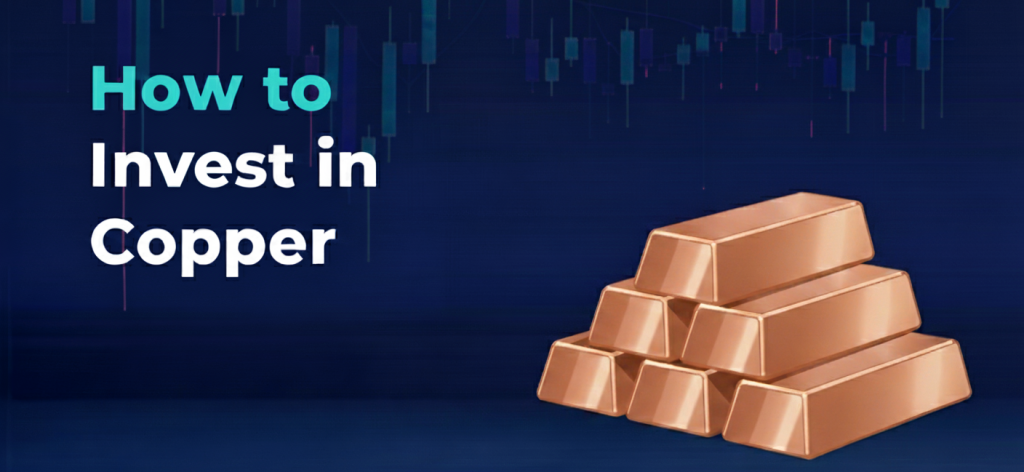
There are numerous ways of investing in copper, from stocks to futures, each with a different level of risk and goal.
You do not need to buy actual copper bars and store them in the garage. There are a number of clever options. You can either trade copper futures, invest in copper ETFs, buy copper company stock, or, should you feel like it, buy real copper.
In India, you can find copper in the form of international brokers, commodity exchanges like MCX, and the stock markets. The most important thing is to select the right strategy for your situation.
This guide will take you through the process of investing in copper. We will go through all your options, list the risks, and help you make the decision of the course of action that best fits your goals and finances. Let’s get started.
Why Invest in Copper?
Copper demand is rising due to electrification and green energy, while supply faces constraints from ageing mines.
People call copper “Dr. Copper” because its price tells us how well the world economy is doing. When factories and builders are busy, they need more copper. But there is a much bigger story going on right now.
What Makes Demand Go Up
There are a few trends that are making the demand for copper go up:
- Electric cars use four times as much copper as gas cars. Think about how many motors, batteries, and charging stations need to be wired up.
- Copper is used up a lot in green energy projects. A single wind turbine needs a lot of copper. Solar farms need miles of copper wiring.
- Our old power grids need to be fixed up. Copper is also required for data centres that run the internet.
- Copper’s market consists mainly of traditional uses like plumbing and building.
Problems On the Supply Side
- Getting copper from the ground keeps getting more complicated and more expensive.
- Chile and Peru are where most copper comes from. There can be problems with global supplies because of strikes or politics there.
- Most of the easy-to-find, high-quality copper is gone. Now, miners must dig deeper and process more rock to get the same amount of metal.
- It takes more than ten years to build a new mine. The S&P Global’s report says that by the end of the decade, there may not be enough supply.
Ways to Invest in Copper (From Lower to Higher Risk)
You can invest in copper through mining stocks, ETFs, futures contracts, or physical metal – each has different risk levels and complexity.
Each way has its own risk profile and level of complexity. Let us dissect them.
Public Equities (Copper Mining Stocks)
One of the most common ways is to buy shares in businesses that extract, refine, or smelt copper with the potential for dividends.
- Pure-Play Miners: These businesses (such as Southern Copper and Freeport-McMoRan) concentrate almost entirely on copper. The price of copper has a direct bearing on their fortunes.
- Diversified Miners: These massive mining companies, such as Rio Tinto and BHP, produce copper and other commodities like aluminium and iron ore. They provide exposure to copper, but their direct price sensitivity is lower.
- Smelters and Fabricators: These businesses transform unprocessed copper into useful forms. Processing margins are more important to their earnings than the price of raw copper.
Pros: High liquidity, dividend potential, and growth potential that goes beyond the price of commodities (for example, through discoveries or improved operational efficiency).
Cons: Share dilution risk from rise in equity, company-specific risks (like management problems, operational failures), and political risks in mining jurisdictions.
Commodity & Thematic Funds (ETFs & Mutual Funds)
Funds are a great choice if you want diversified exposure without picking individual stocks.
- Copper ETFs: Exchange-traded funds that track the price of copper futures or hold various stocks related to copper mining are known as copper ETFs. Like ordinary shares, they are traded on stock exchanges.
- Base Metals or Resource Funds: These are more general mutual or exchange-traded funds (ETFs) that invest in various industrial metals, such as nickel, copper, aluminium, and zinc.
When selecting a copper ETF or mutual fund, always look at the expense ratio (the yearly fee) and tracking error (the degree to which the fund tracks the commodity’s price or the underlying index).
Futures & Options (MCX & COMEX)
Futures contracts are commitments to purchase or sell a certain quantity of copper at a fixed price at a later time. This is a more complex path, best suited for seasoned traders.
Where can you trade:
- Exchanges: MCX copper futures are the norm in India, and offer 1,000 kg copper contracts.
- Global: The COMEX exchange is the standard on a global scale, with 25,000-pound contracts
Leverage: With a comparatively small amount of capital (referred to as margin), futures give you the ability to control a significant amount of copper. Both possible gains and losses are increased as a result. To find out more about the risks, you can study the fundamentals of futures trading and margin risks.
Roll costs: Futures contracts expire. Traders must “roll” their positions to the next contract to keep them open, which can be costly, particularly in a market structure called contango, where future prices are higher than spot prices.
Also Read : Why and How to Trade Copper?
Physical Copper (Bullion)
Though it is possible to buy gold or silver bars, for retail investors, it is not usually possible to attempt to buy copper bullion. It is a logistical nightmare because of the cost of storage, transport challenges, and because it has to be verified by experts (assay) to be pure.
With the very low value-to-weight ratio, the storage of a large investment would need a warehouse instead of a safe.
How to Pick Your Path
Your choice depends on your investment objectives, risk tolerance, and desired level of effort.
Here’s a table to describe this:
| Investment Route | Best For | Risk Level | Cost Profile | Effort Required |
| Equities (Stocks) | Long-term growth & dividends | Medium to High | Low (brokerage) | Medium (research) |
| Funds / ETFs | Diversification & simplicity | Medium | Medium (TER) | Low |
| Futures / Options | Short-term trading & hedging | Very High | Medium (margins, fees) | High (active management) |
| Physical Bullion | Industrial users | Low (market risk) | Very High (storage) | Very High (logistics) |
Allocation & Sizing: Keep It Small
Limit copper to 2–5% of your total portfolio because of its volatility and cyclical nature.
It should not be the main component of a diversified portfolio, but rather a minor, auxiliary one.
- For most individual investors: A fair place to start is with a 2-5% investment in copper-related assets.
- For seasoned investors: This could increase to 10% with proactive risk management, but doing so calls for in-depth market knowledge.
Establishing guidelines for handling your position is also a brilliant idea. Despite their volatility, commodities can be a valuable tool for inflation diversification, according to a recent Morningstar analysis from early 2025.
However, sizing is crucial.
| Example Portfolio | Copper Sleeve | Rebalancing Rule |
| Core Portfolio (80% Stocks, 20% Bonds) | N/A | Annual |
| Core + Copper (77% Stocks, 20% Bonds) | 3% Copper ETF | Rebalance annually or if sleeve drifts to >4% or <2% |
| Advanced Portfolio (with alternatives) | 5% (split between miners & futures) | Quarterly review and rebalance as needed |
A crucial part of this strategy is rebalancing. You can learn more about the importance of position sizing and rebalancing to maintain your desired risk exposure.
India Notes: Access & Taxes
There are a number of easy ways for anyone who wants to invest in copper in India.
- Indian Equities: You can invest in Indian businesses that make money from copper prices, like Hindustan Copper Ltd., or in businesses that are related to the copper industry.
- MCX Copper Futures: Standardized copper futures and well-liked options among Indian traders are available on the Multi-Commodity Exchange (MCX).
- International Brokers: You can invest in foreign copper mining stocks or international copper exchange-traded funds (ETFs) that might not be offered on Indian exchanges by using an international broker (like Startrader).
One important factor is taxes. Depending on the instrument you select, the rules change based on these:
- Equities: Both short-term and long-term capital gains taxes may apply.
- Futures & Options: Futures and options are frequently taxed at your applicable slab rate and considered business income.
- Mutual Funds / ETFs: ETFs and mutual funds are subject to unique tax regulations.
It’s crucial to speak with a tax expert to learn the most recent regulations because they are subject to change. You can read up on general tax basics for traders for a high-level overview.
Costs & Mechanics to Watch Out For
It’s not free to invest. Recognize the expenses related to each approach:
- Equities: Brokerage fees and foreign exchange conversion fees for foreign stocks.
- ETFs and Funds: The fund manager charges an annual fee known as the Total Expense Ratio (TER).
- Futures: Exchange fees, brokerage commissions, and the possible drawbacks of “roll yield” in a contango situation.
Here’s a brief illustration of how roll yield functions in futures:
| Market State | Current Contract | Next Month’s Contract | Action & Impact |
| Contango | $4.50 | $4.52 | You sell at $4.50 and buy at $4.52, creating a slight, guaranteed loss (negative roll yield). |
| Backwardation | $4.50 | $4.48 | You sell at $4.50 and buy at $4.48, creating a small, guaranteed profit (positive roll yield). |
Key Risks to Keep in Mind
Consider the following important risks before you invest in copper:
- Sensitivity to Global Growth: The demand for copper would be severely impacted by a global recession, particularly in China, which uses more than half of the world’s copper.
- Shocks to the Supply: Geopolitical instability in important mining regions continues to be a major risk to stable supply, which can result in extreme price volatility, according to a report by the International Copper Association.
- Policy & ESG: Government policies pertaining to the green transition may have an effect on long-term demand, while stricter environmental regulations may raise mining costs.
- Leverage Risk: A slight negative change in price can wipe out your entire investment in futures and options.
- Tracking Error: Because of fees or the unique makeup of their holdings, ETFs and funds might not accurately reflect the price of copper.
Also Read : Gold ETF vs Physical Gold: Key Differences
A Simple Implementation Plan
- Establish Your Allocation: Choose the proportion of your portfolio that you feel comfortable putting into copper (such as 3%).
- Select Your Vehicle: Select the investment that best suits your objectives and risk tolerance (for example, a beginner’s diversified copper miners ETF).
- Order Now: To execute your trade, use a broker (such as STARTRADER). To regulate your entry price, think about using a limit order rather than a market order. You can learn more about the various kinds of orders to trade there.
- Track and Monitor: Keep an eye on important factors such as manufacturing PMI data, warehouse inventory levels (LME/COMEX), and updates from significant mining firms. See sector and commodity allocation guides for a more comprehensive perspective.
- Rebalance: If your position has deviated considerably from your target allocation, review it at least once a year and rebalance.
FAQs
The simplest and most diversified way to start, especially for beginners, is usually by using a copper ETF, a base metals fund, or a mining stock fund. This prevents the intricacy of futures and the danger of selecting particular stocks.
The future of copper is long-term because the world is moving towards electrification and renewable energy. It is, however, also a very cyclical commodity and therefore investors must be ready to experience high price volatility.
Copper stocks represent ownership of a single company. On the other hand, copper ETFs offer a diversified exposure to a portfolio of stocks or follows the price of the commodity. Copper futures are leveraged derivative contracts that are traded or hedged on a short-term basis.
Most financial advisors recommend that commodities such as copper should have a small proportion of 2 to 5% of a total portfolio because they are volatile.
Invest in the metal driving global industry through stocks, ETFs, and futures — and seize opportunities in the world’s red gold. Start trading copper now
Conclusion
Copper sits at the center of global electrification, but its volatility demands careful position sizing and risk management.
That creates interesting opportunities for investors. But keep in mind that copper prices go up and down a lot, and the fluctuations of the global economy affect it.
Be careful and know the risks, no matter what type of copper investment you choose. People should consider copper a small part of a larger, more diverse portfolio.
You now know the basics of investing in copper, such as your options in India. What do you need to do next? Do your research.
Know how much it will cost. Never put in more money than you’re okay with losing. Start small and stay smart.
Tags


Open Live Account
 Email Address
 Phone Number
Important Notice
STARTRADER does not accept any applications from Australian residents.
To comply with regulatory requirements, clicking the button will redirect you to the STARTRADER website operated by STARTRADER PRIME GLOBAL PTY LTD (ABN 65 156 005 668), an authorized Australian Financial Services Licence holder (AFSL no. 421210) regulated by the Australian Securities and Investments Commission.
Important Notice for Residents of the United Arab Emirates
In alignment with local regulatory requirements, individuals residing in the United Arab Emirates are requested to proceed via our dedicated regional platform at startrader.ae, which is operated by STARTRADER Global Financial Consultation & Financial Analysis L.L.C.. This entity is licensed by the UAE Capital Market Authority (CMA) under License No. 20200000241, and is authorised to introduce financial services and promote financial products in the UAE.
Please click the "Continue" button below to be redirected.


