








 Web Trader MT5








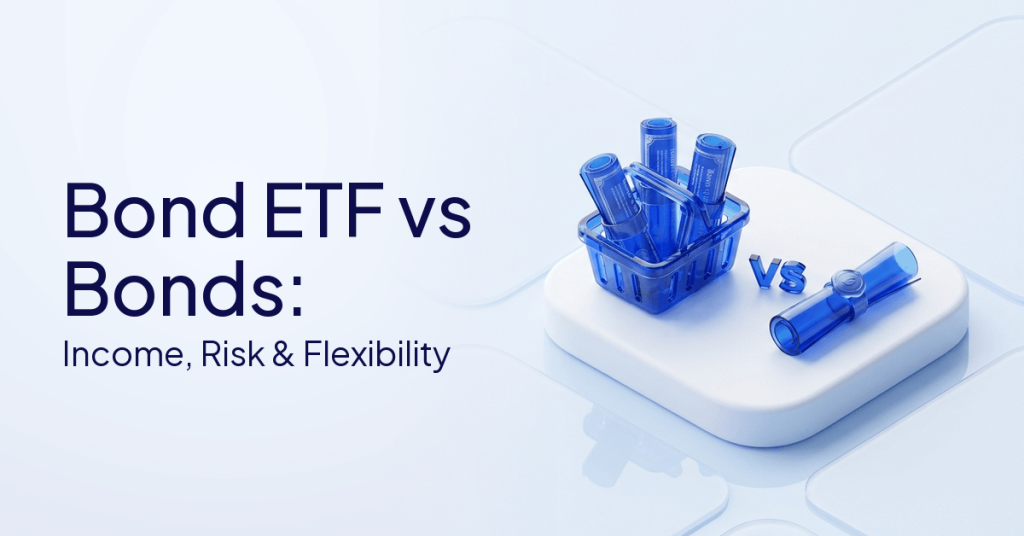
Fixed income investing often seems like the boring, sensible part of investing. Enter it without knowing the fundamentals, though, and it will be perplexing within a few steps, especially when two alternatives appear nearly the same on the surface but behave very differently internally.
The best example would be bond ETFs and individual bonds. Both generate income. They both appear in the discussion of portfolio stability. And still, most amateurs confuse them with each other, resulting in actual confusion about what liquidity is, what income predictability is, and what occurs when interest rates change.
The stakes are worth understanding. The global bond market is much larger than the global equity market, according to the Bank for International Settlements, making it one of the most important asset classes, yet one about which most beginners have the least knowledge.
Understanding Bond ETF vs bonds is what separates an informed decision from a lucky one. Here’s what you need to know.
Quick Answer: Bond ETF vs Bonds
- An individual bond is a debt instrument with a definite maturity date and predictable coupon payments.
- A bond ETF is a collection of bonds traded on a stock exchange, similar to a stock.
- Individual bonds will pay back your principal at a predetermined maturity date; bond ETFs do not do that.
- ETFs are easier to diversify and liquidate; individual bonds have structural confidence.
- They both generate revenue, but the structure of their payouts differs.
Bond ETF vs Individual Bonds: What Is the Difference?
An individual bond is a single debt instrument with a fixed maturity, while a bond ETF is a fund that contains a large number of bonds and trades like a stock.
Purchase a single bond, and you are lending money to a single issuer for a specified period. Purchase a bond ETF, and you will be purchasing a portfolio of numerous bonds altogether, with no single maturity date to determine your investment.
What Is an Individual Bond?
A bond is a loan you give to an issuer, either a government or a company, in exchange for periodic interest and repayment of your principal at a specified end date.
Four things define it: the issuer (who is borrowing), the coupon (the interest rate paid), the maturity (when the loan matures), and the principal (the amount you originally borrowed, which you get back when the loan matures).
That predictability is the major reason individual bonds are appealing to some investors.
Imagine a retired person who requires a steady source of income for the next five years. She purchases a five-year fixed-coupon government bond. She is aware of the amount she will receive every six months and when her principal will be returned.
No surprises and no market timing needed; just a structured design she can budget her expenses around. A bond ETF would not provide her with the same confidence over a fixed period.
What Is a Bond ETF?
A bond ETF is an exchange-traded fund that consists of a portfolio of bonds and trades on a stock exchange during the day.
A single purchase provides you with access to hundreds of bonds. The fund does not mature like a single bond but maintains constant exposure to a specific segment of the bond market.
As individual bonds mature in the fund, proceeds are reinvested into new ones. The fund keeps running indefinitely.
Global bond ETF assets under management have increased significantly over the last ten years, according to ETFGI, indicating widespread investor adoption of bond ETFs as an easy entry point into fixed-income markets.
Bond ETF vs Bonds: How Do They Generate Income?
Both generate income, but the mechanics feel different depending on which structure you hold.
Coupon Payments from Individual Bonds
Fixed interest payments arrive on a fixed schedule, usually every six months. Upon maturity, your principal returns. The revenue curve is evident at the very beginning.
Distribution Income from Bond ETFs
ETFs distribute income typically monthly or quarterly. The amount may change since it is a group income based on a fluctuating portfolio of bonds.
Why Payout Patterns May Feel Different
Individual bonds provide a definite, fixed interest scheme. The distribution of bond ETFs varies in the long run. Individual bonds can be more convenient for investors who have to structure their plans around specific cash flows.
Bond ETF vs Bonds: What Are the Main Differences for Beginners?
The most important differences are in diversification, liquidity, maturity control, pricing, and management.
Diversification
A single bond ties you to one issuer. A bond ETF automatically spreads risk across many.
Liquidity
Bond ETFs trade on exchanges during the day. Individual bonds trade over-the-counter, and liquidity varies significantly by bond.
Maturity Control
Individual bonds have a defined end date — you know exactly when you’ll get your money back. Bond ETFs have no fixed maturity.
Individual bonds have a specified maturity date – you know when you will receive your money back. There is no set maturity for bond ETFs.
Pricing Behaviour
The prices of bond ETFs are updated in real time on exchanges. Pricing of individual bonds is less transparent and more difficult to monitor.
Reinvestment and Management
Bond ETFs handle reinvestment within the fund structure. Individual bondholders manage that themselves.
How Does Maturity Work in Individual Bonds vs Bond ETFs?
Individual bonds have a predetermined maturity date; bond ETFs have an unlimited exposure.
Buy an individual bond to maturity, and you get your principal back in full, no matter how the price has changed in the meantime. The bond ETF never winds down. When you decide to sell, and what the market will pay you, it is up to you.
That structural assurance of individual bonds is truly difficult to obtain with an ETF for investors who are saving towards a particular goal or date.
Buying Bonds vs Bond ETF: Which Structure Suits Which Goal?
What you want to do will determine which one is better for you.
- Defined maturity and structural certainty: Individual bonds are good for investors who want to know when they will receive their principal.
- Simpler access and easier diversification: Bond ETFs are the best option for investors to diversify their portfolios without picking a specific bond. They make it easy to get to and diversify.
- Flexibility and liquidity: Bond ETFs have a big advantage. They trade on exchanges with open prices throughout the day, which provides them with flexibility and liquidity.
What Are the Advantages of Individual Bonds?
Individual bonds provide structural control and predictability, which bond ETFs cannot entirely replicate.
- Defined maturity: You know exactly when the principal will be paid back.
- Direct issuer exposure: Being exposed to just one borrower.
- Hold-to-maturity assurance: Short-term price changes don’t affect your result.
- Fixed-income schedule: You know when you’ll get your coupon payments.
What Are the Advantages of Bond ETFs?
For most investors, bond ETFs make it easier and faster to invest in fixed income.
- Immediate diversification over a wide range of bonds and issuers.
- Trading at prices that are clear and up-to-date.
- The minimum investment is lower than with most individual bonds.
- A single purchase gives you access to a wide range of markets.
- Easier reinvestment of income within the fund.
Access to exchange-traded products may vary depending on the financial service provider and jurisdiction. STARTRADER may offer access to CFD-based instruments referencing a range of underlying markets.
What Risks or Limits Should Investors Understand?
The two structures are risky, but it’s crucial to know where the risk in each one comes from.
Interest-Rate Risk
An increase in interest rates causes a decline in bond prices. Bondholders who hold until maturity still get their principal back. For bond ETF investors, there’s no maturity date to wait out; price declines affect them if they need to sell.
Credit Risk
Individual bonds concentrate credit risk in a single issuer. Bond ETFs diversify risk across many bonds, thus mitigating the effects of any single default, although not eliminating credit risk.
Liquidity Differences
It’s usually easier for bond ETFs to get out. In tough markets, it may be harder to sell individual bonds, especially those in business settings, at a fair price.
Price Volatility Before Maturity
Before a certain bond matures, both can change. Bond ETFs’ prices are always changing, and there is no set floor.
Reinvestment and Fund-Structure Differences
The use of portfolio turnover, management fees, and reinvestment of revenue across all bond ETFs affects returns in ways that individual bondholders do not have to contend with.
Bond ETF vs Bonds: Why Can Performance Feel Different?
Even if they follow the same markets, the two frameworks might nonetheless provide you with different experiences.
The main explanation is the maturity effect. An individual bond pays back its principal when it matures, no matter what happens to its price along the way. A bond ETF doesn’t have that anchor.
Portfolio turnover is another twist: bond ETFs often trade in maturing bonds, which changes the fund’s yield over time. And diversification makes the returns of any one issuer more evenly distributed, which changes the overall return experience.
Investment Company Institute says bond ETFs have seen the most net inflows during periods of market turbulence. This shows that investors consider them as a more flexible fixed-income strategy than buying individual bonds.
What Should Investors Check Before Choosing Bonds or a Bond ETF?
Before you choose either structure, think about these questions.
- Goal and time frame: Do you need the money by a certain date?
- Income vs. liquidity: Do you desire a steady income or do you require easy access to cash?
- Preference for diversification: Are you comfortable with exposure to just one issuer, or would you prefer a wide range of coverage?
- Interest rate sensitivity: How will changes in the rates affect your plan in each structure?
- Credit quality: Do you want a fund or an individual selection?
Frequently Asked Questions
A fixed coupon and maturity exist for an individual bond. A bond ETF holds a large number of bonds in a single fund, with no maturity date.
Both have interest-rate risk, and ETFs distribute credit risk among numerous issuers. Safety depends on the bonds held.
No. Bond ETFs do not change their exposure by maturity but do so by issuing new bonds.
They both lose when interest rates rise, but individual bondholders can afford to ride out price changes to maturity. There is no endpoint for ETF investors.
Individual bonds provide standardized, predetermined coupons. ETF distributions vary. Both are income sources; the predictability of your payment will determine which is right.
They are easier to start with, as they offer easier access, lower minimums, integrated diversification, and exchange trading.
Time horizon, income requirement, liquidity requirement, preference for diversification, and sensitivity to interest rates.
No, bond vs. ETF is a comparison between individual debt instruments and exchange-traded funds. Bond ETF vs. bond mutual fund comparison is between two types of funds. Different comparison entirely.
Final Thoughts
There is no right answer when it comes to bond ETF vs bonds. Individual bonds provide you with certainties of maturity, a determined income plan, and direct exposure to the issuer. Bond ETFs provide you with diversification, liquidity, and easier access.
The superior one is the one that suits your objectives, schedule, and the extent of complexity you desire to undertake. Get clear on that, and the choice becomes straightforward.
Product Availability Notice:
This content is provided for general educational purposes only. Exchange-traded funds (ETFs), bonds, and related instruments described in this article are not offered by the company. They are referenced solely for market education. Clients should refer to the company’s official CFD product offering for available instruments.
Risk Disclaimer
Don’t take this information as investment advice, as it is purely educational. Fixed-income investments carry risks such as interest-rate risk, credit risk, and liquidity risk. The value of your position may fluctuate, and you may lose part or all of your capital.
Thus, before making investment decisions, it is important to consider your individual financial circumstances and seek advice from a qualified financial professional.
CFD Risk Warning:
CFDs are complex instruments and come with a high risk of losing money rapidly due to leverage. You may lose more than your initial investment. You should ensure you fully understand how CFDs work and consider whether you can afford to take the high risk of losing your money.
Tags


Open Live Account
 Email Address
 Phone Number
Important Notice
STARTRADER does not accept any applications from Australian residents.
To comply with regulatory requirements, clicking the button will redirect you to the STARTRADER website operated by STARTRADER PRIME GLOBAL PTY LTD (ABN 65 156 005 668), an authorized Australian Financial Services Licence holder (AFSL no. 421210) regulated by the Australian Securities and Investments Commission.
Important Notice for Residents of the United Arab Emirates
In alignment with local regulatory requirements, individuals residing in the United Arab Emirates are requested to proceed via our dedicated regional platform at startrader.ae, which is operated by STARTRADER Global Financial Consultation & Financial Analysis L.L.C.. This entity is licensed by the UAE Capital Market Authority (CMA) under License No. 20200000241, and is authorised to introduce financial services and promote financial products in the UAE.
Please click the "Continue" button below to be redirected.


