








 Web Trader MT5










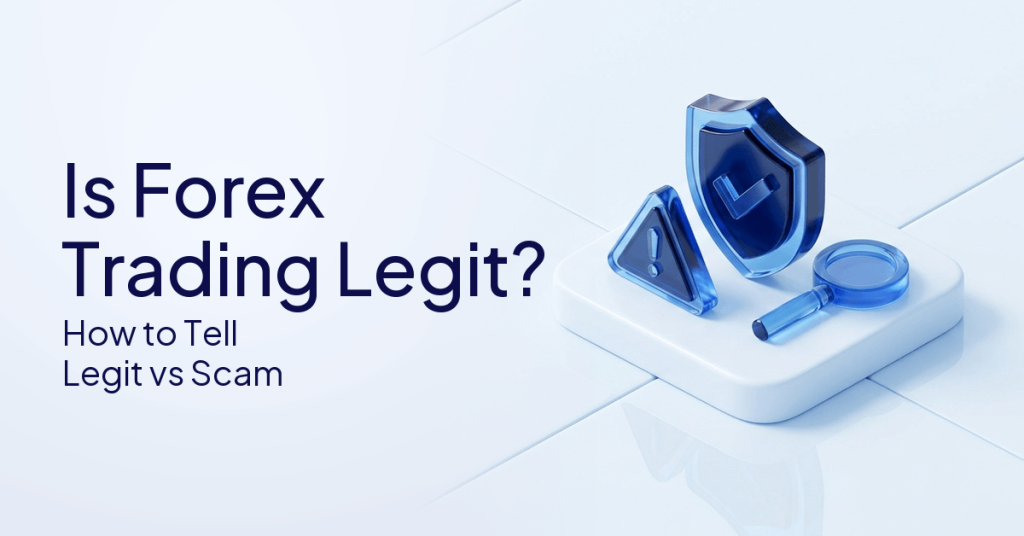
There is a lack of trust in Forex trading, and honestly, it has earned it. You will read crazy success stories of people who get rich by turning $500 into $50,000. Then you will also read nightmare stories about how someone lost their life savings to a broker who will not make any withdrawals. But is forex trading legit?
Yes, the foreign exchange market actually exists. It works 24/5 in banks, corporations, and retail traders globally. However, here’s the point of contention: who you are trading through, whether they are controlled or not, and the risk awareness it entails.
This guide demonstrates what constitutes forex trading(s) as a legitimate endeavor, how to avoid red flags, and what realistic trading would actually appear like (spoiler: it is more difficult than the Instagram advertisements would have you believe).
Quick Answer
- Forex is a legitimate market of over $7 trillion per day
- There are swindles around it, including unscrupulous brokers, counterfeit signals, and guaranteed-profit schemes
- Legitimacy requires regulation, clear charges, and separation of funds
- If you can verify credentials and withdrawals, online trading is safe
- The majority of traders lose their money by using excessive leverage and failing to manage risk
- Always check regulators directly, never trust logos alone
Forex Trading: Is It Legit in the Real World?
When transacted through duly regulated providers with clear terms and conditions, and when informed about the risks, forex trading becomes legitimate. The market itself has a decades-old history.
What Forex Trading Actually Is
Forex refers to the foreign exchange market. People just refer to it as forex, or the spot FX market, where foreign currencies are bought and sold.
International trade, risk protection, or price speculation is conducted through currency exchanges among banks, corporations, governments, and traders.
Daily trading volume? Over $7 trillion. That is why it is the world’s largest financial market. By trading forex, you are betting on changes in exchange rates between pairs such as EUR/USD. Your forex broker provides you with access to trading platforms.
Why Legitimacy Depends on the Provider and Your Risk Controls
A regulated broker, who is supervised by bodies such as the Commodity Futures Trading Commission (CFTC) or the Australian Securities and Investments Commission (ASIC), is required to follow strict guidelines regarding your money.
An unregulated provider can modify terms, deny withdrawals, or make empty promises with no accountability. The market does not defend you; regulation and self-verification do.
And the thing about leverage is this: leverage magnifies the wins and losses. Even if it is an honest provider, a minor action against you might result in your account being wiped out. Legitimacy does not only imply realistic expectations and effective risk management but also the avoidance of outright scams.
Is Forex Trading a Scam or Legit?
The Forex trading market is perfectly valid, but there are scams targeting novices everywhere; they can be posed as training programs or “breakthrough systems.”
The Truth: The Market Is Real; Scams Exist Around It
The foreign exchange market is open around the clock. True price discovery occurs in accordance with economic data and world trade. Banks and institutions process millions of dollars in legitimate transactions daily.
Frauds do not question the existence of the market. They exploit it. False trading platforms are established through fraud, artificial pricing, or by accepting deposits with no expectation of redemption. Others sell foolproof systems or charge monthly fees for signals that are little more than educated guesses (and not always educated ones).
Forex is a favorite of investment scams because it is easy to build a website and exaggerate it. Judging those claims when you are new? That’s hard.
“Too Good to Be True” Promises vs Normal Trading Risk
The actual forex trading is risky, uncertain, and, to be frank, has a high probability of you losing money. All the pitches that offer predictable returns, assured profit rates, or risk-free plans are lying. Full stop.
Here’s what normal trading risk resembles: you open a position, then the market turns against you, and you lose the investment you had invested in that trade. Even experienced traders go on losing sprees.
Scam promises ignore reality altogether. They show you images of lifestyle and income (often fake). When a person promises you that you will earn money, they are either delusional or operating a con.
What Makes a Forex Trading Setup “Legit”?
A legitimate structure comprises verifiable regulation, transparent fees, separate client funds, and straightforward withdrawals. These differentiate real providers from operations that just want to take your money.
Regulation and Registration
Regulation implies that a government body oversees a provider’s business activities and establishes rules governing how client money is handled.
The US has licensed forex dealers who are registered with the CFTC and members of the National Futures Association (NFA).
Regulated entities must segregate your funds from their operating capital, maintain reserves, and undergo an audit. Regulators can impose a fine, suspend their operations, or close them down if they break the rules.
Unregulated providers? They do not work within this structure. The money is in accounts that cannot be traced, and conflict has no official means of resolution.
Transparent Costs (Spreads/Commissions/Financing) and Clear Risk Warnings
Legitimate providers inform you of all expenses before a purchase. Most retail traders’ primary cost is the spread, which is the difference between the buy and sell price. Some brokers charge commissions or overnight funding charges (referred to as swap rates).
These expenses must be listed out clearly. Extra charges or costs that manifest themselves after you make a deposit? Major red flags.
And this is important: controlled providers must mention that the majority of retail traders lose money. If a platform is minimizing the risk or overemphasizing the potential of profit without equalizing the alerts, they are not acting in your interest.
Segregation of Funds + Withdrawals Process
Segregated funds imply that your deposits are kept separate from the company’s operating funds. If their provider is declared bankrupt, your money is not accessible to their creditors either. It is something that controlled brokers must do and not an option.
Test the withdrawal procedure early. Do a small withdrawal immediately after your first deposit. If they make it hard, assume it will become harder as your balance increases.
Is Online Forex Trading Legit and Safe for Beginners?
The conventional method retail traders use to access the market is online forex trading, which is legal when one establishes credentials and uses appropriate risk limits.
The online part is not the issue; the issue is the lack of verification.
Online Access Is Normal—Verification Is the Key Step
Online trader platforms such as MT4 and MT5 allow you to access the market directly via desktop or mobile applications. It is a positive development, not a threat. Many decades ago, you had to call brokers and make large minimum deposits.
But verification is now entirely on you. Ensure that the legal entity’s name is consistent across the terms of service, regulatory database, and the site itself. Also, ensure domain ownership aligns with the company’s location.
Demo vs Live: What Demo Can/Can’t Prove
A demo account allows you to play with imaginary money. Legitimate providers like STARTRADER offer demos to help traders learn the platform before depositing; this is a good practice.
However, demos cannot prove legitimacy. False pretenders provide perfect demonstration lives, and in reality, they offer entirely different terms on live accounts.
Learn to use the software using demos. But also understand that demo performance is not an indicator of the provider’s trustworthiness.
MT4/MT5 Note: Platforms vs “Who Offers the Product”
Hundreds of brokerage companies worldwide use the MT4 and MT5 trading apps. The mere presence of these platforms does not imply legitimacy because it only indicates that the provider was licensed to use the software.
Scam brokers use MT4 and MT5 mainly because traders are familiar with these names and feel comfortable with them. Look into who is providing your account, not what software they licensed.
Common Forex Scams and How to Spot Them
Forex scams include signal sellers and “guaranteed” systems, and they target emotional triggers: greed, fear of missing out, and the wish to become rich fast, claiming they can achieve this through false promises and no plans for fair trade.
Signal Sellers and “Guaranteed” Systems
Signal sellers assure they will provide trade recommendations that generate steady profits. Their marketing approach is through social media, promising high win rates and passive income for subscription fees.
Consider this: if the signals were actually profitable, why would they sell them every month at $50 rather than trade them? The trading results are not the real product but the subscription.
The same is true of “guaranteed” systems. Automated robots and secret algorithms promise to remove uncertainty from trading. None of them delivers. Markets are dynamic, and no system eradicates risk.
Fake Account Managers / Impersonation / Social Media Pressure
Fake account managers contact people with an offer of managed trading services. They could act as representatives of genuine or entirely fictitious companies. Once they win your trust, they coerce you into depositing huge sums in exchange for the promise of good returns.
Once you deposit? The money disappears. Romance scams have even been layered into some of their operations: they establish emotional connections first, then introduce the investment aspect.
This is exacerbated by social media, which features direct messages that showcase luxury lifestyles. However, there is a twist to this matter: real service providers do not cold-approach strangers on Instagram, promising them money. That’s always a scam.
Withdrawal Blocks, Bonus Traps, and Sudden Fee Surprises
Withdrawal blocks occur when you request your money and the provider declines or fails to notify you. The usual justifications are that they need you to trade more volume first, or that you broke some unknown rule.
Bonus traps lure you with deposit matches; they sound very nice until you read the terms. You need to sell 20 or 50 times the bonus value before you can withdraw anything, including your deposit. Bonuses aren’t gifts. They’re hooks.
Sudden fee surprises? Inactivity fees that empty accounts, withdrawal fees that are much higher than usual, or fees that only come into play when you attempt to withdraw your money. If fees are revealed after the withdrawal, you are dealing with a scam.
A Simple Checklist to Verify Legitimacy
Verification will take less than an hour and helps sift through most of the scams before you lay any money on the line.
License Checks
Never believe regulatory logos on websites without investigation. Fraudsters steal the logos of legitimate regulators with the hope that you would think it was legit.
Go to the regulator’s website. In the US, search the NFA BASIC database for the firm name and registration number. Make sure the legal entity name matches exactly, the registration is up to date, and the address matches the trading platform.
Not able to locate the firm in the regulator’s database? They are unregulated, despite what their website says.
Identity, Fees, Documents, and Support Tests Before Depositing More
Check the domain registration to ensure the company name matches the owner of the website. Review the entire fee schedule and request withdrawal fees in writing.
Read client agreement and risk disclosure documents; yes, everything! If records are lost or contain ambiguous wording regarding the company’s discretion, that should be a huge red flag.
Then, test customer service by posing questions about regulations, fees, and withdrawals. If support is unresponsive during a sale, expect that it will only get worse after they get your cash.
How to Trade Forex More Safely
Safe trading is not about eliminating risk, but rather about managing it through position sizing, leverage levels, realistic expectations, etc.
Leverage Basics + Position Sizing
Leverage allows you to hold a position larger than your account balance. A leverage of 50:1 implies that a $1,000 position is managing a $50,000 position. Sounds great, right? This, however, compounds losses as much as it compounds gains; you lose all your $1,000 if you are fully leveraged on a 2 percent shift against you.
Because your broker offers high leverage does not mean you should use it. Being less leveraged will ensure your survival as you navigate the learning curve.
Position sizing refers to the determination of the amount to risk on each trade. One general guideline: never take a risk of more than 1-2 percent of your account on a single trade. That’s it.
Risk Tools: Stop-Loss, Max Loss Per Trade, Daily Limit
A stop-loss is an instruction to automatically sell your position if the price moves against you by a predetermined amount. Setting stops isn’t optional for safe trading—it’s the bare minimum.
Max loss per trade refers to deciding in advance about the amount that you will risk before entering. Simple but effective. With a daily loss limit, you can avoid an emotional spiral where you chase losses by taking more reckless trades each day. If you lose 3-5% in a day, stop trading. Walk away.
Expectations: Why Losses Happen Even With Legit Setups
Losses are normal. Unavoidable, actually. According to studies, professional traders lose 40-60% of their trades. The difference between professionals and failing beginners isn’t the win rate, but risk management and realistic expectations.
The majority of retail traders lose money because they choose unregulated brokers, not because they overtrade, overleverage, or lack a tested strategy. Still, profitable trading is hard even with an honest broker and good risk controls and requires years to build up.
Legit Signals vs Red Flags
| Looks Legit | High-Risk Red Flag | What to Do |
| Registered with CFTC/NFA or equivalent regulator | Claims regulation, but can’t be found in the database | Search the regulator’s official website; reject if not listed |
| Transparent fee schedule with specific examples | Vague language about costs | Request written disclosure; walk away if refused |
| Straightforward withdrawal process (1-3 business days) | Complex withdrawal requirements or delays | Test with a small withdrawal after the first deposit |
| Realistic risk warnings | Promises of guaranteed returns | Reject any guarantee claims |
| Segregated client funds at reputable banks | Mixed funds or refusal to disclose custody | Ask where funds are held and verify |
Before You Deposit Checklist
- Check the regulatory status through the official database of the regulator
- Confirm legal entity + domain ownership
- Review fees, including spreads, commissions, financing, and withdrawal fees
- Test support. Ask questions, probe, and assess the quality of the response
- Do a minor withdrawal test
- Set maximum deposit + risk limits
Frequently Asked Questions
A: Forex trading is legitimate for beginners, provided they work with regulated providers that follow proper risk management practices.
A: The forex market is a legal market with a daily volume of trillions of dollars. Still, there are scams in the market, such as unrealistic promises, fake brokers, and signal sellers; thus, the only way to be sure it is a legitimate market is to ensure it is regulated.
A: Constant profitability is rare and achievable only through years of skill accumulation and sound risk management. Any person promising consistent returns or easy money is lying.
A: Guaranteed profits, withdrawal challenges, rush-to-deposit schemes, unregulated websites, cold calls via social media, bonus bait, ambiguous fees, and counterfeit regulatory logos are significant warning signs of scams.
A: Go directly to the regulator’s official website and look up the provider’s legal entity name and registration number in their database, ensuring that all information matches exactly, not relying on logos.
A: No, MT4 and MT5 are legitimate platforms that any broker can license, including scams. So, you must evaluate the provider’s regulation and reputation separately from the platform they use.
Most traders lose due to over-leverage, inappropriate risk management, an untested strategy, and unrealistic hopes, rather than provider fraud.
Final Thoughts
Forex trading can be considered a legal financial practice provided it is undertaken with regulated providers that offer clear terms. As a forex trader, you must be able to trade through verified channels and understand the statistical odds of losses.
Before depositing, check the rules yourself, make small withdrawals, and read all fee disclosures. Turn your back on anybody promising profit.
Also, please don’t see this article as financial/investment advice. Forex trading carries a high risk of loss and is not suitable for every investor. You should always keep your investment purpose, level of experience, and risk tolerance in mind before trading in foreign exchange. And consult a financial advisor before making significant trading decisions!
Tags


Open Live Account
 Email Address
 Phone Number
Important Notice
STARTRADER does not accept any applications from Australian residents.
To comply with regulatory requirements, clicking the button will redirect you to the STARTRADER website operated by STARTRADER PRIME GLOBAL PTY LTD (ABN 65 156 005 668), an authorized Australian Financial Services Licence holder (AFSL no. 421210) regulated by the Australian Securities and Investments Commission.
Important Notice for Residents of the United Arab Emirates
In alignment with local regulatory requirements, individuals residing in the United Arab Emirates are requested to proceed via our dedicated regional platform at startrader.ae, which is operated by STARTRADER Global Financial Consultation & Financial Analysis L.L.C.. This entity is licensed by the UAE Capital Market Authority (CMA) under License No. 20200000241, and is authorised to introduce financial services and promote financial products in the UAE.
Please click the "Continue" button below to be redirected.


