








 Web Trader MT5








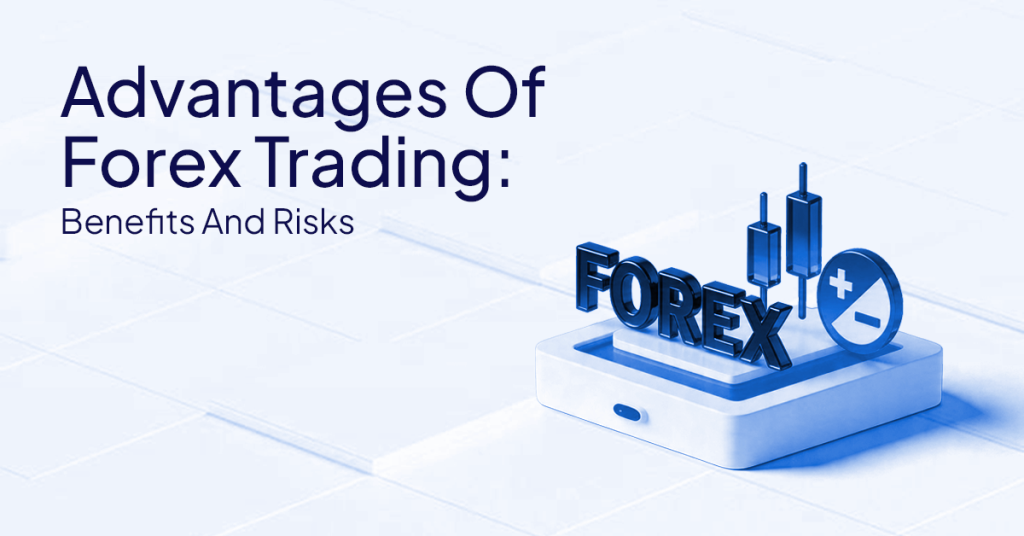
The forex market is very flexible and liquid in its nature, although these benefits are accompanied by high risks that any trader should be aware of in order to manage their capital well.
Why are millions of people and institutions trading currencies daily instead of using the conventional stock markets, and is the potential reward worth the risk involved?
The solution is frequently in the particular framework of the foreign exchange market that enables the participants to react to the economic changes in the worldwide systems in real-time.
This guide will break down the advantages of forex trading compared to other markets and provide a clear view of the risks associated with it. It is a financial undertaking that requires studying, exercising discipline, and managing risks. Let’s get started.
Quick Answer: Key Takeaways
- Large Liquidity: The large number of trades makes it more readily available to enter and exit positions immediately.
- Flexible Access: You can trade 24 hrs a day, 5 days a week, to suit various schedules.
- Two-Way Market: Traders can potentially profit from both rising and falling currency values.
- Controlled Sizing: As opposed to purchasing entire shares, you are able to make precise adjustments of the trade sizes to control risk.
- Major Risks: Leverage can magnify losses, and volatility may be unpredictable.
What are the Advantages of Forex Trading?
The main benefits are high liquidity, round-the-clock weekday access, and the possibility of making profits on both upward and downward markets.
The Forex (foreign exchange) market is an international, decentralized market where currencies are traded in pairs, such as the Euro against the US Dollar (EUR/USD).
Forex is not a physical stock exchange; it is a network of banks, brokers, and traders operating digitally.
Advantage 1: Liquidity in Major Currency Pairs
Liquidity is a factor that determines whether an asset can be easily sold or purchased without a significant price change. The forex market is currently the most liquid market in the world, with daily turnover exceeding $7.5 trillion, according to the Bank for International Settlements (BIS).
To a trader, high liquidity will imply that you can, as a rule, get in or out of a trade immediately at the existing market price. In major pairs, there is no time when you are stuck in a trade since no one is on the other side to trade with. The tightness, in many cases, leads to lower transaction costs (spreads) for illiquid stocks.
Advantage 2: Weekday Market Access
Since the forex market is global, it follows the sun around the world. New Zealand opens on Monday morning, and New York closes on Friday afternoon. This 24-hour system would enable traders to determine a schedule that suits them.
You may trade either in the Asian session, in the London session, or in the New York session. It should be noted, however, that the market is open 24 hours, and liquidity varies. The London-New York overlap is typically the busiest.
According to New York Federal Reserve data, the London-New York overlap accounts for the highest concentration of daily volume, typically between 30-40% of total turnover.
Advantage 3: Ability to Trade Up or Down
Traditional buy-and-hold investing typically requires the asset price to increase to make a profit. In forex, the currencies are never traded in singles.
When you buy EUR/USD, you are speculating that the Euro will appreciate against the dollar. Should you sell the EUR/USD, you bet that the Euro will fall against the Dollar.
Trading a falling market as if it were a rising one is as easy in this structure as it is in a rising market. There are no special short-selling permissions required which are frequently necessary in the stock market.
Advantage 4: Flexible Position Sizing
The stock market may force you to buy an entire share of a company that may cost hundreds of dollars. Position sizing in forex is very loose.
You are able to trade in micro lots (1,000 units of currency), and therefore, you can take very minimal risks of capital per trade.
Such flexibility is essential to newcomers. It implies that you can learn to manage risk by aligning the size of your trades with your account balance to the precise amount so that you never gamble more than even a small percentage on a single idea.
Advantage 5: Clear Macro Drivers
Exchange rates are usually influenced by a country’s macroeconomic health. Key drivers include:
- Interest rates set by central banks.
- Inflation data.
- GDP growth.
- Employment numbers.
Forex is a better focus for those who find looking at the balance sheets of single companies, but want to study the overall picture of the global economy.
What are the Practical Advantages of Trading Forex for Beginners?
Forex gives beginners an opportunity to use small position sizes and specialize in several major pairs to become consistent without analyzing hundreds of companies.
Accessibility is the most significant factor when discussing the pros of trading forex. The capital required to get started is not large, but with adequate capital, it is important to manage risks.
Why Simplicity Matters
New traders tend to be victims of the so-called analysis paralysis as they see thousands of stocks. In forex, the largest share of volume is in approximately 7 major currency pairs (such as EUR/USD, USD/JPY, GBP/USD).
By doing this, by only observing or concentrating on one or two pairs, a novice can study the character of that particular market.
For example, monitoring the GBP/USD response to UK economic data is not as difficult as monitoring the earnings reports of 50 tech companies. We offer learning materials on these particular currency processes at STARTRADER.
Advantages of Forex Trading Over Stocks: What’s Different?
Contrary to stocks, forex is a 24-hour, 7-day-a-week business that is not driven by company profits but by global economic data.
Comparing the merits of forex trading with stock trading, the differences typically boil down to time, leverage, and market orientation.
Trading Hours and Session-Based Volatility
There are stiff opening and closing bells in the stock market (e.g., 9:30 AM to 4:00 PM EST).
When large news events occur during the market close, there is a possibility that the stock price may gap to a large extent the following morning, and you would not be in a position to respond during the night.
The Forex markets are open from Monday to Friday. When there is news at 3:00 AM, then the market is open, and you can handle your position on the spot.
Liquidity Concentration
Although Apple or NVIDIA are extremely liquid, smaller stocks (small-caps) can be hard to dispose of without taking a bad price.
In forex, the major pairs in the market are liquid almost throughout the trading week, and this means that prices remain stable and the execution is fast.
Price Drivers
Stock traders have to concern themselves with the management of the company internally, CEO scandals, product failures and earnings reports.
Forex traders are concerned with the macroeconomy. This does not make it easier, but it eliminates the potential that one of the companies will go bankrupt overnight.
Table: Forex vs. Stocks at a Glance.
| Factor | Forex | Stocks |
| Trading Hours | 24 hours / 5 days | Fixed Exchange Hours |
| Asset Class | National Currencies | Company Ownership |
| Primary Driver | Macroeconomics (Rates, GDP) | Microeconomics (Earnings) |
| Short Selling | Native / Easy | Can be restricted |
What are the Disadvantages and Risks of Forex Trading?
The main risks include high leverage, which can increase losses, unexpected market volatility, and behavioral challenges in controlling emotions.
To get a balanced picture, we should consider both the positive and negative aspects of forex trading. The very aspects that make forex appealing are the same reasons that can cause a lot of losses in case they are not dealt with properly.
Leverage Risk
Leverage will enable you to operate a sizable position using a limited sum of money (margin). Using an example of 1:30 leverage, you manage to control $30,000 in value by being able to control a currency that equals only $1,000.
Although it may increase gains, it increases losses. Even a minor price change in your favor, you will destroy all the deposits in a short time. As statistics from financial regulators across most countries indicate, most retail traders end up losing their money, usually due to over-leverage.
Volatility and News/Event Risk
As a rule, major currencies are stable, but any geopolitical event or unexpected economic news can lead to a sudden increase in volatility. Prices may go this fast during such periods that you can no longer trade at your preferred price (slippage).
Trading Costs
The forex expenses typically take the form of the spread (the difference between the sell and buy prices) and swap rates (the fee for financing positions overnight). These small costs can consume significant capital for active traders who overtrade when spreads are low.
Psychology and Overtrading Risk
The market is open 24 hours, which is why there is a temptation to trade at all times. This is known as overtrading. Lack of discipline means that the market availability will be a liability, which causes emotional choice and exhaustion.
How Can Traders Reduce Forex Risks While Keeping the Benefits?
The mitigation measures traders can adopt to counter risk include using stop losses, maintaining small position sizes, and adhering to a trading plan.
Risk cannot be eliminated, rather, it can be controlled.
Risk Per-Trade and Stop-loss Rules
One rule of thumb is never to risk more than 1 per cent to 2 per cent. of your account value in a single trade. It is done through a stop-loss order -an order to automatically terminate the trade in case the price moves against you by a specified amount.
Limit Leverage and Total Exposure
The fact that a broker is offering high leverage is no excuse to use it. Beginners are advised to trade with lower leverage to ensure they have sufficient breathing room in case of normal market movements.
Avoid Low-Liquidity Periods
The spreads tend to widen either during rollover (when the market date is changed, normally at approximately 5:00 PM New York time) or on significant holidays. By avoiding them, you can save money on transaction costs.
Journal and Review Routine
Good businessmen make a business out of the trade. They maintain a diary of all the trades, they record the entry and exit as well as the reason for the trade.
An examination of this data helps you identify bad habits. Platforms like STARTRADER can be used to monitor your history and evaluate your performance.
Is Forex Trading Right For You?
Forex trading is suitable for an individual who wants to learn on their time, have the discipline to control risk, and have the capital to absorb any likely loss.
Go through this list to see whether you can meet your expectations before opening a live account.
Checklist: Before You Start Trading Forex
- I recognize that leverage may result in losses exceeding my initial deposit (region/account type).
- I have a good risk-per-trade policy (e.g., 1%).
- I will be able to trade within a consistent session rather than randomly.
- I will commence practice on the demo, record the outcomes, and then proceed to use real cash.
- I know that all trades incur trading expenses (spreads and swaps).
A Simple “Start Small” Plan
In this case, the most effective method is the crawl-walk-run approach, if you choose to do it. Start with a demo account.
As soon as you are profitable there, move on to a live account in the smallest size possible. You only have to grow once you have demonstrated stability over several months.
Benefits vs. Risks Summary
| Feature | Why it’s an advantage | What can go wrong | Simple Mitigation |
| Leverage | Capital efficiency; trade with less cash. | Amplifies losses rapidly. | Use low effective leverage; use stop losses. |
| 24/5 Access | Trade on your own schedule. | temptation to overtrade / lose sleep. | Set strict trading hours for yourself. |
| Liquidity | Easy to enter/exit trades. | Volatility can still occur during news. | Avoid trading immediately during high-impact news. |
FAQs
The primary advantages include high liquidity, round-the-clock trading, low transaction costs compared with other markets, and the ability to make gains when prices rise as well as when they fall.
The greatest risks are overleveraging, emotional decision-making (psychology), and market fluctuations due to unanticipated economic events.
Forex has extended trading hours (24/5) and is flexible. It is also macroeconomic rather than specific to the company, and much capital is not usually needed to initiate it because of the flexibility in position sizing.
It may be as long as the beginner pays attention to education and risk management. The entry barriers are minimal, and the learning curve for market analysis and discipline is high.
Conclusion
Forex trading is a market worth considering if one wants to be flexible and independent, given its benefits. The 24-hour trading and liquidity of major pairs are unique opportunities in the stock market.
These advantages, however, cannot be discussed outside the risks. The psychological necessities of trading, the leverage, and volatility call upon a serious and disciplined approach.
The fact is that Forex is neither good nor bad compared to stocks or bonds: it is just different and serves a different type of market participant.
If you are willing to venture into the markets, first invest in education and safety. You can also visit STARTRADER for learning materials that may assist you in establishing an excellent foundation, prior to initiating your first trade.
Tags


Open Live Account
 Email Address
 Phone Number
Important Notice
STARTRADER does not accept any applications from Australian residents.
To comply with regulatory requirements, clicking the button will redirect you to the STARTRADER website operated by STARTRADER PRIME GLOBAL PTY LTD (ABN 65 156 005 668), an authorized Australian Financial Services Licence holder (AFSL no. 421210) regulated by the Australian Securities and Investments Commission.
Important Notice for Residents of the United Arab Emirates
In alignment with local regulatory requirements, individuals residing in the United Arab Emirates are requested to proceed via our dedicated regional platform at startrader.ae, which is operated by STARTRADER Global Financial Consultation & Financial Analysis L.L.C.. This entity is licensed by the UAE Capital Market Authority (CMA) under License No. 20200000241, and is authorised to introduce financial services and promote financial products in the UAE.
Please click the "Continue" button below to be redirected.


