








 Web Trader MT5






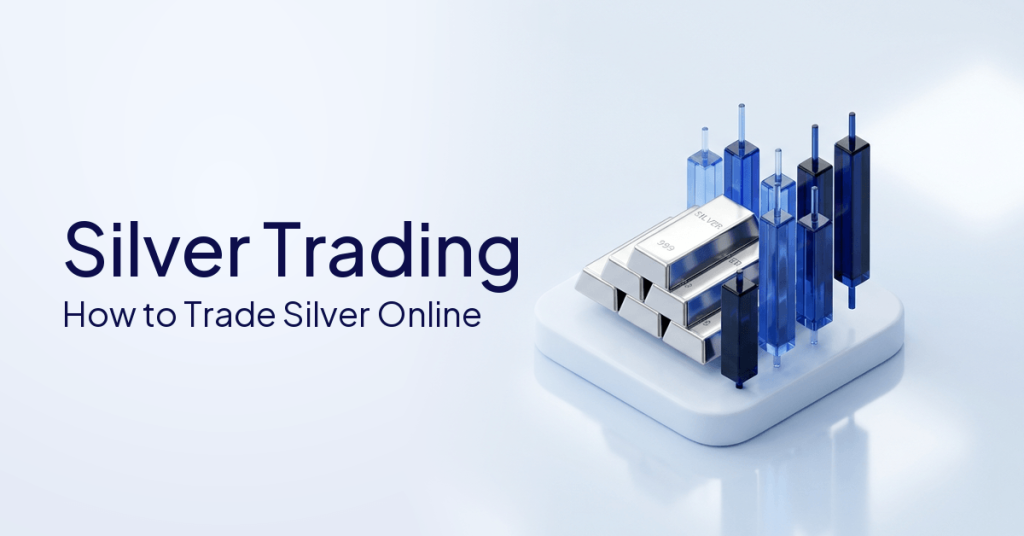
Silver is one of the few traded commodities that hold a distinct position. It is a precious metal, having the same safe-haven qualities as gold in times of financial turmoil, but it is also an industrial commodity, with major uses in electronics, solar panels, electric vehicles, and medical gadgets. That dual character is what makes silver trading so unique: its price is influenced by investor emotion and manufacturing production at the same time, leading to a more complicated and frequently more volatile price dynamic than gold alone.
That volatility is what draws traders in, but it is also what challenges them. Silver can fluctuate 5-10% in one session during important market events, far higher than gold in the same period. For investors, silver’s industrial demand story provides a structural growth dimension that pure precious metals don’t often supply. And for Indian market players in particular, MCX offers direct domestic access to silver futures in INR – no need for international brokerage accounts or USD investment.
This guide explains what silver trading is, what factors influence silver prices, the instruments available for exposure, how to trade silver as a CFD using the XAGUSD pair, how Indian traders access silver through MCX, when silver markets are open, and the risks every trader should know before entering this market.
Quick Answer
Silver trading refers to speculating on silver price changes via futures, CFDs, ETFs, or silver stocks. The XAGUSD is the standard traded pair for spot silver priced in US dollars per troy ounce. Silver prices are influenced by a mix of industrial demand (solar, electronics, EVs), safe-haven investment demand, the gold-silver ratio, and USD strength. Silver is more valuable than gold, but your capital could be at risk.
What Is Silver Trading?
Silver trading involves speculating on the price of silver via financial instruments (futures contracts, CFDs, ETFs, or silver mining stocks) without actually owning or managing silver.
Silver has been traded as a monetary metal and a commodity for hundreds of years. Today, it’s traded on a range of instruments on exchanges from New York to London to Mumbai, and on retail CFD platforms, and it’s traded as XAGUSD – the usual notation for silver priced in US dollars per troy ounce.
Silver’s Dual Market Role
Silver differs from most other commodities in that its demand structure has two sides. It is a precious metal that also works as a store of value and safe-haven asset – drawing investment demand when financial circumstances are unclear, currencies are falling, or inflationary pressures are mounting. Silver, as an industrial metal, is a key component in solar photovoltaic panels, consumer electronics, electrical contacts and a growing number of medicinal and antibacterial uses.
The dual role means that the price of silver reacts to two different sets of market signals at the same time. Silver tends to benefit from safe-haven flows along with gold as investors become less willing to take risk and the economy is more uncertain.
Industrial silver demand is another price support, particularly when industrial activity is on the rise, notably in the solar and electronics industries. And when both forces meet at the same time, silver can leap.
This is what separates silver from trading a simple industrial metal such as copper or a pure store-of-value asset such as gold – the convergence of these two demand factors causes price behavior that neither category fully explains on its own.
For a fuller introduction to silver trading in a variety of market settings and among different types of participants, see our guide on what silver trading involves, which explores the topic in depth.
XAGUSD: The Standard Silver Trading Pair
On forex and CFD platforms, silver is quoted as XAGUSD — silver (XAG) priced against the US dollar (USD), expressed in dollars per troy ounce. This follows the ISO currency code convention where the symbol XAG is used to represent silver. If one troy ounce of silver is worth $30 US dollars, then XAGUSD equals $30.00. When silver prices fluctuate against the US dollar, the pair moves – integrating commodity price movement and currency dynamics in one instrument.
What Drives Silver Prices?
Silver price is driven by a unique mix of industrial demand, investment demand, dollar dynamics, and mine supply conditions. Understanding each of these is a key to understanding silver price swings.
| Price Driver | How It Affects Silver | Example |
| Industrial demand | Solar and electronics manufacturing growth boost silver use, underpinning prices | Solar panel installations surge — silver demand rises |
| Safe-haven demand | Precious metals attract investors in times of financial turmoil | Market stress event — silver and gold both rally |
| Gold-silver ratio | High ratio indicates silver could be cheap vs gold; generally leads to silver outperformance | Historically, an 80+ ratio suggests a probable silver catch-up surge |
| USD strength | A stronger dollar makes silver more expensive for buyers in other countries, pressuring prices | DXY rises — XAGUSD typically falls |
| Mine supply | Silver is mostly a by-product of copper and zinc mining; supply is less sensitive to silver pricing | Copper mine closures reduce silver by-product supply |
| Interest rates | Higher rates increase the opportunity cost of holding non-yielding assets like silver | Rate hikes — silver faces headwinds from dollar and yield competition |
Industrial Demand as a Structural Driver
Silver is meaningfully different from gold because of its industrial demand. Industrial uses account for almost half of the silver demand every year — solar panels (silver paste is used in photovoltaic cells), electronics (silver is the most electrically conductive metal), electric vehicles (battery contacts and charging infrastructure) and medical equipment. This industrial foundation adds a growth component to silver’s price, one connected to manufacturing activity and technology adoption that gold does not have.
This is especially true in the green energy transition. Silver consumption from solar panel manufacture is one of the fastest-growing sources of demand globally. As the targets for solar installation increase in the US, Europe, India and China, the structural need for silver in photovoltaic manufacture is also getting wider. This long-term direction of industrial demand is part of the reason some investors see silver differently from pure precious metal bets.
The Gold-Silver Ratio
One of the most closely monitored relationship measures in the precious metals markets is the gold/silver ratio, which represents the number of ounces of silver it takes to buy one ounce of gold. Historically, the ratio has been approximately 60-70:1 throughout lengthy periods of time.
When the ratio spikes well above its historical average (to 80, 90 or higher), some investors view this as silver being undervalued relative to gold — and prepare for silver to outperform as the ratio mean-reverts.
When the ratio decreases, gold is cheaper relative to silver. It is common practice to understand and monitor the gold to silver ratio in the precious metals markets.
The USD Relationship
Silver, like gold and most commodities, is valued internationally in US dollars. A stronger dollar makes silver prices more expensive for customers using other currencies, which tends to dampen international demand and put downward pressure on XAGUSD prices.
Silver is priced in dollars; therefore, a weaker dollar makes it comparatively cheaper in other currencies, underpinning demand and prices. For silver traders, USD dynamics are a vital component of their silver market analysis, and they should be keeping an eye on Federal Reserve policy signals, US inflation data and dollar index (DXY) movements.
Ways to Trade Silver
There are many vehicles to access silver, all with varying trade-offs between leverage, complexity, cost and minimum capital.
| Instrument | Exchange/Platform | Key Features | Suitable For |
| Silver spot (XAGUSD) | Forex/CFD platforms | 24-hour access; leverage; no physical delivery | Active retail traders |
| Silver futures | COMEX (US), MCX (India) | Standardized contracts; physical delivery possible | Experienced traders with capital |
| Silver CFDs | Retail broker platforms | Flexible size; leverage; cash settlement | Retail traders seeking price exposure |
| Silver ETFs | Stock exchanges (NSE, BSE, NYSE) | No leverage; lower complexity; tradeable like shares | Investors seeking longer-term exposure |
| Silver mining stocks | Stock exchanges globally | Indirect exposure; company risk alongside metal price | Equity investors |
Silver ETFs
Silver ETFs trade on stock exchanges and follow the price of silver. Investors can gain exposure to silver price swings through a fund structure that trades like conventional shares. Silver ETFs are issued by SEBI-licensed mutual fund institutions in India and are traded on NSE and BSE. They are not leveraged, do not include futures expiry management, and give a diversified silver exposure in a single product.
The highest recurring cost for ETF investors is the expense ratio, which is an annual fee paid for fund management. It is worth comparing this across silver ETFs before you deposit your money.
How silver ETFs work explains the complete mechanics and selection criteria, providing a detailed explanation of how these funds are organized, how they follow the silver price, and what investors need to assess before choosing one.
Silver Mining Stocks
Silver mining stocks are shares of firms that mine silver. This can be the primary product ( pure silver miners ) or a significant by-product of other mining operations ( copper, zinc, etc . ). Mining stocks tend to move with silver prices, but there are also company-specific factors that determine how closely a mining stock reflects the underlying prices for silver: operating costs, mine grades, debt levels, geopolitical risk in the regions where they operate, and management decisions.
If you’re interested in mining stocks, find out what percentage of a company’s revenue comes from silver vs other metals. A corporation that makes 80% of its money from copper, with silver as a by-product, will behave differently than a pure-play silver producer. A practical guide to evaluating and selecting silver mining exposure outlines the important considerations on how to invest in silver stocks.
How to Trade Silver via CFDs (XAGUSD)
Silver CFDs provide traders with the opportunity to speculate on silver price movements with leverage, long or short, based on the XAGUSD spot price – without owning the physical metal or dealing with the expiry of futures contracts.
What a Silver CFD Is
A silver CFD ( Contract for Difference ) is a derivative instrument where the trader and broker exchange the difference between the opening and closing price of the contract, multiplied by the size, in cash at settlement. The CFD tracks the XAGUSD spot price, meaning that a long XAGUSD CFD position will gain value when the spot price of silver increases and lose value when the spot price of silver decreases.
How Leverage and Margin Work
Silver CFDs use leverage – this means that traders can control a larger position than the margin they have deposited. If XAGUSD is trading at $30 an ounce and a trader enters into an equal CFD position of 100 ounces, then the notional value is $3,000.
The margin required with a leverage of 10:1 might be $300. If silver goes to $32, the $200 profit would be a 66% return on the margin of $300. If silver drops to $28, the $200 loss is the same percentage drop from the margin deposit. That equal amplification in both directions is why leverage management in silver markets is crucial.
Spread and Overnight Swap
Silver CFDs feature a bid-ask spread – the difference between the price you can purchase and the price you can sell. The spread is the invisible cost of every trade. A swap rate, which is a financing rate reflecting the cost of holding a leveraged position over the daily closure, is also charged on overnight holdings.
If you’re a day trader and you start and close positions during the same day, the overnight swap doesn’t matter. Swap fees can add up for traders holding positions over days or even weeks and should be included in the calculation of the trade’s profitability.
Silver CFD price and XAGUSD mechanics provide you with comprehensive details of the pricing structure, including the mechanics of how spreads and swap rates are generated and applied.
Real-world example: A trader is tracking solar panel installation statistics and sees a massive rise in planned solar capacity in India and Southeast Asia. This is a bullish demand signal for silver, as the metal is vitally important in photovoltaic manufacture. They establish a long XAGUSD CFD position after the price breaks above a critical resistance level on the daily chart, with a stop loss below the breakout level and a take profit at the next major technical target.
XAGUSD moves higher on the solar demand narrative, gaining momentum in the commodity markets next week. The trader hits their target. It was a well-organized trade opportunity, not a random wager on price direction, combining a fundamental stimulus (report of industrial demand) with a technical entry point (breakout confirmation).
Note: Silver CFD trading has a high level of risk. Leverage means that you can lose more than your initial deposit. This is not investment advice.
Silver Trading in India via MCX
The Multi Commodity Exchange (MCX) has launched INR-denominated silver futures contracts for the domestic retail market, giving Indian traders the opportunity to directly trade in silver.
MCX Silver Contract Specifications
| Feature | Silver (Large) | Silver Mini |
| Contract size | 30 kg | 5 kg |
| Price unit | Rs. per kg | Rs. per kg |
| Trading hours | 9:00 AM to 11:30 PM IST (weekdays) | 9:00 AM to 11:30 PM IST (weekdays) |
| Settlement | Cash settled in INR | Cash settled in INR |
| Margin requirement | Set by MCX; varies | Set by MCX; varies |
How MCX Silver Trading Works
MCX silver futures are cash settled in Indian Rupees – retail traders do not have to take physical delivery of silver. The Silver mini contract (5 kg) was established to provide smaller retail traders without the capital for the regular 30 kg Silver contract with access to silver futures. Both contracts are linked to the worldwide silver price (XAGUSD) translated to INR at the prevailing exchange rate.
Currency Risk for Indian Traders
Indian silver traders are exposed to two price movements at the same time. One is the movement of the silver price in dollar terms, and the other is the volatility of the INR/USD exchange rate. If the rupee falls against the dollar, the silver price in INR will increase even if the XAGUSD has not changed. And vice versa. This currency factor adds to the intricacy of MCX silver analysis that is not necessary for traders who simply trade in USD markets.
Who Should Consider MCX Silver
MCX is ideal for Indian traders who want direct access to silver price fluctuations in their own currency within a domestic regulatory structure, without the requirement for an International brokerage account or USD funding. The longer trading hours – 9 AM to 11.30 PM IST – allow Indian traders to trade in the US session when the biggest silver price swings are likely to occur. The Silver mini contract in particular lowers the capital barrier in a major way, and broadens the set of retail participants who can trade silver futures beyond that available with the regular size contract alone.
MCX silver investing explains in detail the whole process for Indian traders, covering all aspects of the MCX silver contract mechanics, margin requirements, and risk considerations.
Silver is also consistently one of the most actively traded contracts on the MCX platform by value, according to the Multi Commodity Exchange of India, indicating strong retail interest in silver price exposure among Indian investors and traders.
When Are Silver Markets Open?
Silver trades across the overlapping global sessions, and knowing when these sessions are most liquid and volatile can allow traders to select the best time frames for their strategy.
| Exchange/Platform | Trading Hours (Local) | Key Session |
| Spot XAGUSD (forex/CFD platforms) | 24 hours, Monday-Friday | Most active during London and New York overlap |
| COMEX silver futures (New York) | 08:25-13:25 ET (pit); 17:00 Sunday-17:00 Friday (electronic) | US session; highest volume for US-referenced silver |
| London Silver Fix | Twice daily benchmark (replaced by LBMA process) | Global benchmark setting |
| MCX India | 09:00-23:30 IST, weekdays | Evening hours capture US session |
The Most Active Silver Trading Window
Silver’s peak volatility tends to occur where the London and New York sessions overlap, from 13:00 to 17:00 UTC on weekdays. This window has both the London OTC silver market and the COMEX futures market operating at the same time, creating the deepest combined liquidity. A lot of US economic data releases such as CPI, Fed decisions, and NFP usually happen during this timeframe and can cause large XAGUSD movements.
Asian Session Considerations
Silver has less active trading during Asian hours than gold, suggesting that there is a smaller foundation of Asian institutional silver trading than the Western precious metals centers. However, silver can also be moved by Chinese manufacturing data and economic indicators during the Asian session if they are significantly above or below consensus – notably given China’s role as a big silver user in electronics and solar manufacture.
For specific guidance on the best trading windows for silver across different strategies and time zones, When Does the silver market open covers the full session structure and timing considerations.
Silver vs Gold: Key Differences for Traders
Silver and gold are both precious metals serving as portfolio hedges and safe-haven investments, but their trading characteristics, price drivers and risk profiles differ in ways that matter practically.
Gold is a monetary metal and store of value. Investment demand, central bank actions, currency movements and risk sentiment almost totally dictate its price. Industrial demand is a minor fraction of total gold use compared with silver.
Silver’s industrial demand base, which accounts for almost half of total annual silver consumption, creates a considerable economic cycle sensitivity that gold lacks. In times of economic expansion, silver often benefits from increasing manufacturing and industrial activity. Demand for industrial silver can collapse during recessions, removing a prop that gold doesn’t require.
This structural difference generates the most obvious feature distinguishing silver from gold in trade terms: silver is more volatile. Gold is generally thought of as the more stable of the two precious metals, moving more slowly and reliably.
Silver may traverse the same distance in a fraction of the time, surging and falling more violently in both directions. That kind of volatility gives traders more chance for bigger moves. It is riskier for investors related to the thesis they are making about precious metals.
The gold-silver ratio – which in several eras has been at historically high levels relative to the long-term average – is frequently studied as a measure of the relative value of the two metals. When silver has underperformed gold for a long period, historical mean reversion favors eventual silver outperformance. But “eventually” can take years, and the ratio can remain high longer than most traders predict.
Risks of Silver Trading
Because silver is more volatile than gold and more sensitive to the cycles of investment and industrial demand, traders need to be aware of special risks and take active management measures.
Major risk events – US Federal Reserve decisions, big geopolitical developments or important industrial demand data – can see silver move 5-10% or more in a single trading day. This volatility is proportionately bigger than most gold traders. Silver’s more aggressive price behavior may not be as suitable to position size as gold’s volatility. One common practical modification made by experienced silver traders is to reduce position size when volatility indicators are high automatically.
Precious metals do not have the cyclical susceptibility created by industrial demand. During recessions, industrial demand for silver falls as manufacturing production shrinks. This might send silver prices lower even as safe-haven investment rises – a counter effect that makes silver’s recession behavior less predictable than gold’s.
This accentuates this unpredictability even further. If XAGUSD moves 5% against your position with 10:1 leverage, you lose 50% of your margin deposit. With the inherent volatility of silver and the amount of leverage available, prudent position sizing is particularly critical in this market.
Another problem is liquidity risk. The silver market is less liquid than the gold market, with greater bid-ask spreads during less busy periods and more difficulty exiting large positions at fair prices during tumultuous sessions. You can mitigate this risk significantly by only trading in the most-liquid windows (London-New York overlap) and not holding substantial positions in lightly traded periods.
Note: Trading in silver carries a high degree of risk. High volatility and leverage demand tight risk management. This is not investment advice.
Frequently Asked Questions
Silver trading involves taking positions on changes in the silver price using various financial instruments such as CFDs, futures, ETFs, or silver mining stocks, without the need to hold physical silver. XAGUSD is the common silver spot trading pair that represents silver in US dollars per troy ounce.
XAGUSD represents silver traded in US dollars per troy ounce in forex and CFD markets. A silver CFD does not involve actual ownership and monitors this spot price, and the trader makes a profit or loss based on the difference between the entry and exit price multiplied by the position size.
MCX offers two silver futures contracts in India: the Silver contract (30kg) and the Silver Mini contract (5kg). Both contracts are denominated in INR and are cash settled. To trade on MCX, you need to have a commodity trading account with a SEBI-regulated, MCX-registered broker.
Silver ETFs are funds that trade on a stock market just like a normal stock and track the price of silver. Silver ETFs in India are sponsored by SEBI-licensed mutual fund institutions and are listed on the NSE and BSE. They give exposure to silver prices without the need for physical delivery, managing futures contracts, or leverage. This makes them a more straightforward option for investors who want silver as a holding in their portfolio, rather than as a position to be actively traded.
Silver mining stocks are bought through a standard brokerage account on the stock exchange where they’re listed. Look for companies where silver represents a significant portion of revenue — pure-play silver miners track the silver price more closely than diversified miners where silver is a by-product. In addition to the silver price, company-specific factors such as operating costs, debt levels and mine grades influence performance.
Spot silver (XAGUSD) is traded 24 hours a day on forex and CFD platforms during the week. COMEX silver futures trade most actively during US trading hours. MCX silver trades from 9:00 AM to 11:30 PM IST on weekdays, with the biggest price movements generally occurring in the evening IST hours when the US session is open. The overlap of the London and New York sessions is the deepest liquidity window in the world.
Conclusion
Trading silver exposes you to a commodity with a dual personality: part precious metal safe haven and part industrial commodity related to the energy shift and global manufacturing. That combination produces a richer set of price drivers than gold alone, and a more volatile trading environment that requires proportionally more cautious risk management.
The products available – XAGUSD CFDs, MCX futures, ETFs and mining stocks – provide traders and investors with many options to express an opinion on silver, depending on their time horizon, capital level and risk tolerance. Active traders experienced in leveraged markets will find XAGUSD CFDs and MCX futures to be the best fit. Silver ETFs or mining equities are often better suited for long-term investors wishing to add silver as a portfolio component.
That ability to understand the interaction of silver’s industrial demand fundamentals and its precious metals qualities – and how the gold-silver ratio might offer context for relative value – is the difference between involvement in the silver market that is informed and participation that is reactive with respect to price. In a market like that, so sensitive to a wide range of global factors, time spent researching and observing to gain that insight before committing capital is well spent.
To explore the structure and mechanics of ETF-based silver investing, how silver ETFs work is the natural next read for investors evaluating longer-term silver exposure options.
This content is for educational purposes only and does not constitute investment advice. Silver trading involves significant risk of loss.
Ready to explore further? Read the silver ETF guide or the MCX silver investing page to build a more complete understanding of how to access silver markets.
CFDs are complex financial instruments and carry a high risk of losing money rapidly due to leverage. You should ensure you fully understand the risks involved and carefully consider whether you can afford to take the high risk of losing your money before trading.
This content is provided for educational and informational purposes only. It does not constitute investment advice, financial guidance, or a recommendation to trade any financial instrument.
Tags


Open Live Account
 Email Address
 Phone Number
Important Notice
STARTRADER does not accept any applications from Australian residents.
To comply with regulatory requirements, clicking the button will redirect you to the STARTRADER website operated by STARTRADER PRIME GLOBAL PTY LTD (ABN 65 156 005 668), an authorized Australian Financial Services Licence holder (AFSL no. 421210) regulated by the Australian Securities and Investments Commission.
Important Notice for Residents of the United Arab Emirates
In alignment with local regulatory requirements, individuals residing in the United Arab Emirates are requested to proceed via our dedicated regional platform at startrader.ae, which is operated by STARTRADER Global Financial Consultation & Financial Analysis L.L.C.. This entity is licensed by the UAE Capital Market Authority (CMA) under License No. 20200000241, and is authorised to introduce financial services and promote financial products in the UAE.
Please click the "Continue" button below to be redirected.


