








 Web Trader MT5











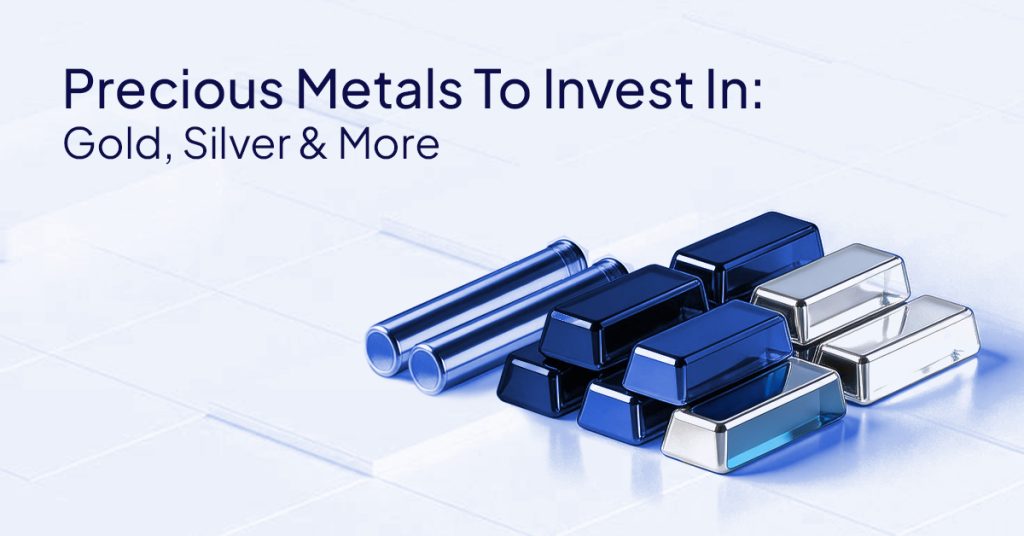
Precious metals have been in investment portfolios since time immemorial, and that appeal hasn’t faded. Global central banks have increased gold purchases by more than 1,200 tons, signaling renewed confidence in gold amid economic uncertainty. This serves as a sign of confidence amid times of uncertainty.
Are you hedging against inflation, diversifying beyond stocks and bonds, or adding an industrial exposure? Whatever your goals are, it’s essential to know the best precious metals to invest in.
Gold, silver, palladium, and platinum each have a different purpose. Gold is usually a store of value. Silver stays between investment and industrial applications. Platinum and palladium, on the other hand, are heavily dependent on the automotive and manufacturing sectors.
More than 45 percent of the demand in precious metals is in the industrial sector, which makes the demand and supply more complicated than you would anticipate.
Choosing the best precious metals is not about picking “one winner.” It is about matching metals to your investment strategy, understanding the risks, and figuring out how to buy them without overpaying on premiums.
Quick Answer
- The best precious metals to invest in depend on your goals, strategies, and needs.
- Gold is stable and a hedge against inflation. Most suitable in uncertain economic conditions.
- Silver is a bimodal investment with industrial demand. Greater volatility but better growth.
- Platinum and palladium are highly dependent on the automotive cycle. A more volatile, concentrated supply poses even greater risk.
- Physical metals provide direct ownership but must be stored in a secure location and carry premiums above the spot price.
- Exchange-traded funds are convenient and liquid without the storage problems. The fees usually vary between 0.25 and 0.75 annually.
- Mining stocks provide leveraged exposure to metal prices, but add operational and management risks.
What are the Precious Metals to Consider for Investing?
The four primary precious metals that investors can use are gold, silver, platinum, and palladium, each with different demand drivers and risks.
The behavior of all precious metals is not similar. Some are investor-sentimental. Some follow the industrial cycles. It would be good to know what drives each metal and which would make sense.
Now, what are the best precious metals to invest in? Let’s look into each.
Gold
Gold is primarily used as a store of value and an inflation hedge, driven by investment demand, central bank purchases, and safe-haven flows during periods of uncertainty.
Investors rush into gold when markets become tremulous or currencies lose their power to buy. Central banks hold large gold reserves. Unlike silver or platinum, gold relies less on industrial uses.
That brings the price of gold less under the control of manufacturing cycles and more subject to monetary policy, interest rates, and geopolitical events.
Silver
Silver is divided into investment demand and industrial demand, which generates greater price volatility than gold but provides exposure to the electronics and solar power sectors.
See silver as the less predictable cousin of gold. It remains a safe-haven asset and monetary metal; however, about half of its demand is industrial. Such a duality implies that silver can vary in both booms and busts, swinging more during booms and less during busts.
Silver prices increase rapidly when the demand in the industries is high. In the event of manufacturing stagnation, it falls even further than gold.
Platinum
The price of platinum is highly dependent on demand for automotive catalytic converters and is supplied by South Africa and Russia.
Platinum is rarer than gold, nearly 30 times rarer, but it is frequently of a lower price, since the industrial demand predominates. The automotive industry consumes platinum in catalytic converters (particularly in diesel-powered vehicles).
Platinum is directly affected when car sales are low or when manufacturers start using other metals. Supply concentration introduces another risk.
Palladium
Palladium has significant use in manufacturing gasoline-powered cars through its role in catalysts, and, as such, its prices are susceptible to fluctuations in automobile production and emission standards.
Palladium’s story is all about cars. It’s essential for catalytic converters in gasoline engines. However, the hitch is that palladium is less liquid-like than gold or silver.
Fewer dealers handle it. Spreads are wider. And it is so tied to one industry, which makes future demand unpredictable in the face of any change in automotive technology.
How Do Precious Metals Compare?
Gold, silver, platinum, and palladium differ significantly in what drives their prices, how much they fluctuate, and how easy they are to buy and sell.
Awareness of these differences would enable you not to choose a metal that does not conform to what you intend to achieve.
Key Drivers
All precious metals are affected by inflation, interest rates, the U.S. dollar, and industrial demand, although they react differently.
Gold flows with the money policy and the currency issues. Gold is generally a beneficiary when real interest rates fall or inflation rises. Silver comes after gold but adds industrial sensitivity. However, automotive cycles are tracked more closely by platinum and palladium than by macroeconomic trends.
A strong dollar usually pressures all precious metals as they are priced in USD.
Volatility and Drawdowns
Silver, platinum, and palladium have more price volatility than gold, dropping by 30 per cent or more when the market is under stress.
Gold is more likely to be stable, but it is not resistant to drawdowns. Silver is 2-3 times as able to move as gold in either direction. Platinum and palladium? Even more volatile.
That volatility is a two-sided affair: on the one hand, strong industrial demand can cause prices to soar rapidly; on the other, you have to be able to handle the drops.
Liquidity and Spreads
The bid-ask spreads and the accessibility of gold are the lowest, whereas those of palladium and platinum are higher, and buyers are fewer.
Liquidity matters when you want to sell. Gold coins and gold bars trade with narrow spreads; they are usually a few percent above the spot price. Silver is more decent, but slightly wider.
Platinum and palladium? Spreads may go up to 5-10% or higher under favorable circumstances. Lower liquidity also implies that it may be challenging to find buyers in a rush during the volatile times.
What is the Best Way to Invest in Precious Metals?
The best way to invest in precious metals depends on your priorities: direct ownership, convenience, or leveraged exposure to mining operations.
Physical metals, exchange-traded funds, mining stocks, and derivatives exist because different investors have different needs.
Physical Metals
Purchasing gold bars, gold coins, silver bullion, or other physical metals provides you with direct ownership but requires secure storage and incurs premiums over the spot price.
When you have 24-karat gold or bullion coins, you are the possessor of the metal. No counterparty risk. No management fees. But there will be a premium on the purchase, usually 3-10% over spot for gold coins, and occasionally more for silver.
Another consideration is storage. It can be stored either at home (with security risks) or by renting a safe deposit box or a professional vault. At the time of sale, the dealer repurchases at a discount to spot.
Funds and ETFs
ETFs that track the prices of precious metals offer a convenient, liquid way to invest without the hassle of holding physical precious metals, but at an annual fee.
Using ETFs, you can also gain exposure to the prices of gold, silver, and platinum, or to baskets of metals, without having to store them. You trade in shares as though they are stocks. However, fees typically run 0.25-0.75% annually.
Again, liquidity is excellent: it is possible to exit positions quickly in the market. The trade-off? You don’t own physical metal. You own shares in a fund that holds metal.
Regulated trading platforms like STARTRADER enable investors to access precious-metal ETFs and other related products through a standard brokerage account, providing a valuable means of exposure without the hassle of managing a physical holding.
Mining Stocks
The leverage exposure to metal prices is offered by investing in mining companies or their stocks, but at the cost of operational and management risk.
The leverage angle is that when the price of gold increases, the cost of gold mining companies tends to increase as well. Yet you are not only betting on gold. You are betting that that company would be able to extract and sell gold at a profit.
The mining stocks are influenced by management choices, labor conflicts, and operational costs, with no relation to metal prices. Physical gold does not have the same risks as gold stocks.
Derivatives
Derivatives such as futures and options have high leverage but require significant capital, entail margin risk, and are not suitable for most investors.
Using derivatives allows you to manage a large size using a comparatively small amount of capital. That increases profits and losses. Futures contracts are time-based, so you are dealing with time-decay costs and rolling-over costs.
Also, margin calls may put you out at the worst times. Unless you’re used to these instruments, physical metals or money are more logical.
Where Can You Invest in Precious Metals?
The best places to invest in precious metals are through physical dealers, exchange-traded funds, brokerage accounts that trade mining stocks, or dedicated platforms.
The place of purchase is as important as the purchase. There are frauds, prices are all over the place, and verifying protects you from costly mistakes.
Buying Physical
When buying physical gold bars, silver, and other bullion, verify the dealer’s details, check the premiums, and review the buyback policies before making a purchase.
All dealers are different. The trustworthy ones post transparent prices and have clear terms of buyback. Check reviews, ensure they are licensed, and confirm they are in place.
Beware of prices that are too good; when someone offers gold coins at a price 20 percent below spot, something is amiss. Also, make sure how they can manage buybacks. You do not want to be trapped, unable to sell when you require liquidity.
Investing via Exchanges and Funds
Brokerage accounts that have access to U.S. exchanges allow you to purchase exchange-traded funds, mining stocks, and, in some instances, commodity futures without actually touching metal.
Most brokerage accounts accommodate ETF trading, making it easy to access precious metals funds. The same applies to the mining company stocks.
Ensure your account supports the asset types you’re interested in. Fees matter here, too. Compare ETF expense ratios and trading commissions.
What to Check Before You Transact
Always ensure that you are dealing with a legitimate party, know the all-inclusive costs, including premiums and storage, and how quickly you can liquidate if required.
Go through a brief checklist. Does the dealer or the platform have any regulations? What are the all-in costs? How liquid is the purchase you are making?
For physical metals, enquire about insurance and storage in advance. For funds, examine the expense ratio and trading volume. A few minutes of verification saves headaches later.
How to Build a Simple Precious-Metals Allocation
Start by defining whether you’re hedging inflation, seeking diversification, or targeting industrial growth, then size positions accordingly.
Throwing money at precious metals without a plan usually ends badly. A basic structure can help you avoid overfocusing and making emotional judgments.
Define Purpose
Clarify whether precious metals act as portfolio diversification, an inflation hedge, or a strategy to capture particular trends in industries.
When you are hedging against inflation or trying to protect your wealth amid uncertainty, you should hold gold as a core holding.
In search of growth tied to industrial demand? Silver or platinum would be more suitable.
Wish to be exposed to automotive cycles? Palladium’s your play. Pick your reason, then choose the metals that align with it.
Position Sizing and Rebalancing Basics
Most conservative investment strategies allocate 5-10 percent to precious metals and periodically rebalance to keep the target weight.
One starting point is 5-10 percent of your investment portfolios. That is sufficient to provide some cushioning against market stress without overshadowing returns.
When precious metals surge and suddenly represent 20% of your portfolio, it is time to shave off. If they drop to 2%, add a bit. Rebalancing helps you buy low and sell high systematically.
Common Mistakes
Overconcentration in one metal, in pursuit of new price gains, and neglect of transaction costs and storage charges all hurt long-term returns.
Investing half of your portfolio in palladium because it is hot? The worst kind of concentration risk. Selling at a 10% discount on the spot and buying gold coins at a 15% premium? Those transaction costs stampede your returns.
Spending 500 dollars a year to store 5000 dollars’ worth of silver? It is a 10% yearly fee that is taking a bite out of your profits. Think through the whole cost structure.
Core Comparison Table
| Metal | Main Demand Driver | Typical Role | Volatility (Relative) | Key Risk |
| Gold | Investment, central banks, jewelry | Inflation hedge, store of value | Low | Interest rate sensitivity |
| Silver | Industrial + investment | Hybrid hedge and industrial play | Medium-High | Dual demand creates swings |
| Platinum | Automotive catalysts | Industrial exposure | High | Supply concentration, diesel shift |
| Palladium | Gasoline vehicle catalysts | Automotive play | Very High | EV transition, single-industry risk |
Investment Method Table
| Method | What You Own | Main Costs | Best For | Main Downside |
| Physical (bars/coins) | Actual metal | Premiums (3-10%+), storage | Direct ownership | Storage hassle, wide spreads |
| ETFs | Fund shares tracking metal | Expense ratios (0.25-0.75%) | Liquidity, convenience | No physical possession, fees |
| Mining stocks | Company equity | Trading commissions | Leveraged exposure to prices | Operational risk |
| Derivatives | Contract rights | Margin, rollover costs | High leverage, active trading | Complexity, margin calls |
Before You Invest: Checklist
- Define your goal. Are you hedging inflation, diversifying, or targeting industrial growth?
- Choose your method. There is physical ownership, exchange-traded funds, and mining stocks
- Calculate total costs. Premiums over spot, storage fees, expense ratios, and bid-ask spreads all matter.
- Check liquidity. Can you sell quickly at fair prices if you need to exit?
- Set position size. Most conservative portfolios allocate 5-10% to precious metals
- Confirm that dealers or platforms are regulated and have transparent pricing to verify legitimacy
Frequently Asked Questions
A: Most investors start with funds or physical gold. Physical metals offer direct ownership but require storage. Exchange-traded funds are convenient but carry an annual fee, while mining stocks increase leverage but risk. The majority of investors put money in or put gold in.
A: The most available are gold and silver. Gold has stability and liquidity. Silver offers the same advantages, with greater volatility and a reduced cost of entry.
A: Gold is more effective as a less volatile means of preserving wealth. Silver has greater growth potential but has greater volatility. A good number of investors have them in the form of a core and a minor portion of silver.
A: Seek low expense ratios (less than 0.50 percent), high trading volume, tangible support rather than futures, and transparent holdings. Compare charges between funds that track the same metal.
A: Confirm that the dealer or platform is controlled with open pricing. Confirm buyback policies and check reviews. Regarding funds, make sure your brokerage favors the tickers you desire. Do not take unrealistic lower prices.
A: Timing matters less than consistent allocation. Precious metals often perform well during inflation and uncertainty. Use dollar-cost averaging to even out entry prices.
A: Yes. They are more volatile, less liquid, and have concentrated supply chains. Their prices are also susceptible to economic cycles because they are directly related to automotive demand, unlike gold.
Final Thoughts
Choosing the best precious metals to invest in depends on your goals. Gold is a stable hedging asset, silver offers greater volatility and industrial exposure, and platinum and palladium are riskier metals that require automotive demand.
For each investment, the type of precious metal investment that is most beneficial varies. You can buy physical metals and take ownership of the assets while being responsible for their storage, own shares in exchange-traded funds that are not so hard to liquidate, or purchase mining stocks that offer leverage but add complexity.
Check dealers and platforms. Compare all costs, premiums, storage, expense ratios, and spreads. Regulated businesses offer the clearest, most transparent pricing, making them the ideal places to buy precious metals.
Keep in mind: This article is for educational purposes only and is not intended to be financial, investment, or legal advice. Precious metals investing is risky and carries the possibility of losing principal. Make sure to visit a certified financial advisor to discuss your situation, and never invest without doing your own research.
Tags


Open Live Account
 Email Address
 Phone Number
Important Notice
STARTRADER does not accept any applications from Australian residents.
To comply with regulatory requirements, clicking the button will redirect you to the STARTRADER website operated by STARTRADER PRIME GLOBAL PTY LTD (ABN 65 156 005 668), an authorized Australian Financial Services Licence holder (AFSL no. 421210) regulated by the Australian Securities and Investments Commission.
Important Notice for Residents of the United Arab Emirates
In alignment with local regulatory requirements, individuals residing in the United Arab Emirates are requested to proceed via our dedicated regional platform at startrader.ae, which is operated by STARTRADER Global Financial Consultation & Financial Analysis L.L.C.. This entity is licensed by the UAE Capital Market Authority (CMA) under License No. 20200000241, and is authorised to introduce financial services and promote financial products in the UAE.
Please click the "Continue" button below to be redirected.


