








 Web Trader MT5












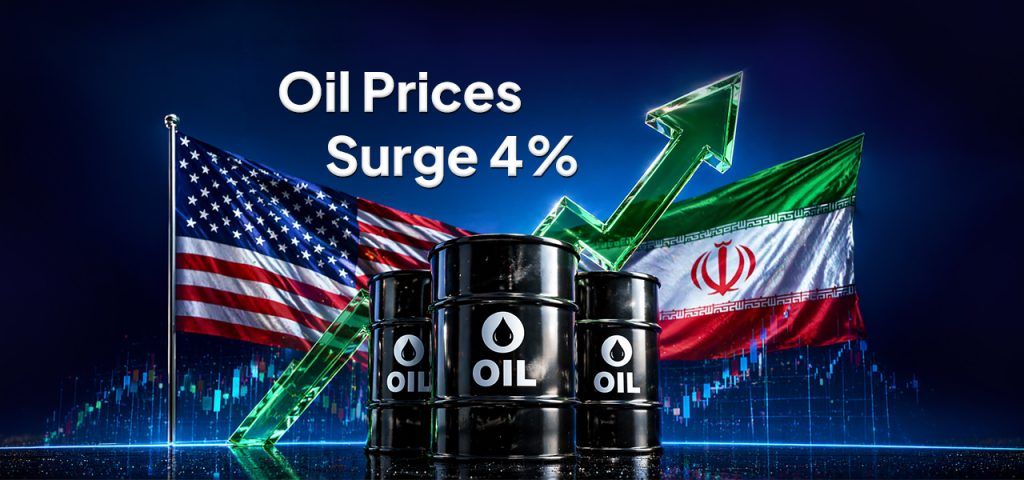
Oil prices jumped sharply on Monday with West Texas Intermediate WTI up 6%, and Brent rising 5% as tensions between the U.S. and Iran escalated again, raising fears of a renewed conflict and fresh supply disruptions. The move followed attacks on commercial ships in the Strait of Hormuz, along with a U.S. seizure of an Iranian vessel after it allegedly tried to bypass the naval blockade.
Uncertainty remains high as the ceasefire is close to expiring, peace talks are in doubt, and the Strait of Hormuz remains effectively restricted, keeping energy markets on edge.
U.S. stock futures fell early Monday as renewed tensions between the U.S. and Iran unsettled markets. The decline came as fears of a wider conflict pushed oil prices sharply higher
Asia-Pacific markets were mostly higher on Monday, as investors balanced strong regional momentum with caution over renewed tensions between the U.S. and Iran.
Despite the geopolitical risks, several Asian markets advanced. South Korea was supported by strength in technology shares, particularly after positive developments linked to AI demand.
In China, the central bank kept lending rates unchanged for an 11th straight month, even as rising energy costs and global uncertainty cloud the economic outlook. This came after stronger-than-expected first quarter GDP growth of 5%. Overall, markets are showing resilience, but investors remain highly focused on whether tensions in the Middle East escalate further or return to diplomacy.
Gold struggled to extend its rebound on Monday after recovering from a one-week low near $4,738, as mixed market forces kept price action volatile. A softer US dollar offered some support to gold, but gains were limited by a sharp rise in oil prices, which renewed inflation concerns and pushed U.S. bond yields higher reducing demand for the non-yielding metal.
The main driver remains rising geopolitical tension between the U.S. and Iran. The U.S. seizure of an Iranian cargo ship and the continuation of the naval blockade have weakened hopes for fresh peace talks before the current ceasefire expires on April 22. Iran has responded by closing the Strait of Hormuz again, increasing fears of further escalation and supporting safe-haven demand for the dollar.
At the same time, expectations that the Federal Reserve may still cut rates later this year are limiting broader dollar strength, which helps prevent deeper losses in gold. With no major U.S. economic data due, gold is likely to remain highly sensitive to any new headlines surrounding the U.S.–Iran conflict, peace negotiations, and energy market developments.
Tags


Open Live Account
 Email Address
 Phone Number
Important Notice
STARTRADER does not accept any applications from Australian residents.
To comply with regulatory requirements, clicking the button will redirect you to the STARTRADER website operated by STARTRADER PRIME GLOBAL PTY LTD (ABN 65 156 005 668), an authorized Australian Financial Services Licence holder (AFSL no. 421210) regulated by the Australian Securities and Investments Commission.
Important Notice for Residents of the United Arab Emirates
In alignment with local regulatory requirements, individuals residing in the United Arab Emirates are requested to proceed via our dedicated regional platform at startrader.ae, which is operated by STARTRADER Global Financial Consultation & Financial Analysis L.L.C.. This entity is licensed by the UAE Capital Market Authority (CMA) under License No. 20200000241, and is authorised to introduce financial services and promote financial products in the UAE.
Please click the "Continue" button below to be redirected.


