







 Web Trader MT5





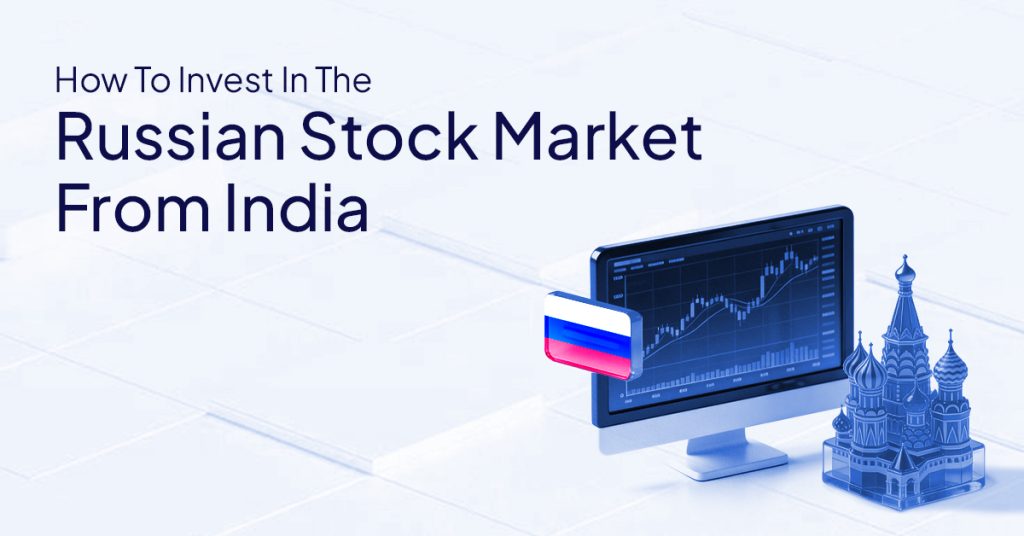
Indian retail investors are increasingly focusing on global diversification; however, penetrating specific markets, such as Russia, presents its own regulatory challenges.
As geopolitical changes transform the global financial landscape, a pressing question is now being posed by many traders: Can one even access the Moscow Exchange or similar exchanges in India today?
Although the intention to buy shares or invest in an energy company or a commodity business is quite self-explanatory, the actual aspect is the necessity to navigate a complicated web of penalties, settlement obstacles, and trading pauses.
For those wishing to know how to invest in the Russian stock market from India, it is not a straightforward affair. It involves a keen insight into the Liberalised Remittance Scheme (LRS), exchange rates, and the present state of operations of the international settlement houses.
In contrast to regular international investing, where liquidity is high, attempting to invest in Russian stocks in India today carries significant risks, including capital lock-up and settlement risks.
This guide outlines the theoretical checkpoints, compliance roadblocks, and due diligence required to familiarize you with the landscape.
Quick Answer
Sanctions, trade suspensions, and barriers to settlement severely restrict access to Russian equities for Indian residents. The exposure is contingent upon the changing market rules and the custodial permissions.
Before engaging in any transaction involving Russian stocks in India, investors must ensure that the instruments are available and that the compliance and liquidity conditions are met.
Can Indians Invest Right Now? (Availability & Compliance)
Harsh trading bans, custodial restrictions, and settlement uncertainties have characterized the past few years for Russian equities.
Although Indian law does not restrict foreign investment in other countries through LRS, the feasibility of executing a trade depends on the end recipient of the trade.
Sanctions or the inability to settle trades (exchange ownership of shares) have resulted in many international brokerages and custodians suspending access to Russian securities.
Moreover, an order may be blocked from selling and repatriating money, even if a buy order has been placed, in cases where banking channels are limited. Availability is subject to change and must be verified before taking any action.
How to Invest in the Russian Stock Market from India
Access to stock investing is solely based on existing sanctions, custody regulations, and exchange status. Provided that the routes are verified as open and compliant, it may offer options such as special-purpose international accounts or diversified funds with specific mandates.
However, limited access means that in many cases, investors are forced to look to wider emerging market funds that provide transparent but limited Russia exposure, as opposed to trying to acquire individual stocks.
Routes to Consider (If Access is Available)
When foreign equity exposure is required, investors typically compare various models, such as feeder funds or direct international access.
Note: These routes are not always available depending on the geopolitical conditions.
How to Buy Russian Stocks from India
In the event that there is a compliant path to follow, investors tend to investigate several structures, each with its own risks, costs, and availability.
- India-Listed Feeder Funds/ETFs (If Active): These are Indian mutual funds that invest in foreign funds or exchange-traded funds (ETFs) listed on the Indian stock exchange. It is the most convenient path because it involves the use of INR. Nonetheless, because of recent events, several funds have halted new inflows or reduced their Russian investments to zero. Always look at the latest monthly factsheet.
- International Account under LRS: This involves opening an account with a foreign broker, such as STARTRADER, that accepts clients from India. You need to ensure that the particular broker and their custodian are allowed to trade and settle Russian instruments of non-residents legally.
- Depositary Receipts (GDRs/ADRs): In the past, Global Depositary Receipts (GDRs) or American Depositary Receipts (ADRs) of Russian companies listed on London or US stock exchanges were purchased by investors. A number of them were suspended or delisted. To fund an account for this purpose, live verification is required.
Routes vs. Key Considerations
| Route | Access & Diversification | Costs | Tax/Filing Complexity | Availability Today |
| India-Listed Feeder/ETF | High (if active) | Low–Med | Low | Varies; Russia’s weight may be near zero |
| International Account (LRS) | Flexible | Med–High | Med–High | Varies; depends on sanctions/settlement |
| ADRs/Regional ETFs | Medium | Med | Med | Some instruments are suspended historically |
Step-by-Step Setup Under LRS
The Liberalised Remittance Scheme (LRS) is the primary method through which Indians living abroad can transfer funds back home to be invested in other countries.
Assuming that you conclude that there is a compliant international route, the procedure usually involves the following steps:
- Complete KYC: To open an account with a foreign broker, you will need to submit your PAN card and a valid Proof of Identity and Address (POI/POA).
- Create a Compliant Account: Verify that the platform accepts Indian residents and has access to the specific exchanges you are interested in.
- Start LRS Remittance: Visit your bank to complete the A2 form and other LRS paperwork. It is worth noting that the Tax Collected at Source (TCS) regulations are applicable and need to be confirmed to the existing current rates.
- Currency Conversion: To finance the trading account, the currency is converted to a base currency (Normally USD or EUR).
- Place Order: Trades in instruments that have been permitted. Retain all contract notes, FX confirmations, and bank advice slips for tax reporting purposes.
There is no need to quote LRS limitations, TCS percentages, or tax rates during the process, as these vary frequently and must be checked on the occasion of the transaction.
Costs & Taxes You Must Factor
International investments involve several levels of charges, including currency exchange fees and special regulatory fees.
In addition to the price of the asset, the returns can be severely depleted by these “friction costs:
- Brokerage and Commissions: International trades typically have higher minimum commissions compared to local trades.
- FX Conversion and Spreads: You incur losses when converting INR to USD, and potentially again, in the case of an asset priced in RUB or another currency.
- Custody Fees: There are international platforms that impose an annual maintenance fee or custody fee for holding foreign assets.
- Withholding Tax: Dividends from foreign companies are subject to withholding tax in the country of origin.
- Capital Gains Tax (India): You are required to report in your Income Tax Return (ITR) the foreign assets that you hold. In India, the gains are subject to taxation as a type of capital gain.
Currency Risk, Settlement Risk, and Sanctions Risk
The risks inherent to the Russian markets extend beyond ordinary volatility to include settlement failure and asset freeze.
These three are key risks that you must learn before going any further:
- Multi-layer Currency Exposure: You are exposed to the INR/USD rate and the USD/RUB rate. Equity gains can be wiped out by volatility in the ruble.
- Settlement Risk: This is defined as the risk of paying for a particular stock but failing to receive the shares, or selling a stock and failing to obtain the cash, due to venue stoppage or custodial interruptions.
- Liquidity Problems: Spreads increase widely in restricted markets. You might end up having a screen price and cannot trade at it (impaired price discovery).
Caution: Market rules can shift rapidly. During suspensions, capital invested in limited areas may be locked up for extended periods.
Due-Diligence Checklist
Due diligence should be carried out strictly to ensure capital lock-up is not experienced in restricted markets.
Before making any commitments in relation to Russian equity exposure, check the following:
- Check if it is a tradable and settable instrument among non-residents: See the broker’s announcements, any exchange announcements, and the support of custodians. Past access does not guarantee present access.
- Confirm LRS process and documentation requirements with your bank: Obtain the latest forms, learn about the implications of TCS, and clarify the processing timelines. Banks can add extra restrictions on top of the regulatory requirements.
- Calculate all fees: Determine the fee for each level of trading or conversion of FX, remittance fees in both directions, custody fees, and any platform fees or inactivity fee. Before any movement in the market, total costs may account for more than 35% of the invested capital.
- Be aware of fundamental tax reporting and withholding requirements: Be familiar with which Indian tax returns to fill out, whether any foreign assets disclosures are required, and whether the provisions of the DTAA have the effect of lowering withholding. Have records to the standard of the Indian tax authorities.
- When considering ETFs or feeder structures, review the ETF or feeder structure’s factsheets or prospectus: Verify that the exposure to Russia is current (not outdated), that frozen position valuation is accurate, and that the liquidity conditions for fund redemptions are well understood.
- Think about the way out: Have an idea of how you will get out, admit that in an emergency, there may be no liquidity, and price positions to the probability of total capital loss or indefinite lock-up.
FAQs
It can only be accessed with the permission of current sanctions, settlement systems, and custodial systems; availability varies considerably due to geopolitical constraints, venue-based restrictions, and operational limitations. Live access should be verified with brokers, custodians, and banks to ensure that when Indian investors seek to conduct any transaction, they are certain that the old routes are not operational.
Generally, the safest type is a diversified emerging-market fund managed by a reputable asset manager. However, you need to verify the factsheets on actual Russian holdings in existing funds, as most funds have written down or closed their Russian positions. Even safe funds can contain illiquid assets or even frozen assets whose valuation is unpredictable.
Dozens of ADRs and GDRs of Russian companies were suspended or delisted on London and American exchanges, with their trading status altered in accordance with the development of sanctions and the actions of depositaries. Remitting funds should always be confirmed with your broker, who can direct you to their live tradability and settlement capability, even when a security is listed in history. This is because just because a security was listed in the past does not mean it is available now.
With outward remittance, you will be required to use your PAN card, documents of KYC (Aadhaar, passport, address proof, etc.), and bank-specific forms (usually, the A2 form with the purpose code and declaration). Precise requirements vary by bank and are subject to change with any updates to regulations; it is strongly recommended that you verify you have the current requirements before making any transfer.
Conclusion
The ability to access Russian equities in India is highly dependent on active settlement systems, custodial rights, and compliance with sanctions, which can vary without investor intervention and frequently without warning.
Indian residents wishing to invest in Russian stocks from India must take the road less traveled, focusing on due diligence, cost evaluation, and compliance checks rather than making assumptions about returns.
The majority of conventional channels are either out of business or operationally non-functional; the few that seem operational may shut down in the middle of a transaction.
Should you choose to go ahead despite these limitations, check out all claims of access individually, appreciate that liquidity can be lost without any previous notice, and scale any position to the amount of capital you can either lose or commit to without restriction.
The risk profile and complexity of the Russian equity exposure in India are much higher than those of regular international investments.
Tags


Open Live Account
 Email Address
 Phone Number
Important Notice
STARTRADER does not accept any applications from Australian residents.
To comply with regulatory requirements, clicking the button will redirect you to the STARTRADER website operated by STARTRADER PRIME GLOBAL PTY LTD (ABN 65 156 005 668), an authorized Australian Financial Services Licence holder (AFSL no. 421210) regulated by the Australian Securities and Investments Commission.
Important Notice for Residents of the United Arab Emirates
In alignment with local regulatory requirements, individuals residing in the United Arab Emirates are requested to proceed via our dedicated regional platform at startrader.ae, which is operated by STARTRADER Global Financial Consultation & Financial Analysis L.L.C.. This entity is licensed by the UAE Capital Market Authority (CMA) under License No. 20200000241, and is authorised to introduce financial services and promote financial products in the UAE.
Please click the "Continue" button below to be redirected.


