








 Web Trader MT5






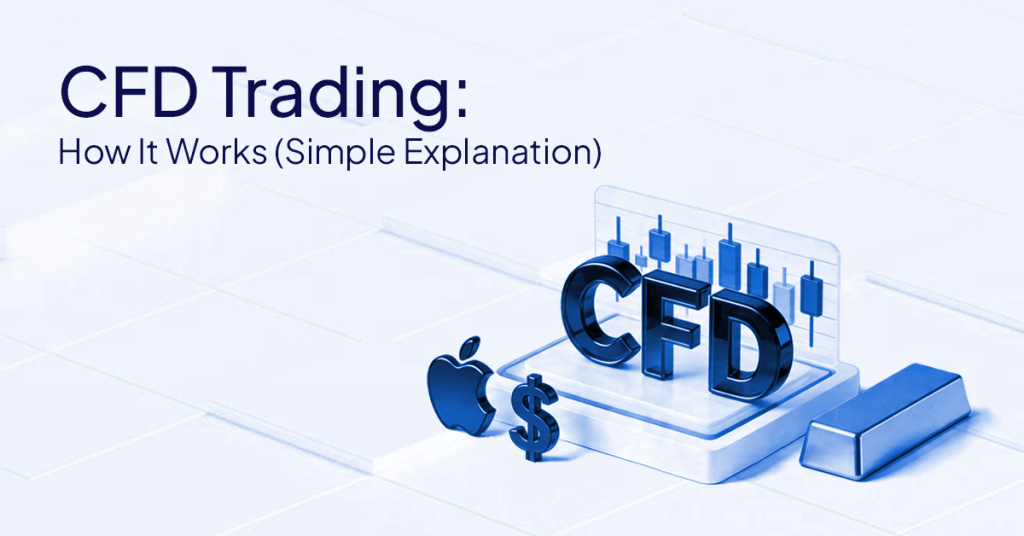
CFD trading allows you to speculate on price movements in financial markets without owning the underlying asset.
CFDs stand for Contracts for Difference. Trading them basically means that you are entering into a contract. But this contract requires the exchange of the difference between the opening and closing price of a given asset.
According to market research, retail CFD accounts accounted for approximately 80 percent of total CFD trading worldwide. However, broker disclosures consistently state that 70-82 percent of traders lose money on retail CFDs, which is why you need to know how CFDs work before you start.
Here’s the thing: With CFDs, you can make gains in both rising and falling markets, leverage to open larger positions, and access thousands of markets through a single account.
But here’s the catch: leverage amplifies losses as much as gains, and expenses grow at an alarming rate. Let’s break down exactly how it all works!
Quick Answer
- CFDs are financial contracts that enable you to trade the changes in prices without the possession of stocks, currencies, or commodities.
- You may go long (profit on increasing prices) or short (profit on decreasing prices) on thousands of markets.
- Margin implies paying a part of the trade value, yet the losses are computed on the entire size of the position.
- Profits and losses are magnified by leverage; a 1% price change can translate into 10- 20% account changes.
- Costs include spreads, commissions (occasionally), and overnight financing on positions held for more than one day.
- Position sizing and stop-loss orders will always save you against margin calls.
What Is a CFD?
A CFD (Contract for Difference) is a financial derivative that is used to follow the movement of a particular underlying asset without the need to own it.
Simple Definition
A CFD is like an agreement to pay or receive the difference between the price at which you open and close a trade.
You open a long position if you expect Tesla to rise. Tesla goes up the ladder from $200 to $210, and you have made $10 per share. If it goes down to $190, you lose 10 a share, yet you did not own the stock.
What You Trade (Price Movement), Not Ownership
You are speculating on price movements, not on ownership.
No voting rights, physical delivery, or shareholder benefits. Some brokers have accounts that are adjusted for dividends, but you don’t get actual dividends or even voting rights.
Common Markets CFDs Track
CFDs cover major financial markets from one platform.
These include forex pairs (EUR/USD, GBP/USD), stock indices (S&P 500, NASDAQ), commodities (gold, oil), single stocks, and even cryptocurrencies, where legally permissible.
How Do CFDs Work?
CFDs work by forming a contract between you and your broker to settle the difference in price between the moment of entering and the moment of leaving.
The CFD Contract and Who You Trade With
There’s something called over-the-counter trading, and that’s where you trade directly with your CFD provider.
They provide quotes for the buy and sell prices, reflecting the underlying market and the spread. When you trade, you enter into a financial contract with that provider; they handle the other half.
Position Size and P&L Basics
The price move multiplied by your position size equals your profit or loss.
Trade 10 CFDs at an index of 5,000, and it goes to 5,010; you have earned 10 CFDs x 10 points = 100 points. Assuming each point is worth $1, that is a $100 profit before expenses.
Why CFDs Allow Long and Short Trades
CFDs allow you to profit when prices are falling, as you are not actually buying the asset; you are simply agreeing on the direction.
It is as easy as clicking a sell button, unlike the traditional stock market, where shorting is complicated.
CFD Trading: How It Works in Practice?
The practical method of CFD trading is straightforward: open, manage, close.
Step-by-Step Flow (Open → Manage → Close)
- Step 1 — Open: Select market, decide long or short, and enter position size. Position opens (possibly 5% post margin).
- Step 2 — Manage: Watch the market. Set a stop-loss to limit losses or a take-profit to lock gains.
- Step 3 — Close: Exit by reversing your entry. Values differ, and the difference between them defines your P&L.
What Happens When You Close the Trade
At the time of closing, the contract is settled, and profit/loss is realized on your account. Balance increases if you made a profit and decreases if you incurred a loss. The trade is over, and no more market risk.
Realistic Outcomes: Profit, Loss, Break-Even After Costs
Don’t forget costs. The actual forex gain of 10-pip will be $100, minus the 20-pip spread, and the 15-pip overnight fee will make you gain only 65, not 100. Always consider the expenses before you think you are ahead.
How Does Going Long vs Short Work in CFDs?
Going long entails purchasing, anticipating a price increase; going short entails selling, anticipating a price decrease.
Long Example (Price Rises)
You buy 10 oil CFDs at $70. Oil rises to $75. You close. Profit: ($75 – $70) x 10 = $50 before costs. Minus net spread and overnight charges.
Short Example (Price Falls)
You sell 5 S&P 500 CFDs at 5,000. The index drops to 4,950. You close. Profit: (5,000-4,950) x 5= 250 points x 1= $250 before costs.
What Can Go Wrong in Each Direction
Long trades lose in a declining market, while short trades lose when prices increase. And since markets can keep rising, shorts have unlimited potential losses without a stop-loss.
What Is Margin in CFD Trading?
The sum of money required to start and maintain a leveraged position is the CFD margin; it is collateral, not a fee.
Initial Margin vs Maintenance Margin
An initial margin initiates the trade. Trading $10,000 with a 10% margin requires an upfront deposit of $1,000. However, the maintenance margin keeps it open. If equity drops below this (often 50% of the initial), you get a margin call.
Margin Level and Why It Matters
Margin level = (equity / used margin) x100%. Below 100% is danger territory. Most brokers offer margin calls at 100 percent and 50 percent of the position’s value.
Margin Call and Forced Close-Out
A margin call is used to warn you that your equity is too low so that you can deposit more or close trades. A forced close-out occurs if you ignore it.
The broker will automatically close your positions to avoid negative balances. It implies that you lose all your accounts if you are overleveraged.
How Leverage Works in CFDs
CFD leverage allows you to trade larger positions with smaller capital, which magnifies gains and losses.
Leverage vs Position Size (Don’t Confuse Them)
Leverage is the ratio of position to margin. $1,000 with 10:1 leverage = $10,000 position. The fact that you can leverage high does not mean you should. Smart traders often use less than what is given.
Leverage Amplifies Both Gains and Losses
A 1% move on 10:1 leverage = 10% gain or loss on margin.
At 20:1, it’s 20%. When the price goes against you by 50:1, then your deposit is gone. This is why 70-82% of retail traders lose; overleveraging kills accounts.
Risk Controls Beginners Should Understand (Stop-Loss Concept, Sizing)
Stop-loss orders close positions at your chosen price, limiting losses.
Position sizing implies taking a risk of 1-2 percent per trade. With $5,000, you can risk $50 to $100 per trade. You can even survive 20 or more losses without much harm.
What Does It Cost to Trade CFDs?
CFD expenses fall into three major categories (spread, commission, swap) and, in some cases, extras.
Spread
The spread is the difference between the sell/buy/sell prices. Gold quoted $2,000/$2,001 has a $1 spread. You go into this with a little negative position.
Commission
Some providers charge a $5 per-trade commission on each side. Spreads are usually used for Forex/index, while commissions are used for equity CFDs.
Overnight Financing / Swap
The CFD overnight rate is an interest charge on leveraged positions that are held after the market closes.
It is the daily interest on borrowed capital. In the case of forex, it is the interest rate differential between the currencies. In the case of stocks/Indices, it is a benchmark rate and a markup. The long-term positions attract substantial charges.
Other Possible Costs to Check
Watch out for currency conversion fees, inactivity fees, and data fees if real-time quotes are unavailable.
CFD vs Buying the Underlying Asset
CFDs and ownership are not the same; the former is used for short-term speculation, and the latter for long-term investing.
Ownership, Voting/Dividends (If Relevant), Holding Costs
Stock ownership entails dividends and voting rights.
CFDs do not pay either (some brokers do not adjust accounts to dividends). There are no daily charges for owning stock; CFD overnight financing fees are charged daily.
Leverage/Margin Differences
Conventional stock accounts seldom provide an advantage of more than a 2:1 margin. CFDs offer 5:1, 10:1, and 30:1 leverage, which is attractive to active traders but perilous for beginners.
When Each Approach Is Typically Used (Neutral Framing)
For short-term price movements and easy shorting, use CFDs. Use ownership for long-term portfolios and dividends.
| Feature | CFD | Buying Underlying |
| Ownership | No ownership; contract only | Full ownership |
| Voting/Dividends | No voting; dividend adjustments may apply | Full shareholder rights |
| Leverage | Yes, large positions with less capital | Limited or no leverage |
| Short Selling | Easy; click “sell.” | Difficult; requires borrowing |
| Holding Costs | Daily overnight fees | No ongoing fees |
| Typical Use | Short-term trading | Long-term investing |
A Simple CFD Trading Example
Let’s walk through realistic scenarios with actual numbers.
Example Assumptions (Price, Size, Margin, Costs)
- Asset: EUR/USD
- Entry: 1.1000 (long)
- Position: 10,000 units
- Margin: 3.33% (30:1 leverage) = $367
- Spread: 2 pips ($2)
- Overnight fee: $1/day
- Account: $5,000
Profit Scenario
EUR/USD rises to 1.1050 (50 pips). Profit: 50 x $1 = $50. Costs: $3. Net: $47. Return on margin: 12.8%.
Loss Scenario + What Triggers Margin Pressure
EUR/USD falls to 1.0950 (50 pips). Loss: $50 + $3 = $53. Account: $4,947.
Examples of margin pressure: You trade 50,000 units (5 times as much)—margin: $1,835. EUR/USD drops 350 pips. Loss: $1,750. Balance: $3,247. Margin level: 177%–getting tight.
Another bad move call is a margin call. This demonstrates the extent of over-altruistic strategies in which normal moves change into catastrophic losses.
How to Start Trading CFDs Safely as a Beginner
Practicing with virtual money before risking real money is the safest place to start.
Use a Demo First (Practice Goals)
Demo accounts are virtual trading accounts that are free and reflect the actual market conditions. Invest for at least 1 month to learn the basics, study the margin, and watch the accumulation of fees. Do not move to live trading just because you made it in the virtual world.
Build a Checklist Before Going Live
Before your first actual trade, answer:
- What’s my position size?
- What’s my max loss?
- Where’s my stop-loss?
- Do I have a margin buffer?
- Have I checked costs?
- Is there major news today?
Platform Basics
Numerous providers offer MetaTrader 4 (MT4) or 5 (MT5), which are the industry-standard platforms for charts, indicators, and order management. Both allow you to place orders, set stop losses, and track positions.
Typical CFD Costs
| Cost Type | What It Is | When You Pay | Typical Range |
| Spread | Buy/sell price difference | Every entry | 1-5 pips (forex); 0.1-1% (stocks) |
| Commission | Fixed fee per trade | Each trade (if applicable) | $0-$10 per side |
| Overnight Financing | Daily interest for leverage | Every night held | 2-8% annually, charged daily |
| Currency Conversion | Fee for different currencies | When applicable | 0.3-0.5% |
Before You Place Your First CFD Trade
✓ Know your position size
✓ Set your maximum loss
✓ Place your stop-loss
✓ Check your margin buffer
✓ Check the costs (spread, commission, overnight)
✓ Review the news risk
Frequently Asked Questions
A: CFD is a contract that pays the difference if the price moves in your favor or imposes an obligation if it moves against you, even though you do not own the asset.
A: Select a market, determine whether the price will increase or decrease, open a position with margin, and close when it is time to do so.
A: Negative balance protection in controlled markets means you can lose only up to your balance. Without protection, you may owe money if markets gap past your stop.
A: The deposit of leveraged positions is the margin. When there is a loss of trades and equity declines to the maintenance level, margin calls are issued.
A: The overnight fee is the daily interest for holding leveraged positions past close, charged every night the trade stays open.
A: No. Purchasing stocks will provide ownership and dividends. CFDs are not owned but follow the price.
A: CFD is legal and regulated in most nations, but rules differ. The US does not allow retail traders to trade CFDs. Strict regulations are in place in Europe, Australia, and Asia.
A: Yes. Demos allow you to learn the basics and test strategies without spending money. At least spend one month in the demo.
Final Thoughts
CFDs are more flexible than traditional investing: they trade in thousands of markets, can profit when prices fall, and can leverage returns. However, it is easy to wind up without risk management within minutes through the same leverage. The majority of retail CFD traders lose money due to overtrading, overleveraging, and failing to follow the basics.
Keep it small at the beginning, practice demos, and learn the margin before putting money into the game. Also, understand that this article is not investment advice but educational. Trading CFDs is highly risky, and not all investors can practice it.
You should continually evaluate the level of risk you can take and the costs involved, and always consult a qualified financial advisor before trading CFDs.
Disclaimer: No representation is given, warranty made or responsibility taken about the accuracy, timeliness or completeness of information sourced from third parties. Because of this, we recommend you consider, with or without the assistance of a financial adviser, whether the information is appropriate having regard to your particular circumstances.
Tags


Open Live Account
 Email Address
 Phone Number
Important Notice
STARTRADER does not accept any applications from Australian residents.
To comply with regulatory requirements, clicking the button will redirect you to the STARTRADER website operated by STARTRADER PRIME GLOBAL PTY LTD (ABN 65 156 005 668), an authorized Australian Financial Services Licence holder (AFSL no. 421210) regulated by the Australian Securities and Investments Commission.
Important Notice for Residents of the United Arab Emirates
In alignment with local regulatory requirements, individuals residing in the United Arab Emirates are requested to proceed via our dedicated regional platform at startrader.ae, which is operated by STARTRADER Global Financial Consultation & Financial Analysis L.L.C.. This entity is licensed by the UAE Capital Market Authority (CMA) under License No. 20200000241, and is authorised to introduce financial services and promote financial products in the UAE.
Please click the "Continue" button below to be redirected.


