







 Web Trader MT5




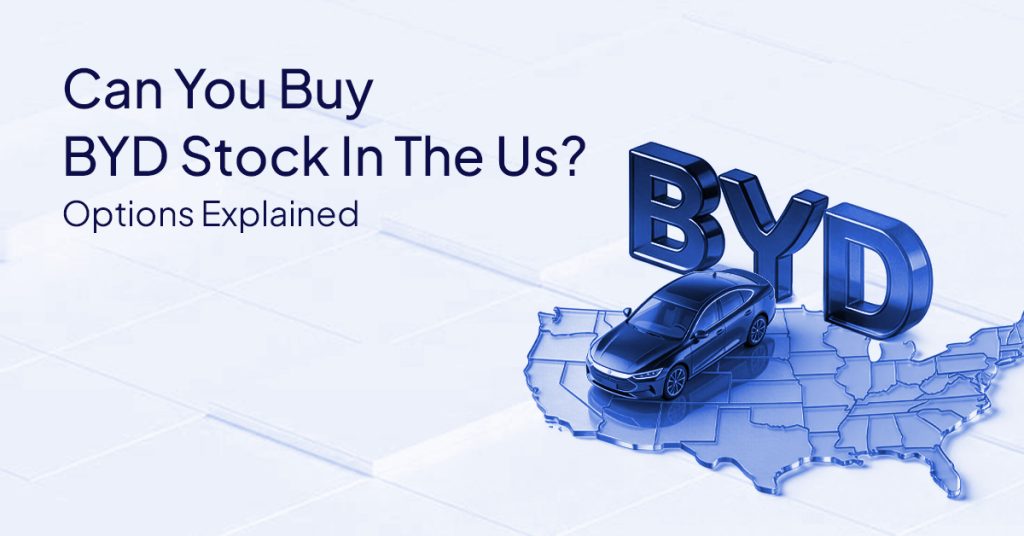
BYD has emerged as one of the global leaders in electric vehicle manufacturing, and there are plenty of American investors who want in on the action. But here’s the thing – BYD isn’t listed on major U.S. exchanges like the NASDAQ or the NYSE. That leaves many wondering, “Can you buy BYD stock in the US?” and, if so, what is it really worth?
The answer isn’t as simple as picking up something like Tesla or Ford. BYD’s primary listing is on the Hong Kong Stock Exchange, which adds some extra steps for U.S.-based investors. You might be able to trade on OTC, over-the-counter markets, or international trading platforms, but ultimately, you’ll be limited by what services your brokerage offers.
Knowing where BYD trades, which ticker symbols to look for, and the risks you take on when purchasing foreign stocks can help you determine whether this investment is right for your portfolio. Let’s break down your options.
Quick Answer
- Yes, you can buy BYD stock in the U.S.
- Availability depends on your brokerage’s international market access.
- BYD is primarily listed on the Hong Kong Stock Exchange (HKEX) under stock number 1211.HK.
- On some platforms, OTC can be available via a ticker symbol
- Spreads and liquidity on these choices can vary greatly.
- Purchasing BYD stock, like any foreign-held security, requires you to make a currency conversion from USD (the quoted price of the stock) to HKD
- Make sure to always check the correct ticker and trading venue so you do not buy the wrong security.
Can You Buy BYD Stock in the US?
Yes, American investors can buy BYD stock, but access depends on whether your brokerage allows you to trade in international markets or over-the-counter.
It’s not as simple as buying a domestic U.S. stock. BYD itself doesn’t have a direct listing on the NYSE or NASDAQ, so you won’t find it lounging next to Apple or Amazon in any normal stock screener. Ultimately, your options to purchase BYD shares will depend on the markets offered by your platform.
The Short Answer
When you see “available”, it means your brokerage provides access to the Hong Kong Stock Exchange or OTC stocks that track the main listing of BYD.
When individuals question whether they can purchase BYD stock in the US, they want to know whether the stock is available for investment through an American brokerage. Some platforms allow you to trade on foreign exchanges, such as the Hong Kong Stock Exchange.
The others are OTC forms: foreign shares listed on U.S. over-the-counter markets. Both of these approaches may be successful, and each has different costs and risks.
Why Availability Differs by Platform
Not every broker provides OTC and international trading, and you might not have access to specific foreign markets because the regulations are too complex.
Even more infrastructure and regulatory compliance are required in international trade. Some platforms chose to embrace it, while others did not.
So what’s easier? Well, it is the over-the-counter (OTC) markets, but they also have their problems, such as lower liquidity and wider spreads. Before you assume you can trade BYD, determine what your specific platform allows.
Where Does BYD Stock Trade?
It is primarily listed on the Hong Kong Stock Exchange, but U.S. investors can buy the company’s OTC shares.
Knowing the actual location of the stock trade is important because it determines not only trading hours but also liquidity and investor safety.
Primary Listing vs OTC Access
BYD is primarily traded on the Hong Kong Stock Exchange with ticker 1211.HK, while OTC tickers such as BYDDY and BYDDF would give you indirect access via U.S. markets.
Most of the action takes place on the Hong Kong listing — higher volume, tighter spreads, better liquidity. Here’s how: O.T.C. stocks trading in the United States are really shares of those Hong Kong shares, but they trade separately at their own prices (although they generally move together).
Think of OTC as a mirror image of the Hong Kong market, but sometimes that mirror is slower or slightly distorted.
Note: BYDDY is an American Depositary Receipt (ADR), while BYDDF is ordinary shares, which can explain why there may be differences in liquidity and pricing between the two.
Trading Hours and Settlement Differences
Hong Kong’s market doesn’t overlap with the United States’, and the settlement process isn’t as straightforward as it is with a regular U.S. stock trade.
Hong Kong’s exchange operates during Asian business hours, or roughly between 9:30 p.m. and 4 a.m. Eastern time for U.S.-based investors. OTC markets mimic U.S. hours, with little to no volume.
Settlement times can also differ, especially in direct Hong Kong trades. Always know when your funds and shares will settle.
What Ticker Should You Look for When Buying BYD Shares?
The ticker varies depending on the market you’re in. 1211.HK if you want Hong Kong direct, or BYDDY/BYDDF for OTC access.
Reaching for the wrong ticker is all too easy and can result in accidentally buying a completely different security. It’s nice to take a minute to check that you have the right one, so there won’t be any headaches later.
How to Confirm the Correct Ticker and Venue Safely
Always double-check the ticker symbol for the trading exchange you’re using and cross-check it with BYD’s official investor relations website or other financial databases.
You might find a variety of results if you search for “BYD.” Make sure the one you’re picking actually says Hong Kong Stock Exchange or OTC, whichever of those you are trying to buy.
Then check the company name, verify the exchange, and confirm the security type. If something seems amiss, take a breath and double-check it before you place your order.
Common Mistakes
Investors occasionally purchase securities with similar names, click on the wrong market’s version, or fail to notice that they are buying a different share class.
“BYD” can pull up more than one ticker. Perhaps there’s another company with similar letters. Maybe you mistakenly bought a warrant instead of common stock.
Also, you may have clicked an A-share listing when you intended to select a list of H-shares. These errors occur more often than you think, particularly when platforms have dozens of securities with overlapping names.
How to Buy BYD Stock in the US Step by Step
Verify market access, select your order type, know all costs & submit the order with attention to execution details.
After you have determined where BYD trades and which ticker to use, the actual process of buying presents a few extra wrinkles compared with a typical domestic stock purchase.
Step 1 — Confirm You Have Access to the Right Market
Before you place your order, make sure you have an online brokerage account that provides access to the Hong Kong Stock Exchange or the over-the-counter (OTC) markets.
Open your platform and see if you can trade globally. Some platforms may require you to sign additional contracts and turn on special features. Over-the-counter availability is broader but not universal.
Pretty good to know now, because you don’t want money in your account and then not be able to make the trade.
Step 2 — Check Order Type
When you are looking to buy a foreign or over-the-counter stock, always use limit orders to set your entry price, especially when spreads are wide or liquidity is low.
You can get a worse price than you expect on thinly traded OTC stocks if you use market orders. The bid-ask spread can be a few percentage points wide at certain times.
However, with limit orders, you can specify the highest price you’re willing to pay. It may not execute, but at least you won’t accidentally overpay.
Step 3 — Understand Costs
Consider currency conversion fees and potentially higher commissions for international trades, as well as wider bid-ask spreads than with domestic stocks.
If you are going to trade Hong Kong shares, you need to convert USD to HKD. Your platform will charge for that conversion — typically 0.5% to 2%, depending on the provider. There may be higher international trade commissions than domestic ones.
And those spreads? They eat into your returns more than you might think, especially on small positions.
Step 4 — Place the Order and Monitor Execution
Submit your order with realistic expectations for execution speed, and confirm that it was filled at an acceptable price before assuming all went well.
International orders aren’t always filled as quickly as domestic orders. You may not receive immediate confirmation. After it fills, check the execution price against what you expected.
If it’s way off, figure out why. Perhaps your spread was wider than you realized, or maybe there was a gap in the price. If you understand what happened, you can make better decisions next time.
What Are the Risks of Buying BYD Stock From the US?
Buying foreign stocks introduces liquidity risk, currency exposure, regulatory differences, and concentration risk beyond typical domestic investments.
BYD may well be a great company, but owning it as a U.S. investor brings headaches you don’t have when buying American stocks. Know what you’re getting into.
Liquidity and OTC Spread Risk
OTC foreign stocks may have lower trading volume and wider bid-ask spreads, so it can be pricier to get into and out of positions.
Less liquidity means fewer buyers and sellers. And when you’re ready to sell, you may need to accept a lower price to find a buyer. When you want to buy, you might have to spend more to find a seller.
That spread, the difference between bid and ask prices, can be 1%, 2%, or even 5% in extreme cases. Compare that to major U.S. stocks, where spreads can be just a penny or two.
Currency Risk
BYD shares priced in Hong Kong dollars expose you to exchange rate fluctuations between USD and HKD, which adds another layer of volatility.
And if BYD’s shares remain the same in HKD terms, you might still lose money if the Hong Kong dollar falls in value against the U.S. dollar. Or make money if it rises.
Gibbering currencies can be a tailwind or a headwind for your returns, often in quite profound ways. That’s a risk whenever you invest in non-USD-denominated assets.
Regulatory and Disclosure Differences
The reporting regulations and disclosure requirements applicable to Hong Kong-listed companies differ from those applicable to U.S. securities, which may provide you with less or outdated information.
The U.S. shares are subject to SEC regulations, including quarterly reporting, disclosure, and scheduling obligations. Hong Kong has its own rules, and they are firm yet different.
You may receive less frequent, detailed updates or information than you are accustomed to. It is a good idea for you to be aware of the protections and disclosures you are giving up.
Concentration Risk
Investing a large amount of money in a single foreign stock not only exposes you to company-specific risk but also to currency- and market-specific factors.
Any investment in a single stock involves risk, as performance is closely tied to the outcomes of that specific company. Additional factors such as currency exposure, foreign market volatility, and differences in regulatory environments can further increase overall risk.
By investing in many companies across sectors and geographies, the impact of poor performance by any single investment can be reduced.
Ways U.S. Investors May Access BYD
| Route | Where It Trades | Pros | Cons/Risks |
| Hong Kong direct | Hong Kong Stock Exchange (1211.HK) | Higher liquidity; tighter spreads; primary market | Requires international trading access, currency conversion, and Asian market hours |
| OTC shares | U.S. OTC markets (BYDDY/BYDDF) | U.S. market hours; often easier access | Lower liquidity; wider spreads; may lag primary listing |
| International ETFs | Various exchanges | Diversification; professional management | Less direct exposure, management fees, and still foreign exposure |
Before You Buy BYD: Checklist
- Choose the correct symbol and exchange (1211.HK for Hong Kong, BYDDY/BYDDF for OTC)
- See if the account you’re linking supports the venue you’re attempting to trade on.
- If spreads appear wide and/or liquidity feels low, employ limit orders
- Determine any currency conversion fees and include those in your total cost
- Be aware of liquidity risk. OTC shares may not sell as easily at fair prices
- Compare Hong Kong listings and U.S. stock regulations
Frequently Asked Questions
A: Yes, American investors can buy BYD shares through brokerages that offer trading on the Hong Kong Stock Exchange or access to over-the-counter markets. Availability is based on your platform’s international capabilities.
A: BYD trades as 1211.HK on the Hong Kong Stock Exchange. Its OTC tickers are BYDDY and BYDDF. Check the official investor relations page for BYD to make sure the exchange and security type match what you intend to buy.
A: Not exactly. HK OTCs are shares technically owned by HK shares, but they trade independently, with their own liquidity and spreads. They generally follow the primary listing and can have a wider spread between the bid and offer.
A: You may find currency conversion fees (often between 0.5% and 2%), perhaps higher trade commissions for international orders, and wider bid-ask spreads relative to domestic stocks. Some platforms also require you to pay extra for such access to foreign markets.
A: OTC stocks generally have lower liquidity, wider spreads, and lower trading volume than listings on primary exchanges. This makes getting in and out of positions more expensive and more difficult during volatile times.
A: Some brokerages may enable the international trading features or require additional agreements to be signed. Please make sure your account type allows trading in foreign markets, and check your trading platform’s requirements before depositing.
Final Thoughts
Can you buy BYD stock in the U.S.? Yes, but it’s not quite as plug-and-play as purchasing domestic stocks. Chances are you’ll be able to access BYD through the Hong Kong Stock Exchange (if your brokerage allows it) or OTC markets like BYDDY and/or BYDDF. Each choice compromises liquidity, costs, and trading windows.
Before you dive in, make sure you understand the whole picture on costs; currency conversion, wider spreads, and potentially higher commissions all add up. Foreign stocks also carry regulatory differences, currency risk, and sometimes, bothersome liquidity problems that don’t exist with major U.S. stocks.
Never invest money you can’t afford to leave undisturbed for the long term, or invest in a single foreign stock if it doesn’t fit your overall risk tolerance and diversification strategy. BYD is available, but you’ll need to do more homework than when buying most stocks.
Keep in mind: This is just an article and is not financial, investment, tax, or legal advice. Stock investing, especially in foreign issuers, is speculative and risky, and you can lose all your principal. A qualified financial planner can tell you how it applies to your situation, and be sure to do your own homework before acting.
Tags


Open Live Account
 Email Address
 Phone Number
Important Notice
STARTRADER does not accept any applications from Australian residents.
To comply with regulatory requirements, clicking the button will redirect you to the STARTRADER website operated by STARTRADER PRIME GLOBAL PTY LTD (ABN 65 156 005 668), an authorized Australian Financial Services Licence holder (AFSL no. 421210) regulated by the Australian Securities and Investments Commission.
Important Notice for Residents of the United Arab Emirates
In alignment with local regulatory requirements, individuals residing in the United Arab Emirates are requested to proceed via our dedicated regional platform at startrader.ae, which is operated by STARTRADER Global Financial Consultation & Financial Analysis L.L.C.. This entity is licensed by the UAE Capital Market Authority (CMA) under License No. 20200000241, and is authorised to introduce financial services and promote financial products in the UAE.
Please click the "Continue" button below to be redirected.


