








 Web Trader MT5





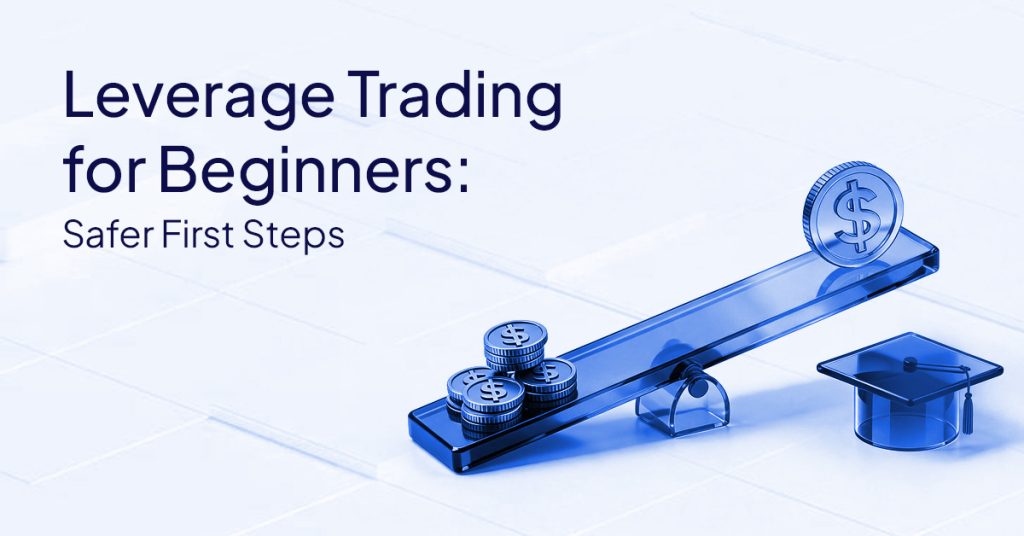
With leverage trading, you can control a big market position with only a small amount of your own money.
But are you really ready for how quickly leverage can make your losses bigger, even as it can make your potential gains bigger?
It can be scary to get into the financial markets, but knowing how to use your money wisely is a basic skill. Many new traders like leverage because it lets them open bigger positions with less money up front. But this sword cuts both ways.
It gives you greater market exposure, but it also carries significant risk. Before you ever place a live trade, this guide will help you understand leverage for beginners by teaching you how to build a safe, educational foundation.
Quick Answer
Leverage is a financial tool that lets you control a bigger market position with a smaller initial deposit.
When you borrow capital from your broker, you can have a higher purchasing power in the market. This can increase potential returns, but it also increases the risk of losing more money.
What Is Leverage Trading For Beginners?
When you trade with leverage for the first time, you borrow money from a broker to increase your overall market exposure.
When you trade with leverage, you are basically increasing how much you can buy. You don’t pay the full price of an asset up front; instead, you put down a down payment of a small portion of the total value.
The broker handles the rest, so you can act as if you invested the full amount and still participate in market movements. This system lets regular people trade in global markets without a lot of money. But it’s important to remember that leverage magnifies both profits and losses.
If the market goes your way, your profits are based on the whole position size. On the other hand, if the market goes against you, your losses are also based on that total size, which means you could lose your initial deposit quickly.
How Does Leverage Work In A Simple Beginner Example?
When you use leverage, you use a certain ratio of your initial deposit to figure out how much you can buy.
The best way to understand how this idea works is to know the math behind it. You don’t need complicated formulas. Simple math shows how exposure grows.
A Basic Leverage Example With Round Numbers
Using leverage lets you open a position that’s many times your small account balance.
Think about how you want to open a position, but you want to keep your math simple and clean. This is what a simple trade structure looks like:
- Account balance: $100
- Leverage ratio: 1:10
- Total position size: $1,000
- Margin required: $100
In this case, your $100 is the security deposit. Your broker gives you a 1:10 ratio, which means that your $100 controls $1,000 worth of an asset.
What Happens If The Market Moves Against The Trade?
When you have a leveraged position, a small drop in price can cause a much bigger percentage loss on your initial deposit. If you own a $1,000 position and the asset’s price drops by only 10%, the position loses $100.
That 10% drop wipes out your entire deposit, since your initial margin was only $100. This simple percentage-based fact shows why risk awareness is the most important skill for any new trader.
Is There A Best Leverage Level For Beginners?
There is no one-size-fits-all answer to what the best trading leverage is for beginners. It depends on how much risk you can handle and how big your account is.
Traders often look for a “magic number,” but it’s not right to say that any ratio is the “best.” The best level for you is the one that fits your unique financial situation.
A trader with a big account might use very low leverage to lower their risk, while someone testing a micro-account might use a slightly higher ratio just to meet the minimum trade sizes.
Most of the time, beginners find it much easier to control lower leverage. A smaller ratio gives your trades more room to move around when the market is changing. Before you borrow money to trade, you need to know how much risk you are taking.
How Does Forex Leverage Work For Beginners?
Forex leverage for beginners lets traders speculate on small changes in currency prices by controlling large lot sizes with a small amount of money.
Currency exchange rates usually change by less than a cent each day, so trading without a multiplier would not have much of an effect. Brokers give you leverage to make these small changes matter.
Forex Leverage For Beginners In Simple Words
In currency markets, leverage turns small changes in exchange rates into big changes in your account. When you trade forex, you buy one currency and sell another at the same time.
This is because you are dealing with currency pairs. Leverage in forex for beginners is a way to increase exposure because the daily volatility of major currencies is low. The same logic applies beyond currencies; gold trading leverage works on identical margin principles. When you control a lot of currency, small pip movements add up to real dollars and cents.
Beginner Leverage In Forex With A Worked Example
A real-life example of forex shows how a small deposit can control thousands of units of base currency.
Let’s look at a simple example of a forex trade. Let’s say you want to trade the EUR/USD currency pair.
- Currency pair: EUR/USD
- Position size: 10,000 units (One Mini Lot)
- Leverage ratio: 1:50
- Margin required: $200 (assuming parity for simple math)
In this case, forex trading leverage for beginners lets you control 10,000 Euros with only $200 of your own money.
If you want to see how these mechanics work in real time without risking your money, a good next step might be to look into a live account or a demo environment.
What Is The Difference Between Leverage And Margin?
Leverage is the amount of money you can borrow to buy something, and margin is the amount of cash you need to put down to keep that position open.
People often use these two words together, but they mean different things. Knowing how this relationship works helps you avoid expensive account mistakes.
What the Leverage Ratio Means
The leverage ratio tells you exactly how many times your deposit will be multiplied to make your total position.
A ratio of 1:10 or 1:100 shows how much you can buy. If you have $1, you can control $100 in the market. It tells you how likely it is and how big the risk is.
What Margin Requirement Means
Margin is the amount of money that the broker keeps in your account to protect your leveraged trade.
Margin is not a fee; it’s a good-faith deposit. That margin remains frozen until the trade is closed. If you want to learn more about the basics of margin, keep in mind that your account must always have enough free equity to meet this requirement.
| Concept | Definition | Relationship |
| Leverage | Multiplies total position size | Determines how large you can trade |
| Margin | Deposit required to open trade | The cash needed to support the leverage |
Why Can High Leverage Be Risky For New Traders?
High leverage greatly increases your market exposure, so even small changes in the market can quickly wipe out your account balance.
On average, traders using margin for leverage report a 4.53% return, according to trading data. Big positions are very appealing, but high leverage makes mistakes very costly. The CFTC’s educational guidelines often tell retail traders about the risks of using too much leverage.
Faster Losses
An over-leveraged account loses money much faster because losses are based on the full position size.
For a trader who isn’t using leverage, a small dip in the market might be normal. For a trader with a lot of leverage, that same blip could mean a huge percentage loss of their entire account equity.
Margin Pressure
If your losses take up too much of your account balance, brokers will call you on margin and make you close your trades.
The broker steps in to protect themselves when your available funds fall below the required margin. They will automatically sell your positions, which will permanently lock in your losses.
Emotional Overtrading
Watching big, leveraged swings in the market makes people panic, which makes them make bad, emotional trading decisions. When traders see their real money disappearing quickly, they often stop following their plans.
They might keep losing positions in the hopes that they will turn around, or they might open new, bigger trades to get their money back. This mental stress is why it’s so important to stay neutral and learn.
How Should Beginners Choose A Leverage Level?
New traders should choose a leverage ratio that fits perfectly with the risk management rules and stop-loss limits they have already set.
You shouldn’t just guess what your exposure should be.
You should do the math. Long-term consistency when you trade with STARTRADER depends on following good risk management rules.
Start With Risk Per Trade
Always figure out how much leverage you need so that losing one trade only costs a small part of your total account.
Most of the time, professional educators say that you shouldn’t risk more than 1% to 2% of your account on one idea. To find the right position size, start with that dollar amount and work backward.
Match Leverage To Account Size
You need to be extra careful with smaller account balances to avoid margin closeouts from small market noise.
If your account is small, using high multipliers means you have almost no room for error. A moderate approach makes sure you stay in the game long enough to learn.
Consider Volatility And Stop-Loss Distance
To safely place wider stop loss orders in highly volatile markets, you need to use less leverage.
If an asset moves a lot, you need to move your stop-loss farther away so it doesn’t trigger too soon. Wider stops require smaller position sizes.
Avoid Using Maximum Available Leverage
Choosing the highest multiplier your broker offers makes it much harder to make mistakes and raises the chances of failure.
You shouldn’t use a broker just because they offer 1:500. For new forex traders, the best leverage is usually the lowest ratio that still lets them use their strategy effectively.
What Should A Beginner Check Before Using Leverage?
Always check your margin requirements, stop-loss placement, and total risk exposure before opening a leveraged position.
Making a routine before you trade can help you keep your emotions out of it. Here is a quick checklist:
- Leverage ratio: Do I know exactly how much risk I’m taking?
- Margin requirement: Do I have enough free equity to keep this trade open?
- Stop-loss placement: Do I know where I’ll exit before I enter?
- Market volatility: Is the market acting very strangely today?
- Risk per trade: Am I putting a reasonable amount of my account at risk?
- Practice with a demo: Have I tried this exact setup in a fake environment before?
FAQs
When you trade on leverage, you borrow money from a broker to control a market position that is much bigger than what your initial deposit would normally let you do.
There is no one-size-fits-all answer; a good level depends on the trader’s account size, the asset they choose, and how strictly they follow risk management rules.
Yes, using lower ratios gives you more control because it lets trades move naturally without having to close them right away.
It lets traders control a large amount of currency with a small margin deposit, which means that small changes in the price of a currency can lead to real financial gains or losses.
Conclusion
A big step in learning about money is knowing how to use borrowed capital. Leverage increases both your market opportunity and your risk. For people who are just starting, using lower, controlled leverage is often easier to handle emotionally and financially.
Before you ever place a live order, you need to fully understand the exact link between margin requirements and risk limits. Always encourage yourself to practice in demo environments, put risk management first, and keep a cautious, education-first attitude.
Tags


Open Live Account
 Email Address
 Phone Number
Important Notice
STARTRADER does not accept any applications from Australian residents.
To comply with regulatory requirements, clicking the button will redirect you to the STARTRADER website operated by STARTRADER PRIME GLOBAL PTY LTD (ABN 65 156 005 668), an authorized Australian Financial Services Licence holder (AFSL no. 421210) regulated by the Australian Securities and Investments Commission.
Important Notice for Residents of the United Arab Emirates
In alignment with local regulatory requirements, individuals residing in the United Arab Emirates are requested to proceed via our dedicated regional platform at startrader.ae, which is operated by STARTRADER Global Financial Consultation & Financial Analysis L.L.C.. This entity is licensed by the UAE Capital Market Authority (CMA) under License No. 20200000241, and is authorised to introduce financial services and promote financial products in the UAE.
Please click the "Continue" button below to be redirected.


