







 Web Trader MT5








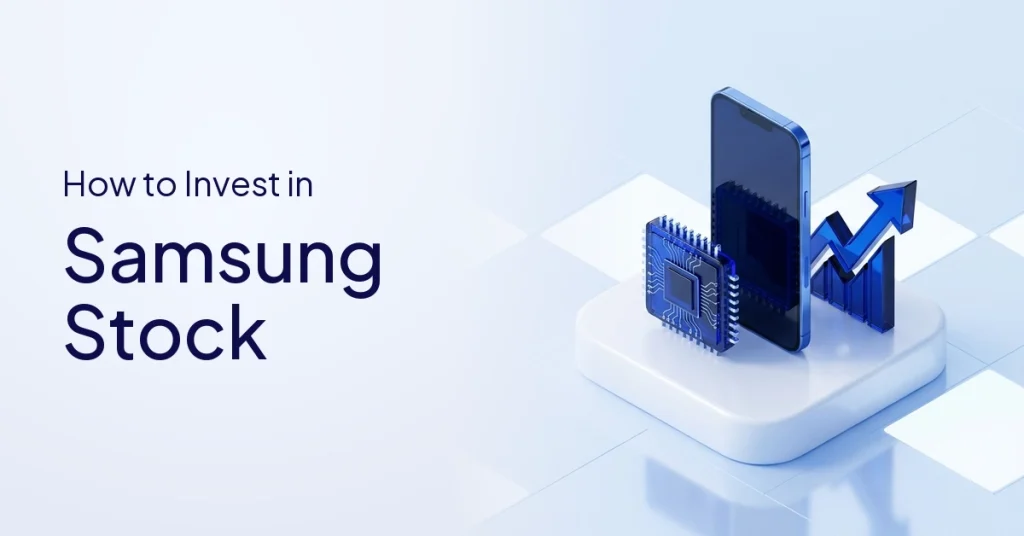
Samsung Electronics is among the most identifiable technology firms globally, and unlike several AI firms making headlines currently, it is a publicly traded company that has been around for decades. The question of how to invest in Samsung stock is not whether you can purchase shares. It is all about how to get a stock that trades on a foreign exchange, which most retail investors outside South Korea have never traded in directly.
That distinction matters. Samsung is not listed on the New York Stock Exchange (NYSE), the London Stock Exchange (LSE) or any other stock exchange that most international investors are familiar with, but on the Korea Exchange. Investing in Samsung stock would be either via a broker linking to the international market or otherwise. You need to know about those before you begin.
The Korea Exchange is one of the world’s top 10 stock exchanges by market capitalization (World Federation of Exchanges), so you can get an idea of the size of the market. However, it is probably not known to investors outside the region.
Quick Answer
- Samsung Electronics is a publicly traded company listed on the Korea Exchange (KOSPI).
- It does not have its shares directly listed on most foreign exchanges.
- Investors with access to international markets can obtain Samsung stock through their brokers.
- There might also be some exposure via depository receipts.
- Samsung has both ordinary and preference shares of various types.
- When investing in a foreign country, currency and tax considerations apply.
Is Samsung Stock Publicly Traded?
Yes, Samsung Electronics is a publicly traded corporation and has been listed on a major stock exchange for decades.
You can buy and sell Samsung Electronics stocks via controlled market platforms. It is among the largest listed companies in the world by market capitalization, and its shares are among the most actively traded on its domestic exchange.
In contrast to the case of the private technology companies (where the issue of whether the shares are available is complex), fundamental access is simple in the case of Samsung’s public listing. The challenge most international investors face is how to access a market that is not their home exchange.
What Exchange Is Samsung Listed On?
Samsung Electronics is publicly traded on the Korea Exchange (KOSPI), South Korea’s main stock exchange for large-cap companies.
Korea Exchange, also known as KRX, is a market that manages the KOSPI (Korea Composite Stock Price Index), the primary board for major listed companies. Samsung Electronics is listed on this exchange as KRX. The fact that Samsung Electronics shares trade are quoted in Korean Won is the first practical implication for any international investor; every transaction incurs a foreign currency.
Also, “ADR” (American Depositary Receipt) is a term applicable in this context. ADRs are instruments that enable shares of foreign-listed companies to be traded in the US in US dollars. This makes foreign stocks more available to American investors without necessarily requiring access to the home market.
Before choosing a path, it is better to ensure that Samsung ADRs are available and to consult your brokerage about their structure.
How Can You Buy Samsung Stock from Outside South Korea?
Samsung shares are typically made available to international investors in two ways: through a broker with direct access to the Korean market or through ADRs, where available.
This question is all about learning how to buy foreign stocks. A majority of retail investors have brokerage accounts in the domestic market. In order to trade in the Korea Exchange, one needs to have access to a broker that offers international markets (including South Korea) or a depository receipt structure that offers exposure to a more accessible market.
Route one: Direct Market Access: There are brokers – regulated by the global community – that allow you to access the Korea Exchange (and other exchanges around the world). If you have this service, you will be able to buy Samsung stock in the same way as you buy other stock. But it will be in Korean Won, and the trade will be subject to the Korean trading hours.
Option two – American Depositary Receipts: ADRs allow investors to access overseas-listed securities via instruments that are traded on US exchanges, and in US dollars. They do not provide all of the attributes of the underlying shares; there can be differences in dividends, voting rights and price. But they provide a more convenient way for investors who do not have access to the Korean market through their broker to gain exposure.
Neither access is guaranteed in all standard brokerage accounts. It is not a “look back” but a “look before you invest” for your broker to have access to the international market.
If you want to trade in global equity markets, including technology stocks in different geographical areas, trading platforms such as STARTRADER offer investors in global markets a range of international financial instruments on a regulated trading platform, suited to different investor needs.
What’s the Difference between Samsung Ordinary and Preference Shares?
Samsung Electronics currently has two publicly traded share classes: ordinary and preference shares, which display distinctive characteristics important to investors.
This is one of the more important factors to take into consideration when investing in Samsung; both are publicly traded but not fungible.
Ordinary shares have voting rights; i.e., the ability to vote at general meetings. They are the most familiar type of stock that most investors are familiar with.
Preference shares are usually not accompanied by voting rights, but they usually have preferential dividend treatment. In the case of Samsung, preference shares have historically traded at a discount to ordinary shares, among other things, because they do not carry voting rights.
This is something that investors looking for dividend streams rather than participating in corporate governance should be aware of.
Market conditions and investor sentiment can lead to differences in the prices of the two classes. Neither is necessarily preferable, but the better one depends on what you are focusing on as an investor.
What Should You Consider Before Investing in Samsung?
As a global investor, there are four practical things you are likely to consider before purchasing Samsung shares. Each has a direct impact on your eventual payoff, not just your investment theory.
- Currency risk: Samsung trades in Korean Won. If you invest in another currency, movements in the exchange rate of your home currency against the Won will affect returns on their own, without considering Samsung’s share price performance. The high value of the Won is advantageous to international investors in terms of conversion back; a low value of the Won is disadvantageous regardless of an increase in the share price.
- Withholding tax on dividends, South Korea imposes a withholding tax on dividends paid to foreign investors. The tax treaty between South Korea and your home country will determine this. This lowers the effective dividend yield that you get relative to what a Korean domestic investor would get, before you consider dividend income in your investment case.
- Broker access: Not every broker will offer Korean Exchange access, as discussed above. Check this before devoting time to analyzing the investment, not after.
- Liquidity: Samsung is one of the most liquid stocks on the Korea Exchange, and thus, the acquisition and selling within typical market conditions is not an issue. Nevertheless, the Korean market does not open and close at the same time as the European and American markets, so you may not be able to act on news or price changes in real time.
- Share class choice: Before placing an order, decide on which share best suits your objectives: ordinary or preference, as they are different in both their properties and cost.
- Access to information: Samsung releases both financial reports and regulatory filings in Korean and English. However, the English-language analyst coverage might not be as in-depth as you might expect for US or European stocks.
The CFA Institute reports that one of the most often underestimated risks of international investing is currency exposure; it can significantly increase or decrease the performance of a specific investment as exchange rates vary over the holding period.
Frequently Asked Questions
Samsung Electronics trades on the Korea Exchange under its KRX ticker.
It is subject to your broker. The Korea Exchange is not immediately available in all typical retail brokerage accounts.
An American Depositary Receipt is a document that allows shares of a company listed in another country to be traded on a US exchange (in US dollars).
Yes, Samsung is traded in Korean Won, and the movements of the exchange rates between your home currency and the Won will influence the total return of your share, independent of its share price.
Ordinary shares carry voting rights, and preference shares don’t. Preference shares typically have preference in dividend payments and have traditionally been traded at a discount to ordinary shares.
Samsung Electronics is not listed on a major US exchange. US investors may have access to Samsung via ADRs, if available, or through a broker with direct access to the Korean Exchange.
Samsung pays dividends to shareholders; however, international investors may have their dividends withheld for South Korean taxes. The rate of the treaty is also subject to the tax treaty between South Korea and your home country.
Final Thoughts
The question of how to invest in Samsung stock is more practical than complicated because the company is publicly traded, financially transparent, and accessible to foreign investors with the correct arrangements.
The actual task lies in the preparation: ensuring that your broker has access to the market, understanding currency exposure, determining which share class suits your objectives, and understanding dividend withholding tax before constructing your investment case. None of them are barriers; they’re just the specific considerations that come with investing in any foreign-listed stock.
Get the access infrastructure in place. Then, make the investment decision.
Compliance Note
This page is for educational purposes, and not investment advice. International stocks are risky investments because of currency fluctuations and potential taxation. Please refer to your financial circumstances and, where necessary, consult for independent advice.
Risk Warning: CFDs are complex instruments and come with a high risk of losing money rapidly due to leverage. Please ensure you understand the risks involved before trading.
Tags


Open Live Account
 Email Address
 Phone Number
Important Notice
STARTRADER does not accept any applications from Australian residents.
To comply with regulatory requirements, clicking the button will redirect you to the STARTRADER website operated by STARTRADER PRIME GLOBAL PTY LTD (ABN 65 156 005 668), an authorized Australian Financial Services Licence holder (AFSL no. 421210) regulated by the Australian Securities and Investments Commission.
Important Notice for Residents of the United Arab Emirates
In alignment with local regulatory requirements, individuals residing in the United Arab Emirates are requested to proceed via our dedicated regional platform at startrader.ae, which is operated by STARTRADER Global Financial Consultation & Financial Analysis L.L.C.. This entity is licensed by the UAE Capital Market Authority (CMA) under License No. 20200000241, and is authorised to introduce financial services and promote financial products in the UAE.
Please click the "Continue" button below to be redirected.


