







 Web Trader MT5








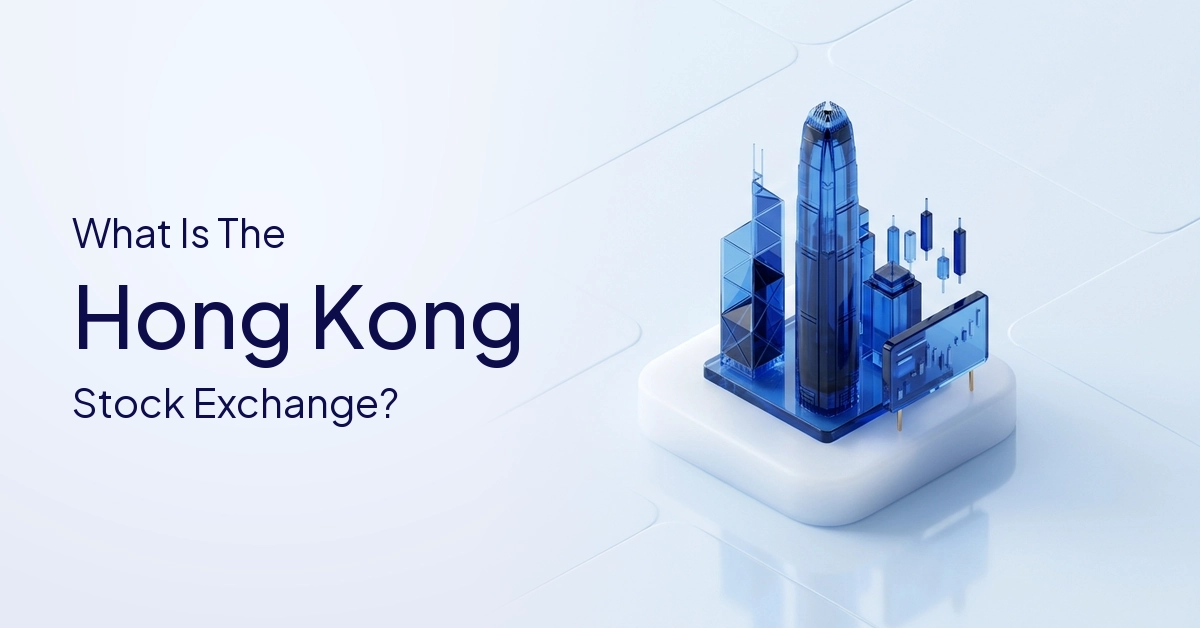
The Hong Kong Stock Exchange (HKEX) is one of the largest financial markets in the world, connecting international capital with the powerhouses of Asia.
Established in its current form in 2000 through the merger of three separate exchanges, HKEX is now the main regulated market for equities, derivatives and fixed income products in Hong Kong.
HKEX has a total market capitalization of around $5.85 trillion, making it one of the largest exchanges in the world.
One major feature of HKEX is the diversity of companies listed on it. With the exception of local Hong Kong companies, the exchange has many mainland Chinese firms that have opted for Hong Kong as their international listing. These have two main structural forms:
- H-shares: Chinese companies that are incorporated on the mainland but are listed on the Hong Kong exchange and therefore subject to HKEX rules.
- Red Chips: Chinese companies formed outside of China but with significant state-backed or government-linked ownership.
HKEX has two core market segments: The Main Board lists larger, established companies with higher financial thresholds, while the Growth Enterprise Market (GEM) is designed for smaller companies with high growth potential and higher risk profiles. All transactions of the exchange are settled in Hong Kong dollars (HKD).
The Hang Seng Index, which tracks the largest and most liquid companies on the Main Board, is the benchmark against which the overall performance of the exchange is measured. HKEX has been consistently noted as a key gateway into the region for investors who are contemplating a broader investment into Asian stock markets.
What Does HKEX List?
The HKEX is home to a wide range of local conglomerates, large mainland state-owned enterprises and cutting-edge technology companies.
One of the exchange’s biggest draws is its diversity. Listed companies generally fall into three broad categories. First, there are local Hong Kong firms, which often include huge property conglomerates, regional banks and utilities.
Second, the exchange lists mainland Chinese companies, including large state-owned companies in the energy, telecoms and financial sectors. Finally, a huge presence of technology and consumer-focused businesses.
Many leading Chinese companies with a global presence select HKEX as their international public listing venue for its stable legal environment and proximity to their main consumer base. With such a varied corporate landscape, traders look to the Hang Seng Index as the key benchmark.
- Local conglomerates: Utilities, regional banking and real estate.
- State-Owned Enterprises (SOEs): Energy, infrastructure and telecommunications in the Mainland
- Tech & Consumer: E-commerce giants, electric vehicle makers and consumer electronics.
When researching particular HKEX-listed stocks, it is necessary to consider the sector in which the company operates, and if its main revenue comes from Hong Kong, Mainland China or global operations.
How Can Foreign Investors Buy HKEX Stocks?
Foreign investors can invest in Hong Kong stocks through two main channels: open a brokerage account with international market access or indirect exposure through depositary receipts.
Direct Access via an International Brokerage
The most popular option is to open a brokerage account with international access that accepts HKEX-listed securities. For those familiar with how to invest in the stock market, the direct brokerage route will be simple, assuming HKEX access is confirmed.
Not all brokers offer access to all international exchanges, so it’s worth checking that the broker explicitly supports HKEX trading. Once installed, investors can search for stocks using their ticker codes on the HKEX and trade during the Hong Kong market hours.
All HKEX trades are in Hong Kong dollars (HKD), so international investors will need to either hold HKD in their brokerage account or allow their broker to convert at the prevailing exchange rate. This adds another layer of currency exposure that should be taken into account in any assessment.
Indirect Exposure via Depositary Receipts
Some large companies listed on HKEX are also traded as American Depositary Receipts (ADRs) or similar instruments on foreign exchanges such as the New York Stock Exchange or NASDAQ.
ADRs allow investors to get exposure to the underlying shares without trading directly on HKEX and are denominated in the investor’s local currency. This provides an easy way for those who wish to invest in China stock market from India without the trouble of managing HKD currency accounts.
But the universe of companies you can gain access to this way is more limited than the entire HKEX listing universe. All HKEX transactions settle in Hong Kong dollars. Currency exposure is an inherent part of direct investment in the exchange.
With platforms such as STARTRADER, investors can access global markets such as Asian equities and the infrastructure to explore a range of international securities in a regulated environment.
What Should Investors Know About HKEX?
When trading on the Hong Kong Stock Exchange, it is important to understand special structural rules such as board lots and special transaction taxes.
The mechanics of this market are different from those of typical Western exchanges. These structural points are important to understand, as they affect how orders are executed and how much they cost.
Trading Hours
HKEX operates an operating schedule precisely aligned with Hong Kong business hours (Hong Kong Time). There is a morning session, a mandatory lunch break where trading halts, and an afternoon session.
For international investors, the time zone difference has to be taken into account which often results in trading late at night or early morning depending on the investor’s location.
Board Lots
HKEX uses a “Board Lot” system unlike markets where you can just buy a single share. A board lot is the minimum number of shares that can be traded in a single normal transaction.
| Feature | US Exchanges | Hong Kong Stock Exchange (HKEX) |
| Minimum Purchase | 1 Share (or fractional) | 1 Board Lot (e.g., 100, 500, or 1000 shares) |
| Determination | Uniform across the market | Decided by the individual listed company |
If a company decides to set its board lot at 500 shares and the stock is at 10 HKD per share, then the minimum investment required is 5,000 HKD.
Transaction Costs
There are some specific regulatory fees to pay when trading on HKEX. The most important of these is stamp duty, a government tax levied on every standard stock transaction.
Both the buyer and the seller are subject to the tax, which is a small percentage of the total value of the transaction. In Hong Kong, the stamp duty on stock transfers is 0.1% per side (the buyer and seller each pay 0.1% of the transaction value).
Regulatory Environment
Hong Kong has a robust regulatory regime in place, managed by the Securities and Futures Commission (SFC). It is compliant with international standards but its structure and some specific mechanisms of oversight differ from those of Western regulators.
What Are The Risks Of Investing In HKEX?
Investing in Hong Kong stocks means actively navigating regional policy shifts, unique liquidity dynamics and specific foreign exchange parameters.
While the market offers deep liquidity and access to heavyweight global firms, it also features a unique set of risk factors that must be carefully managed.
Currency Risk
All direct transactions are in Hong Kong Dollars and therefore international investors will be subject to currency risk. The HKD is currently pegged to the US dollar at a certain trading band.
The peg offers the USD stability, but investors with a non-USD base currency (like the Euro or British Pound) will see the value of their portfolio move with exchange rate fluctuations.
Political And Regulatory Risk
Policy changes can rapidly affect market valuations. Hong Kong is a Special Administrative Region of China, which means that movement in regulation from local Hong Kong authorities or mainland Chinese policymakers can shift the business landscape.
China Exposure Risk
The majority of revenue, manufacturing and consumer bases of a large number of companies listed on HKEX are from mainland China. Therefore, the financial health of such companies is very much linked to the general health of the Chinese economy.
Liquidity And Market Structure Risk
The Hang Seng Index constituents are very liquid, but the liquidity and trading can be all over the place between the different listings, especially on the Growth Enterprise Market (GEM). Liquidity can be thin, with wider bid-ask spreads, making it harder to get on or off a position at the exact price points.
FAQs
HKEX stocks are only available in Hong Kong dollars (HKD). International account investors will need to convert their local currency into HKD for the settlement of direct trades.
The Hang Seng Index (HSI) is the primary benchmark index for the largest, most liquid and most representative companies listed on the Main Board of the HKEX.
Yes, foreign investors can easily access HKEX through digital retail brokers and institutional platforms with international market trading capabilities.
Board lots are the minimum number of shares required to make a regular trade on HKEX. Each HKEX company has its own board lot size (such as 100 shares, 1,000 shares), unlike systems that allow single-share purchases.
Conclusion
Indeed, the Hong Kong Stock Exchange remains one of the best ways to access established global conglomerates and emerging Asian market leaders.
Understanding the mechanics of HKEX allows international investors to confidently tap into a wide range of companies from Hong Kong and mainland China.
If you are going to buy stocks directly in Hong Kong Dollars or indirectly via ADRs, you should learn the basic rules, such as board lots and trading hours. Always challenge yourself to learn a deep understanding of the market structure, unique currency dynamics, and regional policy risks before putting capital to work.
When it comes to investing in international markets, it is key to know the value of geographic diversification. A good way to learn how to trade Asian equities effectively is to take the time to explore a live account with a trustworthy platform. Disclaimer: This content is for educational purposes only and does not constitute investment, financial, or legal advice. CFDs are complex instruments and carry a high risk of rapid money loss due to leverage. Emerging market investments involve additional risks including currency fluctuations, limited liquidity, and regulatory changes. Any references to regulations or market structures are general in nature and subject to change. Seek independent professional advice before making any investment decisions.
Tags


Open Live Account
 Email Address
 Phone Number
Important Notice
STARTRADER does not accept any applications from Australian residents.
To comply with regulatory requirements, clicking the button will redirect you to the STARTRADER website operated by STARTRADER PRIME GLOBAL PTY LTD (ABN 65 156 005 668), an authorized Australian Financial Services Licence holder (AFSL no. 421210) regulated by the Australian Securities and Investments Commission.
Important Notice for Residents of the United Arab Emirates
In alignment with local regulatory requirements, individuals residing in the United Arab Emirates are requested to proceed via our dedicated regional platform at startrader.ae, which is operated by STARTRADER Global Financial Consultation & Financial Analysis L.L.C.. This entity is licensed by the UAE Capital Market Authority (CMA) under License No. 20200000241, and is authorised to introduce financial services and promote financial products in the UAE.
Please click the "Continue" button below to be redirected.


