








 Web Trader MT5






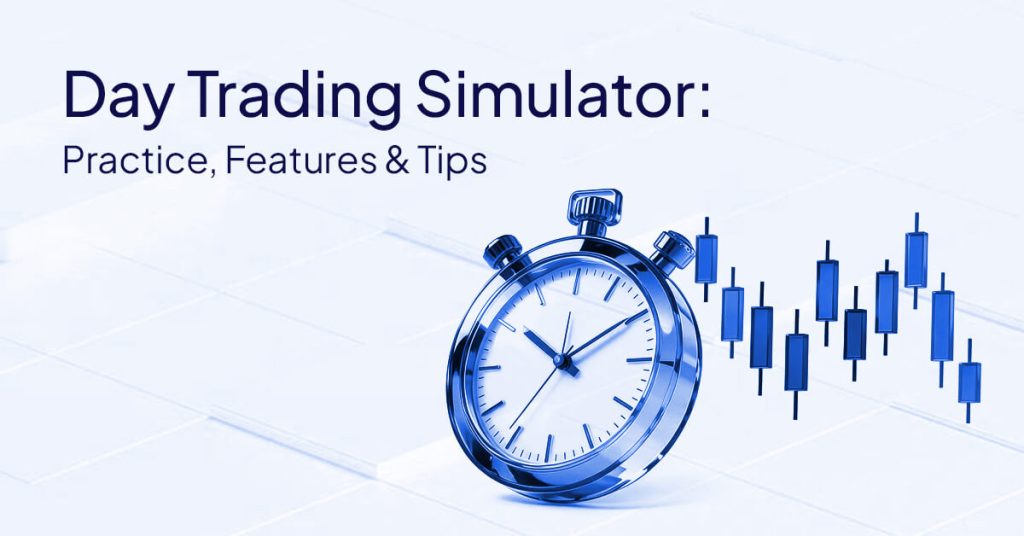
A day trading simulator is a virtual trading platform that lets people practice buying and selling financial assets without any risk.
What if you could make all the mistakes that a new trader makes in the market and not lose any money? You can do that with a day trading simulator.
Traders can try out different ideas, enter and exit positions, and get a sense of how the market works without putting any money at risk. It’s one of the best tools for people who are just starting out.
It’s like getting behind the wheel of a car and going straight to the highway without any practice. The simulator lets you practice your skills, learn how to be disciplined, and see how the markets really work before you put your money on the line.
This guide explains what a day trading simulator is, how it works, what features are most important, and what it can’t do. If you know how to use a simulator well, it can change the way you trade, even if you’re just starting out or trying to make a strategy better.
Quick Answer
A day trading simulator is a tool that lets traders practice using virtual money to simulate real market conditions.
It helps beginner traders learn how to day trade, test different strategies, and understand risk without risking real money. It looks a lot like real markets, but it doesn’t guarantee results when you switch to live trading.
What Is A Day Trading Simulator?
A day trading simulator is software that simulates the real market so people can trade with “paper or virtual funds” (fake money).
A simulator is a digital version of the real-world trading environment. It gets information from stock, forex, and commodity exchanges around the world and lets you act on those price changes as if you were there.
For example, you may have a stock market simulator that focuses specifically on equities while day trading simulators covering other assets such as forex, commodities and indices within a single platform.
But since you’re using virtual credit, your bank account stays the same. A day trading simulator is easy to mix up with a regular demo account or live trading. A demo account is a feature many brokers offer to let you try out their platform.
A simulator, on the other hand, is more focused on replaying market data for educational purposes. On the other hand, live trading involves real money, real feelings, and real money problems. Using a practice tool is about improving your skills and strategies, rather than about making money right away.
How Does A Day Trading Simulator Work?
Simulators work by matching the balances of virtual accounts with either live or historical market price feeds to fill orders.
Simulated Balance And Virtual Orders
When you sign in to a practice day trading simulator, you usually get a set amount of virtual money, like $50,000 or $100,000. When you “buy” a position, the software determines how many units you can afford and deducts the virtual cost from your balance.
There isn’t a real transaction on an exchange; instead, the software keeps track of the entry price and how that position has performed relative to the current market price.
Real-Time Or Delayed Market Data
Most high-quality simulators use real-time data feeds, which means that the price you see on your screen is exactly what is happening in the global markets at that moment.
Some free versions may use data that is 15-20 minutes behind. Real-time data is often better for beginners who want to practice day trading because it shows how fast and volatile the modern trading environment really is.
Tracking Profit, Loss, And Trade History
A trade history or journal keeps track of everything you do. While a trade is open, the simulator figures out your Unrealized Profit and Loss (P&L). When you close the trade, it figures out your Realized P&L.
This information is very important for someone who uses a day trading practice simulator because it lets you look back and see if your choices were based on a good plan or just a lucky guess.
How Can Beginners Practice Day Trading With A Simulator?
Beginners should use a simulator to create a structured routine that focuses on the process and discipline rather than on how much money they make in the process.
You shouldn’t just “play” with the buttons if you want to get good at day trading. Make some simple rules for yourself to start. For instance, you will only trade during the first two hours after the market opens. First, you should focus on getting the technical details right:
- Entries and Exits: Keep clicking the buy and sell buttons until it feels like the process happens right away.
- Stop-Loss Placement: Always set a price level for your stop-loss order at which you will exit if the trade goes against you.
- Position Sizing: Find out how to figure out how much of your virtual balance you can risk on one trade so you don’t “blow” your practice account.
Repetition is the goal. You can see patterns in your behavior by going over your trades at the end of each session. Determining how liquid the market is is an important step at this point because it affects how easily orders are filled in the simulator compared to the real world.
What Should You Look For In The Best Day Trading Simulator?
The best day trading simulator is technically accurate, offers strong risk tools, and is easy for beginners to use.
Realistic Order Execution
“Perfect” execution is a common mistake in simulation. In the real world, “slippage” happens when your order is filled at a price that is a little different from what you thought it would be. A good day trading practice simulator will have settings that make these real-world flaws happen, giving you a more accurate picture of how you might do.
Risk Management Tools
Without the right safety gear, you can’t learn how to trade safely. Industry data shows 88% of profitable day traders use stop-loss orders as their primary risk management tool making simulator practice of stop placement essential. Make sure the tool has “Hard Stops,” “Trailing Stops,” and “Take Profit” orders. These are what keep the markets going.
Performance Analytics
Find a platform that shows you your “Win Rate” and “Average Risk-to-Reward Ratio” in detail. These numbers are more important than your total virtual balance because they show whether your strategy will work in the long run.
Ease Of Use For Beginners
If the interface is too busy or hard to understand, you’ll spend more time trying to figure out how to use the software than learning about the markets. With a clean, easy-to-use design, you can focus on price action and chart patterns.
| Feature | Importance for Beginners |
| Real-time Data | High – Essential for accurate timing. |
| Strategy Backtesting | Medium – Helpful for testing historical ideas. |
| Journaling Tools | High – Critical for identifying mistakes. |
| Mobile Access | Low – Better for monitoring than deep learning. |
Is A Day Trading Simulator Free?
Many platforms offer free day-trading simulators, but some “pro” versions may require a subscription or a live brokerage account.
A lot of the time, a broker’s trading platform will include a free day trading simulator. People often call these demo accounts. They are a great way to learn how to use that broker’s specific buttons and tools without spending any money.
However, some specialized simulators that let you “Market Replay” (go back in time and practice on past days) may cost money. When making a choice, prioritize realism over cost.
A “free” simulator that doesn’t act like the real market can actually teach you bad habits that will cost you money later. Practicing in a virtual environment can help investors learn how different order types work before they put their own money on the line.
Should You Use A Day Trading Simulator App Or Desktop Platform?
A day-trading simulator app is the most convenient option, but desktop platforms usually offer the depth needed for full technical analysis.
Mobile Convenience
A practice day-trading app is great for checking the markets during your lunch break or for practicing how to place simple orders when you’re not at your desk. It keeps you in touch with the market’s “rhythm.”
Desktop Depth And Charting
The desktop is usually better for serious study. You can see multiple timeframes at once, use advanced drawing tools, and run more complicated analytics with it. Most professional setups use a computer because they need a lot of screen space to see trends clearly.
A hybrid approach works best for most beginners: use your desktop for most of your practice sessions and the day trading simulator app to keep up with price action throughout the day.
What Can A Simulator Teach Before Live Trading?
A simulator is like a lab where traders can practice the “soft skills” and technical habits that keep their money safe.
A day trading practice simulator helps you remember the following:
- Types of Orders: Knowing the difference between a Market Order and a Limit Order.
- Trade Planning: Make yourself write down why you’re making a trade before you click the button.
- Risk Control: Getting used to the idea of a “virtual” loss so you don’t panic when you lose money for real. Practicing the importance of a stop loss in a simulation setting it before entry, not after, is one of the most transferable habits a beginner can build.
- Journaling: Getting into the habit of writing down every trade to find your “edge.”
You can get the mental discipline you need for the real markets by treating the simulator the same way you would a real account.
What Are The Limits Of Simulated Trading?
The main problem with a simulator is that it does not involve any real financial risk, which significantly changes how people feel about market movements.
No Real-Money Pressure
It’s easy to be “brave” with digital money. If a trade goes $1,000 into the red in a simulator, you might not feel anything. That same loss in a live account could cause panic, which could lead to bad choices. The biggest problem when making the switch is this “emotional gap.”
Execution Differences
In a real market, your order needs to find a “counterparty,” or someone willing to take the other side. The computer often fills your order right away in a simulator. This can make you think that you can get in and out of trades much faster than you really can, especially with low-volume stocks.
Risk Remains
Using a simulator to practice doesn’t guarantee success. The Securities and Exchange Commission (SEC) reports that simulators are good for learning, but they can’t recreate the psychological and liquidity pressures of real trading.
What Should Beginners Do Before Moving From Simulator To Live Trading?
You should only start live trading after you have demonstrated that your strategy works and that you can control your emotions for the long term.
Before you stop using your day trading simulator and open a real account, go through this checklist:
- Consistency: Have you made money in the simulator for at least three months in a row?
- Rule Adherence: Do you always follow your stop-loss rules without “cheating”?
- Journaling: Do you keep track of at least 50–100 virtual trades?
- Strategy: Can you tell someone else what your strategy is in two sentences or less?
If you can check all of these boxes, you might want to think about switching to a “micro” account, where you trade the smallest amounts of money to slowly get used to the emotions that come with real money.
You should also learn how to open a demo account from STARTRADER so you can try out the platform’s tools before you make a decision.
FAQs
It is a piece of software that uses virtual funds to let you practice trading in a real market without risking your own money.
It connects to a market data feed and lets you place virtual buy and sell orders. It keeps track of your profits and losses as if you were using real money.
Yes, beginners can practice as long as they need to using a free day-trading simulator or a demo account from their broker.
A lot of them are free, especially those offered by brokers. Some more advanced versions that let you replay historical replay features may need a monthly fee.
Conclusion
A day trading simulator is the most useful tool for a new trader. It gives you a low-pressure place to fail, learn, and get better.
You get ready for the live market by focusing on the process, such as the rules, risk management, and journaling, rather than the virtual dollar amount.
The point of simulation is to learn how to be a disciplined student of the markets so that you don’t trade with real money without knowing what you’re doing.
Tags


Open Live Account
 Email Address
 Phone Number
Important Notice
STARTRADER does not accept any applications from Australian residents.
To comply with regulatory requirements, clicking the button will redirect you to the STARTRADER website operated by STARTRADER PRIME GLOBAL PTY LTD (ABN 65 156 005 668), an authorized Australian Financial Services Licence holder (AFSL no. 421210) regulated by the Australian Securities and Investments Commission.
Important Notice for Residents of the United Arab Emirates
In alignment with local regulatory requirements, individuals residing in the United Arab Emirates are requested to proceed via our dedicated regional platform at startrader.ae, which is operated by STARTRADER Global Financial Consultation & Financial Analysis L.L.C.. This entity is licensed by the UAE Capital Market Authority (CMA) under License No. 20200000241, and is authorised to introduce financial services and promote financial products in the UAE.
Please click the "Continue" button below to be redirected.


