








 Web Trader MT5











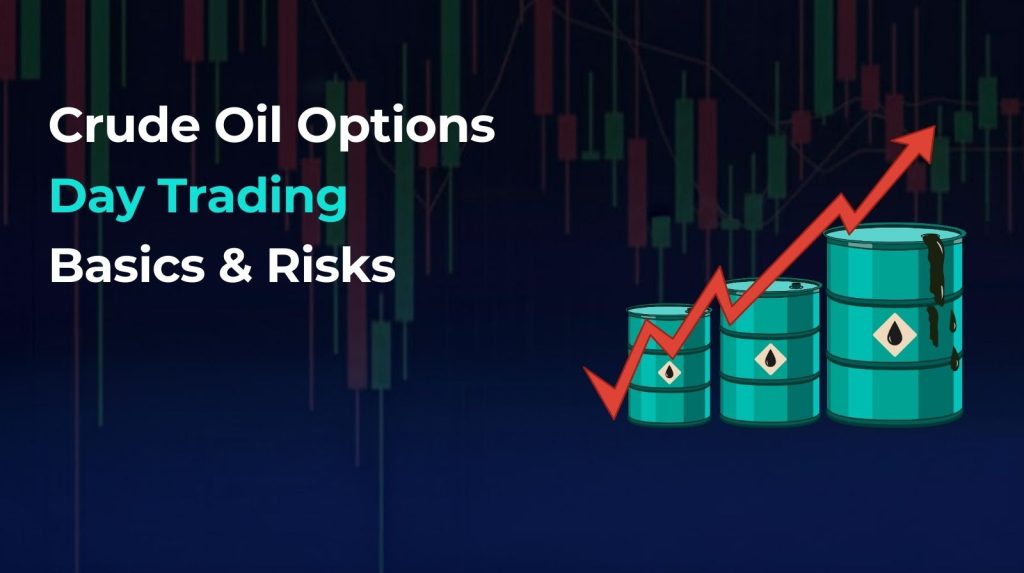
Crude oil has been essential to the world economy for over a hundred years. It has powered industries, changed the course of geopolitics, and marked times of boom and disaster. Oil markets have changed over time. For example, in the 1800s, people traded real barrels, but in the 1980s, electronic futures trading became popular. Technology and risk management techniques have always played a role in these changes.
Options on crude oil arose during that process. They were initially listed on NYMEX in the 1980s, which helped traders manage price volatility that had previously hurt producers and refiners. Brent options on ICE became benchmarks for energy risk, alongside WTI, as markets became more global.
Today, day trading crude oil options is the fastest, most short-term variant of this evolution: speculating or hedging on WTI or Brent options during the day, often for just a few minutes or hours rather than days. But the fundamental problem is still the same: dealing with timing, volatility, and risk.
This article discusses the most common intraday option frameworks, liquidity, news windows, and position-sizing criteria. It provides made-up examples to help you understand how they work and the risks involved.
Quick Answer
- Day trading crude oil options involves buying and selling WTI or Brent options during the day to express or protect short-term views.
- Used for short-term bets or to protect against changes in the future
- Exposures are only for one session (they terminate flat at the end of the day).
- Primary risks are time decay, spreads, and changes in market news and economic reports.
- Results depend highly on contingent adherence to the plan and the containment of risks.
Instruments & Contract Essentials
Crude oil options appear on both the WTI (NYMEX) and Brent (ICE) contracts. They both have trading hours and contract structures.
If you’re trading from India (e.g., MCX-linked exposure), use this guide on how to trade in crude oil in India to align product rules with your setup.
The two most significant crude oil benchmarks in the world are WTI and Brent. Depending on the exchange, they can choose to settle in cash (Brent) or in person (WTI). Traders can choose between monthly expirations for greater liquidity or weekly options for lower exposure, which align with specific events.
Prices change by $0.01 per barrel, and each contract is for 1,000 barrels of oil. The tick value for WTI options is usually $10. Long calls and debit spreads are examples of defined-risk strategies that only need the option premium as margin.
Short naked options, on the other hand, are examples of undefined-risk positions that require a lot more margin because the risk is theoretically unlimited.
Liquidity changes around roll periods (when traders move from one month’s contract to the next) and during holidays or daylight-saving time changes, when exchange and broker schedules may not match up. Always check the times of your sessions on your platform MT4 , MetaTrader 5 before you trade.
When Traders Use Options Intraday
During volatile sessions, traders commonly employ intraday options methods to set or restrict risk.
Short-term traders use crude oil options for:
- Risk control vs. futures: Options limit losses to the premium paid, rather than taking direct futures risk.
- Event-driven plays: Inventory data releases or OPEC news might trigger quick moves. Traders employ short-dated calls or puts to minimize their risk.
- Temporary hedges: A trader who has an open futures or CFD position could employ same-day options to protect himself from news shocks that come out of nowhere.
These uses are tactical, not predictive, and always depend on how much risk you can handle, when the event happens, and how much funding is available.
Core Building Blocks (Generic Frameworks)
There are three main types of intraday oil options setups: directional, risk-defined, and neutral/volatility-based.
Directional (Single Call or Put)
Used to give a short-term opinion on how oil prices will change with little risk.
| Pros | Cons |
| Simple to execute | All of the premium is at risk |
| Limited downside | Time decay can quickly lower the value |
| Leverage on small moves | Slippage in spreads impacts exits |
Risk-Defined Spreads (Vertical Debit or Credit)
Combine two strikes to lower costs or set payout restrictions.
| Pros | Cons |
| Defined max loss and gain | Limited profit potential |
| Lower entry cost | Requires strike precision |
| Lessens exposure to volatility | More complicated order entry |
Payoff logic: debit spreads profit when the price moves toward the bought strike, while credit spreads profit when the price stays between the strike levels.
Neutral / Volatility Ideas (Straddles & Strangles)
Used when you think a significant change is coming, but aren’t sure which way it will go.
| Pros | Cons |
| Profits from volatility, not direction | High cost to enter |
| Captures event-driven spikes | Needs fast movement to offset decay |
| Can hedge correlated exposure | Sensitive to volatility crush post-event |
These frameworks are based on ideas. Execution, sizing, and timing determine whether they serve risk-control or speculative aims.
Greeks & Costs That Matter
Intraday option traders need to know how each Greek and cost affects positions that change quickly.
- Delta: Tells you how much the option’s price changes for every $1 change in the price of oil futures. Scalpers who work throughout the day often prefer deltas between 0.30 and 0.60 because they are sensitive without taking on too much risk.
- Theta: The speed of passage of time is rapid and faster than same-day alternatives. Holding beyond planned trade windows can erode value sharply.
- Vega: Indicates the sensitivity to change. Although the price may not be volatile, volatility spikes on news can increase premiums.
- Bid-Ask Spreads and Slippage: It is more expensive and less accurate when fills are more active and wider.
- Commissions: The presence of multiple legs and frequent entries increases transaction costs.
- Early Assignment: It is possible to put short legs in early spreads, primarily near the expiration date, or near the dividend date, or the roll date.
Time Windows & News
Oil options are likely to be the most liquid when the London and U.S. sessions overlap.
Price changes during key events often fall between 13:00 and 18:00 UTC, the busiest times for the two crude benchmarks and their associated contracts. Also, the spreads could become significantly large during slower periods in Asia.
Events to Watch (UTC)
| Event | Approx. Time (UTC) | Impact Potential |
| U.S. EIA Weekly Crude Inventories | Wed 15:30 | High |
| OPEC+ Press Briefings | Variable | High |
| U.S. Nonfarm Payrolls | 13:30 (Monthly) | Moderate–High |
| Fed or ECB Policy Announcements | 18:00–19:00 | Moderate |
| API Inventory Estimate | Tue 21:30 | Moderate |
Traders shouldn’t open positions just minutes before these kinds of events unless the risk is obvious. Check the local time equivalents—DST changes can change when markets overlap—and compare with commodity market timings in India if you trade from IST.
You can always check your platform or the Economic Calendar for the latest schedule.
Position Sizing & Risk Checklist
Structured position sizing and disciplined exits are what make intraday performance consistent.
Risk Checklist:
- Only put a certain percentage of your account equity at risk for each idea.
- Use structures with stated risks whenever you can
- Don’t base size on option premium; base it on maximum potential loss.
- Before entering, set a time or price-based exit.
- Don’t start trading shortly before important data comes out.
- Set a daily loss limit to protect your money.
- Write down the reasons for the trade, the fills, and the Greeks that matter.
- Check the trading hours and DST alignment every week.
- Look at what happened after the trade to see whether it may be better.
- Check the margin and liquidity for both legs.
For more on sizing logic, explore risk management basics and leverage and margin.
Hypothetical Intraday Examples
Examples show how crude oil options might reveal ideas for the day while limiting risk.
Example A: Debit Call into a Confirmed Breakout
WTI cracks through intraday resistance after positive inventory reports. A trader buys a near-the-money call option that expires the same day, limiting risk to the premium paid.
- Payoff Sketch: When futures go over strike, profit goes up, but only until expiration.
- Invalidation: The price drops back below the breakout point, or the option loses half of its value by the time it is supposed to stop.
Example B: Protective Put on a Futures Long
A trader has a small long position in WTI futures before an OPEC headline. If you buy an at-the-money put, you are safe from a sudden drop.
- Payoff Sketch: The value rises to offset losses in futures.
- Invalidation: The news goes by without causing any problems, and the choice runs out of time.
These are examples of risk-control frameworks, not suggestions. You can explore oil trading strategies for more general ideas.
FAQs About Day Trading Crude Oil Options
A: It involves the purchasing and selling of WTI or Brent options within a single session to express or hedge short-term price forecasts, and all contracts are closed before market close.
A: Yes, weekly options are more flexible and better suited to events, but they lose value more quickly and can spread more widely than monthly options.
A: Trade within liquid hours, choose at-the-money strikes, and use spreads or defined exits to limit exposure to time decay and bid–ask slippage.
A: Yes, traders may hedge intraday risk with puts or calls, but their effectiveness depends on the strike price, remaining time, and market volatility.
A: In contract rollovers, liquidity may change significantly. Ask your broker which month they route to, and adjust your plans accordingly.
Final Thoughts
Day trading crude oil options involves integrating time, structure, and risk awareness in one of the most volatile markets globally.
Short-term contracts may reward accuracy; however, they also penalise uncertainty and inadequate preparation. Since prices, volatility, and time decay change rapidly, it is usually more important to be prepared than to predict what will happen.
Intraday trading requires pre-established risk management tactics, position size limits, and controlled exits to remain sustainable. It is not about tracking every step, but about maintaining a view of your risk and discovering how each contract performs when the going gets rough.
In the long run, traders who view options as manageable instruments rather than as a way to make quick money will be better positioned to cope with uncertainty and remain consistent across multiple market cycles.
Tags


Open Live Account
 Email Address
 Phone Number
Important Notice
STARTRADER does not accept any applications from Australian residents.
To comply with regulatory requirements, clicking the button will redirect you to the STARTRADER website operated by STARTRADER PRIME GLOBAL PTY LTD (ABN 65 156 005 668), an authorized Australian Financial Services Licence holder (AFSL no. 421210) regulated by the Australian Securities and Investments Commission.
Important Notice for Residents of the United Arab Emirates
In alignment with local regulatory requirements, individuals residing in the United Arab Emirates are requested to proceed via our dedicated regional platform at startrader.ae, which is operated by STARTRADER Global Financial Consultation & Financial Analysis L.L.C.. This entity is licensed by the UAE Capital Market Authority (CMA) under License No. 20200000241, and is authorised to introduce financial services and promote financial products in the UAE.
Please click the "Continue" button below to be redirected.


