








 Web Trader MT5








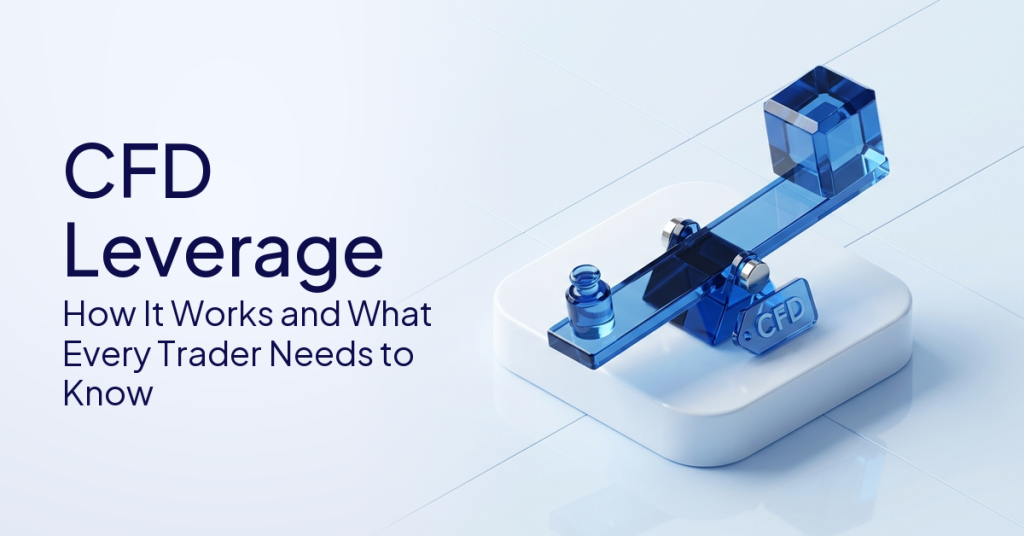
CFD leverage allows a trader to control a large market position with a smaller margin deposit but the same mechanism can amplify losses and create margin pressure if the trade moves against them.
So how should a trader approach this tool? A look at what a CFD is shows that leverage is a standard component and a margin deposit is needed to open positions. Bigger exposure does not mean lower risk.
Trading CFD leverage demands strict risk awareness because losses are calculated on the total position size. A high exposure can result in quick losses, margin calls and forced closure. This guide covers ratios, margin relationships and key risk management.
Quick Answer
CFD leverage lets traders open a position size that’s bigger than their margin deposit. Leverage of 1:100 means that the trader is controlling 100 times the amount of margin. This increases the exposure to the market but greatly magnifies losses. If the market moves against the position, the trader may face margin pressure, forced liquidation or losses beyond the initial margin, depending on the product terms.
What Is Leverage In CFD Trading?
In CFD trading, leverage is the use of margin to control a larger notional position than the cash deposited for that trade.
Leverage allows traders to open a position larger than their initial margin deposit. You don ’t have to pay the full notional value immediately, but all market gains and losses are still on the size of the position.
Leverage Ratio Meaning
Leverage notation tells you precisely how much exposure multiplies:
- 1:10 leverage means 10 times exposure.
- 1:50 leverage means you get 50 times exposure.
- 1:100 leverage means you are exposed 100 times.
Simple Ratio Example
For example, a margin deposit of 1,000 with 1:100 leverage controls a notional position of 100,000. If the market moves 1%, then the financial impact is based on the 100,000 exposure and not the 1,000 margin.
Why This Matters
A small change in price results in a large change in account equity. Leverage is a risk tool rather than merely a capital-efficiency feature.
How Does CFD Leverage Work?
CFD leverage works by reducing the initial margin required to open a position while still providing full market profit and loss exposure.
Step-By-Step Procedure
Here is how the standard process goes:
- You pick a CFD instrument.
- You choose the size of the trade.
- The platform works out the notional exposure.
- The platform will apply a margin requirement.
- You must have a sufficient margin for opening the position.
- Profit or loss moves with the total position value.
- If the equity falls too low, you’ll get a margin call or stop-out.
Long And Short Positions
Leverage functions in both directions in the market:
- Long CFD: You believe the price will rise.
- Short CFD: You expect the price to go down.
Please note that this is only a product feature rather than a trade recommendation.
Why Leverage Can Be Dangerous
Leverage drastically reduces the amount of market movement required to blow an account. A price move that seems tiny on a chart can be devastating relative to the deposited margin.
Regulatory data from sources such as the International Organization of Securities Commissions (IOSCO) repeatedly shows how over the counter (“OTC”) leverage accelerates retail losses, especially when the markets are volatile.
CFD Leverage Example: Profit And Loss Scenario
Leverage is best illustrated with an example, as it magnifies profits as well as losses, clearly exposing both the upside and the downside.
Example Setup
For a standard XAUUSD margin example, take:
- Gold CFD opening price: 2,300
- Position size: 100 ounces
- Notional exposure: 2,300 × 100 = 230,000
- Leverage: 1:100
- Margin required: 230,000 ÷ 100 = 2,300
Profit Scenario
If gold goes up from 2,300 to 2,350:
- Price move: +50
- Position size: 100 ounces
- Gross profit: 50 × 100 = 5,000
The gain is on the full 100-ounce exposure, not the 2,300 margin.
Loss Scenario
If gold drops from 2,300 to 2,250:
- Price move: -50
- Position size: 100 ounces
- Gross loss: 50 × 100 = 5,000
This loss is more than the original margin. Traders could face margin calls, forced closures or further financial liability, depending on the rules of the provider.
Costs Not Included In The Example
This example is simplified. Real trading may involve:
- Spread and commission
- Overnight financing or swap
- Currency conversion and slippage
- Margin close-out rules
- Taxes or applicable charges
Note: This example shows exactly why leverage is very risky. The exposure that produces a favorable result can produce rapid, devastating losses when the market moves against you.
CFD Margin And Leverage: How Are They Connected?
Margin is the collateral deposit that you need to open or maintain a leveraged CFD position, while leverage is the ratio of margin to total exposure.
What Is Margin?
Margin is the amount of account equity required to open and maintain a leveraged CFD position. It is locked collateral while the trade is open. It is not considered a transaction cost.
How Leverage Affects Margin
- The higher the leverage, the smaller the margin needed for the same-sized position.
- A higher margin required means lower leverage.
- Lower margins don’t mean less risk. Risk is a function of full exposure and price movement only.
Margin Requirement Formula
Required Margin = Notional Position Value ÷ Leverage
If the notional position is 50,000 and the leverage is 1:50, the required margin is 1,000.
What Is A Margin Call?
A margin call occurs when the account’s equity gets close to or drops below the required margin level. You have to put money in, cut exposure or get out of positions.
High volatility is linked to tight margin requirements, which are a key buffer against a default, according to the Bank for International Settlements (BIS).
What Is Stop-Out Or Forced Closure?
If the margin is insufficient, the provider automatically closes positions in accordance with the rules for each account. In volatile markets this happens very rapidly.
Margin Terms To Define
- Balance: Total funds before open positions.
- Equity: Balance plus floating profit/loss.
- Used margin: Funds locked in open trades.
- Free margin: Equity available for new trades.
- Margin level: Equity divided by used margin (percentage).
- Margin call: Warning of low equity.
- Stop-out / Liquidation: Automatic position closure.
Leverage Ratios For Different CFD Assets
CFD leverage can differ by asset class, provider, account type and product rules, so don’t think there is a single ratio to apply everywhere.
Why Leverage Varies
Leverage is different because some markets are more volatile, more prone to gaps or sensitive to global news.
Common Asset Categories
Leverage is different for:
- Exotic, minor and major currency pairs
- Stock indices and individual share CFDs
- Commodities, metals and energy products
- Crypto CFDs where available
Why Forex May Have Higher Leverage
Major forex pairs usually have higher available leverage due to their deep liquidity but they are never risk-free.
Why Commodities And Crypto May Have Lower Leverage
Commodities and crypto are very volatile and have gaps in price. This instability requires providers to have higher margin requirements to compensate.
Product Specification Checklist
Always review these details:
| Specification | Check Before Trading |
|---|---|
| Instrument name | Leverage ratio & Margin requirement |
| Minimum trade size | Contract size |
| Spread & Commission | Trading hours |
| Overnight financing | Margin call & Stop-out level |
How To Manage CFD Leverage Risk
Managing leverage risk means trading smaller position sizes, having clear loss limits, being aware of margin, and not using the maximum leverage that is available. Do note that these practices reduce but do not remove the risk of loss and guarantee no particular outcome.
Use Smaller Position Sizes
Position size dictates exposure. You should know how much capital is at risk before entering a trade.
Avoid Using Maximum Available Leverage
The leverage available is a limit. With too much leverage, accounts are vulnerable to small price movements. Considering specifications on trusted sites, safety is more important than exposure limits.
Set A Defined Risk Limit
A common risk-management convention is to decide in advance the amount of equity to place at risk on any single trade.
Use Stop Loss Orders Carefully
Stop-loss orders establish an exit point but don’t eliminate risk. Execution can occur at worse prices in market gaps.
Monitor Margin Level
Keep monitoring your equity, used margin, free margin and margin level constantly as long as trades are active
Avoid Overlapping Exposure
Multiple trades lead to greater hidden risks. It is typical for multiple USD-related positions to move simultaneously during economic announcements.
Understand Market Events
Leveraged positions can swing wildly around:
- Interest rate decisions and inflation reports
- Employment and earnings reports
- Geopolitical events and weekend market opens
Keep Overnight Costs In Mind
If you leave a leveraged CFD position open overnight, you will incur financing or swap fees that will erode your equity over time.
Common Mistakes Beginners Make With CFD Leverage
Beginners often look at bigger exposure, ignoring margin, costs, volatility and forced closure risk.
Mistakes Checklist
- Using leverage as free buying power.
- Getting the maximum leverage possible.
- Choosing the size of trade before calculating risk.
- Ignoring drops in the margin level
- Confusing margin with maximum possible loss.
- Assuming stop-loss orders always fill perfectly.
- Blindly holding positions overnight.
- Opening correlated positions.
- Trading big news events without a plan.
- Thinking demo results guarantee success in the live market.
- Disregarding product specifications and margin rules.
FAQs
Leverage is the use of margin to control a larger market position than the deposit would allow. Profit and loss are calculated on the total exposure.
It enhances both of them. Big exposure reflects on favorable moves. Opposing moves lead to rapid losses that exceed the initial margin.
Leverage is the ratio of total exposure to the required deposit. Margin is the specific equity required to keep the trade open.
Your equity has dropped to just near the margin call. You have to add money, reduce the size or close trades. Otherwise, positions will be closed off automatically.
In itself, it is not good or bad, but very risky. Traders who do not have strict risk management lose money quickly with high leverage.
Conclusion
CFDs increase market exposure, but also increase the speed and scale of potential losses.
Leverage lets you control bigger positions with less margin upfront but the P&L is always based on total exposure. More leverage means lower margin requirements, instead of lower risk.
Depending on the product terms, your losses can easily exceed your initial margin, resulting in margin calls and forced closures. Never overleverage without knowing the whole story on market volatility.
CFDs are complex instruments and carry a high risk of rapidly losing money due to leverage. Learn more about CFD trading, margin calls, account equity and trading risk before using leveraged live products.
CFDs are complex financial instruments and carry a high risk of losing money rapidly due to leverage. You should ensure you fully understand the risks involved and carefully consider whether you can afford to take the high risk of losing your money before trading.
This content is provided for educational and informational purposes only. It does not constitute investment advice, financial guidance, or a recommendation to trade any financial instrument.
Any examples are hypothetical and for illustrative purposes only, and do not reflect actual trading results or client experiences.
Tags


Open Live Account
 Email Address
 Phone Number
Important Notice
STARTRADER does not accept any applications from Australian residents.
To comply with regulatory requirements, clicking the button will redirect you to the STARTRADER website operated by STARTRADER PRIME GLOBAL PTY LTD (ABN 65 156 005 668), an authorized Australian Financial Services Licence holder (AFSL no. 421210) regulated by the Australian Securities and Investments Commission.
Important Notice for Residents of the United Arab Emirates
In alignment with local regulatory requirements, individuals residing in the United Arab Emirates are requested to proceed via our dedicated regional platform at startrader.ae, which is operated by STARTRADER Global Financial Consultation & Financial Analysis L.L.C.. This entity is licensed by the UAE Capital Market Authority (CMA) under License No. 20200000241, and is authorised to introduce financial services and promote financial products in the UAE.
Please click the "Continue" button below to be redirected.


