








 Web Trader MT5




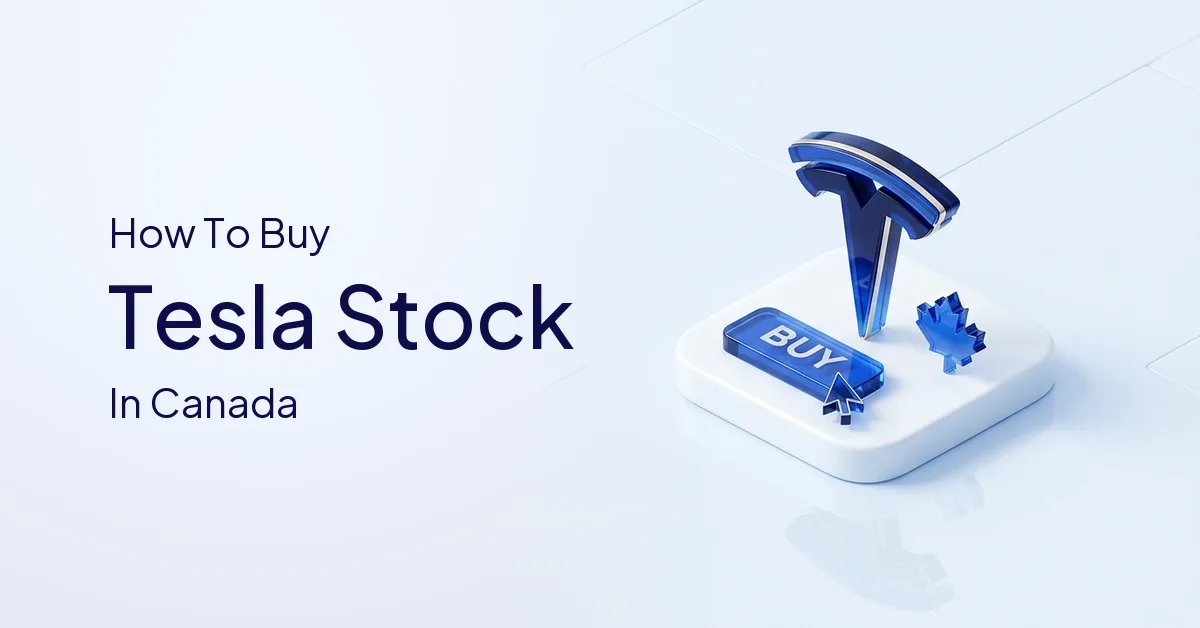
Tesla is one of the most talked-about stocks in the world, and if you’re a Canadian investor looking to buy Tesla shares, the good news is that it’s completely doable. You don’t need a US brokerage account or a US address. You just need a Canadian self-directed brokerage account that gives you access to US markets, and you’re set.
That said, there are a few things worth understanding before you place that order. Tesla trades on NASDAQ in US dollars, which means currency conversion comes into play. There are also some tax considerations specific to Canadians holding US stocks. Let’s walk through the whole process step by step.
Can Canadians Buy Tesla Stock?
Yes. Canadians can buy Tesla shares (ticker: TSLA) through any self-directed brokerage account that offers access to US exchanges. Tesla is listed on NASDAQ, which is one of the two major US stock exchanges. It’s not listed on the TSX or any Canadian exchange, so you’ll be buying it directly on the US market.
Most major Canadian online brokerages provide access to US-listed stocks as part of their standard offering. When you search for TSLA in your brokerage platform, it should come up with NASDAQ as the exchange and the price quoted in USD.
Step 1: Open a Brokerage Account with US Market Access
If you don’t already have a self-directed brokerage account, you’ll need to open one. The process is fairly standard across most Canadian platforms. You’ll typically need to provide your personal identification, Social Insurance Number (SIN), address, employment details, and answer a few questions about your investment knowledge and risk tolerance.
When setting up your account, you’ll choose an account type. The most common options are a non-registered (taxable) account, a TFSA, or an RRSP. Each one has different tax implications for holding US stocks, and the choice matters more than you might expect.
Here’s one thing worth flagging early: if you hold US stocks that pay dividends inside an RRSP, the US dividend withholding tax is typically waived under the Canada-US tax treaty. A TFSA doesn’t get this benefit. Tesla doesn’t currently pay a dividend, so this isn’t an immediate concern, but it’s good to know if your portfolio grows beyond just one stock.
Step 2: Fund Your Account and Handle Currency Conversion
Since Tesla trades in US dollars on NASDAQ, your Canadian dollars need to be converted to USD before you can buy shares. How this happens depends on your brokerage setup.
The simplest option is to let your brokerage handle the conversion automatically at the time of purchase. Most platforms will convert your CAD to USD on the spot and execute the trade. The catch is that they typically charge a spread on the exchange rate, which eats into your returns. It’s not always obvious how much this costs because it’s baked into the rate rather than shown as a separate fee.
The other approach is to hold a USD-denominated account (many brokerages offer this) and convert your currency separately, either through the brokerage’s conversion tool or through a strategy that gets you a better rate. Some investors use what’s informally known as Norbert’s Gambit, which involves buying a dual-listed security in CAD and selling it in USD to effectively convert currency at a lower cost. It takes a bit more effort, but for larger amounts, the savings can be meaningful.
Step 3: Find Tesla Stock and Confirm the Ticker
Once your account is funded, search for “TSLA” or “Tesla” in your brokerage’s search bar. The result you want is TSLA on NASDAQ, priced in USD.
A quick word of caution: some brokerage platforms list multiple entries for the same company across different exchanges or in different currencies. Make sure you’re selecting the NASDAQ listing with USD pricing. If something looks off, like a price that seems way too low or a different currency symbol, double-check the exchange before proceeding.
The stock detail page will typically show you the current price, market capitalization, 52-week price range, and other data points. These are useful for context, but they’re not buy or sell signals on their own.
Step 4: Place Your Buy Order
Now for the actual purchase. You’ll generally choose between two order types:
A market order executes at the current market price, more or less immediately. It’s straightforward and works well when the stock is trading normally and you just want to get in.
A limit order lets you set the maximum price you’re willing to pay. The order will only execute if the stock hits that price or lower. This gives you more control, especially if the stock is moving around a lot during the day.
On the order form, you’ll enter the ticker (TSLA), the number of shares you want to buy (some brokerages also support fractional shares), and select your order type. Review the estimated total in USD before confirming.
One thing to keep in mind: NASDAQ operates on Eastern Time, and the regular trading session runs from 9:30 AM to 4:00 PM ET. If you’re placing a market order, make sure the market is open. If you want to set up an order outside of trading hours, use a limit order and it’ll execute when the market opens and your price conditions are met.
Tax Considerations for Canadians Buying Tesla Stock
When you sell Tesla shares at a profit, that profit is a capital gain, and it’s taxable in Canada. Under current rules, 50% of the capital gain is included in your taxable income (the inclusion rate). So if you made a $2,000 profit, $1,000 would be added to your income for the year. It’s worth noting that this inclusion rate is subject to potential legislative changes, so checking with the CRA or a tax professional for the most current rules is always a good idea.
On the dividend side, Tesla doesn’t currently pay a dividend. But for general knowledge: when US companies pay dividends to Canadian investors, the US government withholds 15% of the dividend (reduced from 30% under the Canada-US tax treaty). If you hold US dividend-paying stocks in an RRSP, this withholding is typically waived. In a TFSA or non-registered account, the withholding applies.
If your foreign holdings exceed certain thresholds, you may need to file a T1135 (Foreign Income Verification Statement) with the CRA. The specifics around the threshold can change, so it’s best to check with the CRA directly or speak to a tax advisor if you think you might be close.
What Are the Risks of Buying Individual Foreign Stocks Like Tesla?
Buying any individual stock comes with risks, and it’s worth being clear-eyed about them:
Concentration risk. Putting a large portion of your portfolio into a single company means your returns are heavily tied to that one stock’s performance. If Tesla has a rough stretch, your portfolio feels it directly.
Currency risk. Because Tesla trades in USD, your returns in Canadian dollar terms are affected by the CAD/USD exchange rate. Even if Tesla’s share price stays flat, a shift in the exchange rate can change what your investment is worth when converted back to Canadian dollars.
Company-specific risk. Tesla operates in a competitive, rapidly changing industry. Regulatory changes, production issues, competition, or shifts in consumer demand can all impact the stock price.
No deposit protection. Equity holdings are not covered by CDIC. While your brokerage account may have CIPF protection for the securities held, the value of the stocks themselves can go down.
Volatility. Tesla has historically been one of the more volatile large-cap stocks. That means bigger swings, both up and down, compared to more established, less growth-oriented companies.
Understanding these risks is part of making an informed investment decision. None of them are reasons not to invest, but they’re worth factoring into how much of your portfolio you allocate to any single stock.
Frequently Asked Questions
Yes. You can hold Tesla (and other US-listed stocks) inside a TFSA. Capital gains will be tax-free, but US dividend withholding tax would apply if Tesla ever starts paying dividends.
Tesla trades under the ticker TSLA on the NASDAQ exchange.
Yes. Tesla trades in USD, so your CAD needs to be converted. Most brokerages handle this automatically, though you can also convert manually for potentially better rates.
No. Tesla is listed on NASDAQ only. You’ll need a brokerage that provides access to US exchanges to buy it from Canada.
Profits from selling Tesla shares are capital gains. Under current rules, 50% of the gain is included in your taxable income. This applies to non-registered accounts. In a TFSA, gains are tax-free. In an RRSP, gains are tax-deferred until withdrawal.
Some Canadian brokerages offer fractional share trading, which allows you to buy a dollar amount of Tesla rather than a whole share. Check whether your specific brokerage supports this feature.
The US withholds 15% of dividends paid to Canadian investors under the Canada-US tax treaty (reduced from the standard 30% rate). Tesla doesn’t currently pay a dividend, but this applies to other US stocks you might hold.
Yes. US dividend withholding tax is typically waived for stocks held in an RRSP under the Canada-US tax treaty. This exemption doesn’t apply to TFSAs or non-registered accounts.
Disclaimer: The information provided on this website is for educational and informational purposes only and should not be construed as financial, investment, or trading advice. We are not licensed financial advisors, brokers, or dealers. Always conduct your own research and consult with a qualified financial professional before making any investment decisions. Past performance is not indicative of future results, and all investments carry risk, including the potential loss of principal.
Tags


Open Live Account
 Email Address
 Phone Number
Important Notice
STARTRADER does not accept any applications from Australian residents.
To comply with regulatory requirements, clicking the button will redirect you to the STARTRADER website operated by STARTRADER PRIME GLOBAL PTY LTD (ABN 65 156 005 668), an authorized Australian Financial Services Licence holder (AFSL no. 421210) regulated by the Australian Securities and Investments Commission.
Important Notice for Residents of the United Arab Emirates
In alignment with local regulatory requirements, individuals residing in the United Arab Emirates are requested to proceed via our dedicated regional platform at startrader.ae, which is operated by STARTRADER Global Financial Consultation & Financial Analysis L.L.C.. This entity is licensed by the UAE Capital Market Authority (CMA) under License No. 20200000241, and is authorised to introduce financial services and promote financial products in the UAE.
Please click the "Continue" button below to be redirected.


